AI-assisted note, based on the text and a physical inspection of this copy.
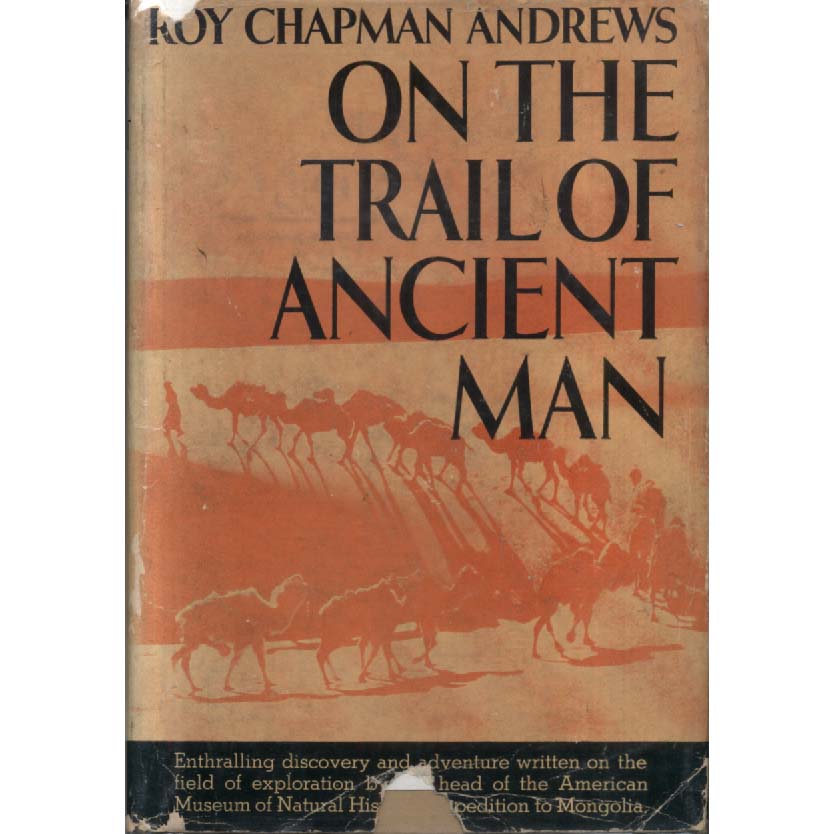
"On The Trail of Ancient Man" by Roy Chapman Andrews, published in 1926 by Star Books, is a fascinating cultural artifact that offers a glimpse into the era's exploration and archaeological fervour. The book's cover design, with its striking illustrations and bold typeface, immediately transports readers back to a time when adventure and discovery were at the forefront of public consciousness. The visual aesthetics of the paperback reflect a certain romanticism associated with the scientific exploration of the early 20th century. The choice of colours and imagery evokes the rugged landscapes Andrews traversed, suggesting a sense of wonder and excitement about the unknown, much in line with other popular adventure literature of the period.
Andrews himself is a prominent figure in the annals of exploration and paleontology, best known for leading the Central Asiatic Expeditions in the 1920s, which unearthed significant dinosaur fossils and provided a wealth of information about prehistoric life. Born in 1884, Andrews was an American explorer and archaeologist whose work laid the groundwork for modern paleontological practices. His exploits not only contributed to the field of archaeology but also captured the public imagination, securing his place as a celebrity adventurer of his time. The 1920s were marked by a fascination with the ancient world, and Andrews's writings helped to popularise these themes, making him a notable figure within the context of early 20th-century exploration literature.
The year 1926 was a pivotal moment in the evolution of cultural and scientific discourse. Post-World War I society was eager for new narratives and discoveries that could inspire hope and curiosity. The Roaring Twenties saw a rise in leisure activities and a burgeoning interest in the sciences, particularly in fields like archaeology and anthropology, which were becoming increasingly accessible to the general public. This cultural milieu provided fertile ground for Andrews's work, as people sought to understand their place in a rapidly changing world. His account serves not only as a travelogue but also as a reflection of the era's collective yearning for knowledge and adventure.
In "On The Trail of Ancient Man," Andrews offers a compelling narrative that combines elements of personal memoir with scientific observation. The text is rich with descriptions of the landscapes he encountered and the ancient relics he unearthed, providing readers with a vivid sense of the adventure involved in exploration during that time. However, while the writing is engaging, one cannot overlook the dated perspectives and occasional Eurocentric views that may render some passages uncomfortable for modern readers. The book encapsulates both the spirit of adventure and the limitations of its time, making it an intriguing, albeit flawed, cultural document.
One cannot help but notice that Andrews's prose often romanticises the act of discovery, presenting a somewhat simplified view of archaeological processes. The emphasis on the thrill of the chase overshadows the complexities and ethical considerations that contemporary archaeology demands. This tendency reflects a broader trend in early 20th-century literature where the glorification of exploration often overlooked the cultural ramifications of excavating ancient sites. Thus, while "On The Trail of Ancient Man" is undoubtedly an important work within the context of its time, it also invites critical reflection on the evolving ethics of archaeological practice.
In terms of print culture, the book is a product of its time, with an emphasis on accessibility to a mass audience. Star Books, as a publisher, was part of a growing trend in the 1920s to produce literature that appealed to both the educated elite and the general public. This democratization of knowledge allowed works such as Andrews's to reach a wider readership, fostering a collective interest in archaeology that would have lasting impacts on how these subjects were perceived in popular culture. The paperback format itself is indicative of the era's publishing norms, which sought to make literature more portable and affordable, thus encouraging exploration beyond the classroom or library.
In conclusion, "On The Trail of Ancient Man" serves as a cultural touchstone that encapsulates the spirit of exploration and scientific inquiry of the 1920s. While it offers an engaging narrative filled with adventure and discovery, it also reflects the limitations and biases of its time. Andrews's contributions to the field of archaeology remain significant, but modern readers must approach his work with a critical lens, acknowledging both the marvels of his discoveries and the ethical considerations they entail. Crappy Old Books invites readers to explore these facets, reminding us that while the past may be captivating, it is essential to engage with it thoughtfully.