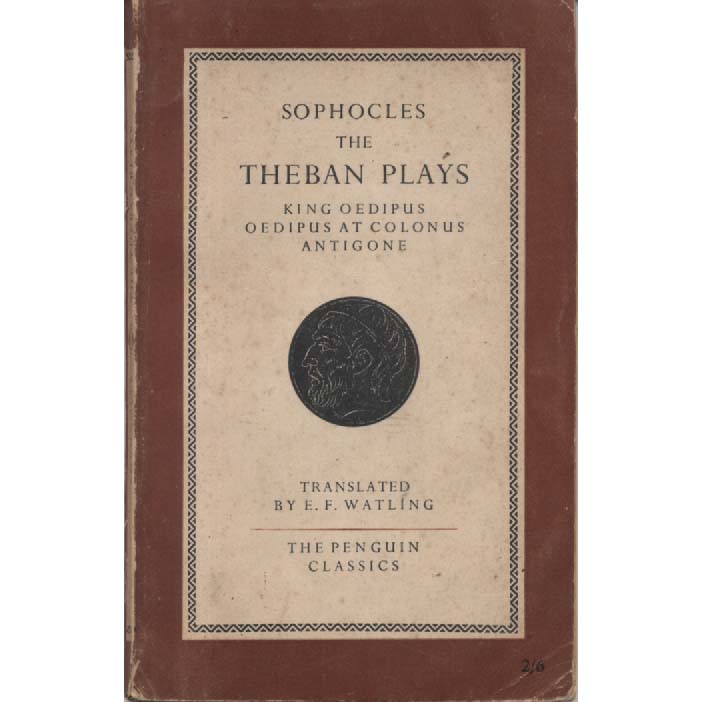
AI-assisted note, based on the text and a physical inspection of this copy.
In the realm of classic literature, few works resonate with the weight of tragedy and existential inquiry as Sophocles' collection known as "The Theban Plays." Published in 1955 by Penguin Classics, this edition presents three of the playwright's most renowned tragedies: "Oedipus Rex," "Antigone," and "Oedipus at Colonus." The cover design is quintessentially mid-20th century, featuring a minimalist aesthetic that reflects the era's taste for clean lines and understated elegance. The iconic Penguin logo, coupled with a simple yet evocative image, immediately signals to readers that they are about to delve into a work of significant cultural heritage. The paperback format gives it an approachable vibe, fitting comfortably in hand or on a shelf, making it an inviting choice for both seasoned readers and newcomers alike.
Sophocles, an ancient Greek playwright, stands as a towering figure in the annals of literary history. Born in 497/6 BC in Colonus, just outside of Athens, he was a contemporary of Aeschylus and Euripides, contributing significantly to the development of Greek tragedy. His works have not merely endured the test of time; they have profoundly influenced Western literature and drama. Sophocles is credited with introducing the third actor to the stage, thus expanding the possibilities of dramatic storytelling. Despite his monumental contributions, much of his life remains elusive, with few concrete biographical details available. He is often remembered for his triumphs in the dramatic competitions of ancient Athens, having won many victories, yet the specifics of his personal life and the full scope of his oeuvre are somewhat shrouded in mystery.
The year 1955 sits at a confluence of cultural movements and literary revivals. Post-World War II, there was a burgeoning interest in re-examining classical texts, both as a means of grappling with contemporary existential crises and as a way to reconnect with the foundational narratives of Western thought. The Penguin Classics series was instrumental in making these texts accessible to a wider audience, often accompanied by scholarly introductions and notes that provided context to modern readers. In a society that was increasingly questioning traditional values and norms, the themes explored in "The Theban Plays"—fate, free will, and moral responsibility—resonated powerfully with the zeitgeist of the time. The stark realities of post-war life echoed the tragic elements of Sophocles' narratives, providing a poignant backdrop for reflection and discourse.
One cannot overlook the striking contrast between the ancient setting of Sophocles’ plays and the modernity of their 1955 publishing context. The Theban Plays grapple with timeless themes, yet the language and translation employed in this edition reflect a mid-century sensibility that may feel both fresh and dated to today's readers. The translation itself, while aiming to capture the lyrical quality of the original Greek, may not fully engage the contemporary reader who is accustomed to more dynamic and fluid approaches to language. This edition's language is often formal, which may alienate those seeking a more accessible interpretation. Nonetheless, it retains a certain gravitas that is befitting of Sophocles' work, inviting readers to engage with the weighty moral questions posed within.
In terms of print culture, the Penguin Classics edition of "The Theban Plays" represents a significant effort to preserve and disseminate classic literature in a format that is both affordable and widely available. The paperback format, somewhat less prestigious than hardback editions, democratizes access to these essential texts, allowing a diverse audience to explore the complexities of human experience as portrayed in Sophocles’ works. The fact that this edition was released in the mid-20th century highlights Penguin's commitment to making classical literature relevant to modern readers; it serves as a bridge between the ancient and the contemporary, urging readers to consider the implications of these ancient stories in their own lives.
Critically, "The Theban Plays" offers a profound exploration of human nature, authority, and the often-painful consequences of our choices. The characters are steeped in familial loyalty and tragic irony, with Oedipus’ quest for truth ultimately leading to his downfall, and Antigone’s defiance against the state resulting in her martyrdom. These themes are not merely relics of the past; they continue to resonate in today's world, where the balance between individual rights and societal obligations remains a contentious issue. Readers may find themselves reflecting on the timelessness of Sophocles’ insights, even as they engage with the specific cultural milieu of the mid-20th century.
In conclusion, while the 1955 Penguin Classics edition of "The Theban Plays" may not be the definitive translation for every modern reader, it undeniably serves as a significant cultural artifact. It encapsulates a moment in literary history where classical works were being revitalized for new generations, allowing for a deeper understanding of the human condition. With Sophocles’ works continually inviting interpretation and discussion, this edition stands as a testament to the enduring power of tragedy. For those interested in the intersection of culture, literature, and history, "The Theban Plays" is a worthy addition to any bookshelf. Crappy Old Books celebrates such enduring works that have shaped literary culture, reminding us of the importance of revisiting our literary heritage.