AI-assisted note, based on the text and a physical inspection of this copy.
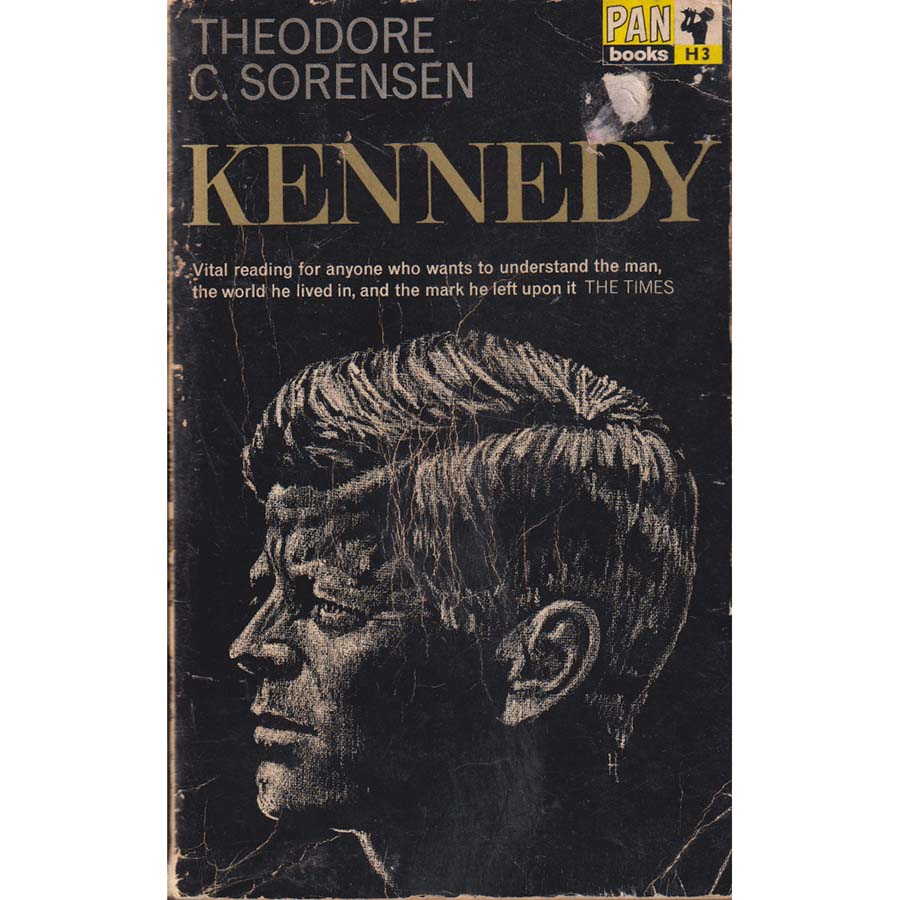
The book Kennedy by Theodore C. Sorensen, published in 1966 by Pan Books, presents itself as a vivid portrait of one of the most iconic figures in American history, John F. Kennedy. The cover design is a classic example of mid-20th-century publishing aesthetics, featuring a striking photograph of Kennedy himself, which captures the essence of his charismatic and youthful appeal. The typography is straightforward, typical of the period, with the title boldly displayed, inviting readers to delve into the life and legacy of the 35th President of the United States. The paperback format feels both accessible and utilitarian, embodying the era’s trend towards mass-market literature that sought to cater to a broader audience, especially in the wake of Kennedy's assassination in 1963. This makes the book not just a biography but also a cultural artefact that reflects the public's fascination with Kennedy at a time when his image was still fresh in the national consciousness.
Theodore C. Sorensen, the author, is a notable figure in his own right, having served as a special counsel and advisor to President Kennedy. His close relationship with Kennedy provides him with unique insights that he translates into the pages of this book. Sorensen was deeply involved in the formulation of many of Kennedy's most significant speeches, and this intimate knowledge allows him to present a narrative that is both personal and politically astute. His background as a lawyer and speechwriter positions him well within the literary culture of political biographies, making him a prominent voice during a time when such works were gaining popularity. While Sorensen is not as universally recognised as some other political writers, his contributions to the understanding of Kennedy’s presidency through this biography certainly mark him as an important figure in the context of American political literature.
The year 1966 stands as a pivotal moment in American history, a time when the country was grappling with the aftermath of the Vietnam War and the social upheavals of the 1960s. The assassination of Kennedy had left a profound impact on the American psyche, and Sorensen’s work attempts to capture the essence of a leader whose vision and ideals were cut short. The cultural milieu of the mid-1960s was characterised by a searching for identity and meaning, both politically and socially, and Sorensen’s portrayal of Kennedy taps into this atmosphere. The book serves not only as a biography but also as a reflection of the hopes and disillusionments of a generation that looked to Kennedy as a symbol of promise. In this context, Kennedy becomes a cultural object that speaks to the enduring legacy of its subject while also addressing the turbulent times in which it was written.
In examining Kennedy, one cannot overlook the broader implications of its publication within the realm of print culture. The 1960s saw a significant rise in the popularity of political biographies, reflecting a growing appetite among readers for insights into the lives of their leaders. The format of the paperback, as offered by Pan Books, made such literature more accessible to the general public, signalling a shift in the dynamics of reading culture. The availability of this book in a more affordable format allowed it to reach a wider audience, catering to the intense curiosity surrounding public figures like Kennedy. This accessibility is crucial in understanding how the narratives of power and influence were disseminated during this era, shaping public perception and historical discourse.
Overall, Theodore C. Sorensen’s Kennedy serves as a compelling amalgamation of biography and cultural commentary. It invites readers not only to learn about John F. Kennedy as a historical figure but also to engage with the emotional and political currents of the time. The book encapsulates the hopes, dreams, and eventual disillusionment surrounding a leader who remains a significant part of American history. As a cultural object, it is representative of a moment in time when the written word had the power to shape narratives and influence public sentiment.
In reflecting on this work, it is worth noting how Kennedy fits within the larger tradition of political biographies that continue to be published today. The legacy of such works often lies in their ability to provoke thought and discussion about leadership, governance, and the complexities of human character in the political arena. As we consider the trajectory of American political literature, Sorensen's effort stands as a testament to the enduring interest in the narratives that shape our understanding of history. For those looking to delve into the cultural and historical significance of Kennedy through the lens of one of his closest advisors, Kennedy by Theodore C. Sorensen, as reviewed by Crappy Old Books, remains a significant read.