AI-assisted note, based on the text and a physical inspection of this copy.
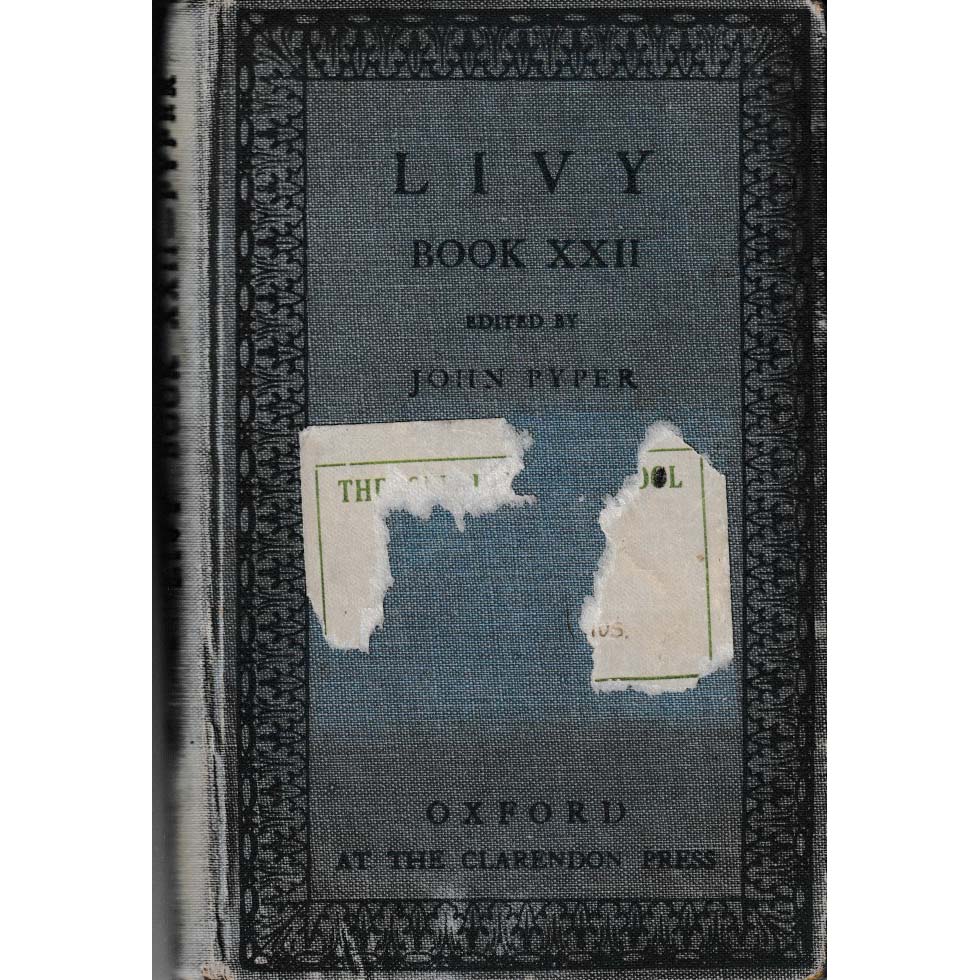
“Livy - Book XXII,” translated by John Pyper, is a fascinating artifact of both literary and historical significance, published in 1929 by Oxford At The Clarendon Press. The book, a translation of a segment from the monumental work of the Roman historian Titus Livius (Livy), is a window into the complexities of the Roman Republic during the Second Punic War. The cover design reflects the aesthetic sensibilities of its era, with a simple yet dignified layout that speaks to the scholarly nature of the text. The muted tones and classic typography evoke a sense of gravitas appropriate for the historical content, while the paperback format, typical of the period, suggests accessibility for readers interested in classical studies.
As we delve into the cultural context of the late 1920s, it is important to note that this was a time when classical scholarship was experiencing a renaissance. Scholars and students alike were increasingly turning to ancient texts in search of insights into contemporary political and social structures. The interwar period was marked by a fascination with the lessons of history, particularly in light of the upheavals of World War I. In this milieu, Pyper's translation would have resonated with an audience eager to understand the parallels between ancient conflicts and their own tumultuous times. The choice to publish with Oxford At The Clarendon Press, a respected academic publisher, further underscores the text's intended audience of scholars and serious students of history.
John Pyper, the translator of this edition, appears to be a somewhat obscure figure within the broader literary landscape. There is little widely available biographical information about him, suggesting that he may not have achieved significant prominence beyond this specific translation. This obscurity can sometimes lend a unique charm to a work, as it allows readers to engage more deeply with the text itself without the distractions of an author’s overwhelming reputation. However, the absence of extensive documentation also leaves us pondering the inspirations and motivations behind his translation choices, which can greatly influence the reader's experience of Livy’s narrative.
Published in 1929, this edition of “Book XXII” comes at a time when the world was grappling with the aftermath of the First World War and the rise of new political ideologies. The economic instability and social change of the period would have made Livy's accounts of war and governance especially poignant. Readers of the time might have drawn parallels between the strategic military campaigns of Hannibal and the Roman generals and their contemporary political machinations. This context adds an additional layer of richness to Pyper's translation, inviting readers to engage not only with the historical narrative but also with its implications for their own time.
The translation itself merits examination. Pyper’s choices in language and phrasing reflect a careful balance between fidelity to the original Latin text and the need for readability in English. The prose is generally clear and direct, making it accessible to a broader audience, yet it retains an academic tone that respects the gravity of Livy's historical narrative. This balancing act is no small feat, as many translations struggle to maintain the original’s nuance while still being engaging for modern readers. Pyper’s work here, while perhaps not groundbreaking, contributes to the ongoing dialogue about how ancient texts can be understood and interpreted in contemporary contexts.
The physical characteristics of the book also speak volumes about its place in print culture. The choice of a paperback format reflects the growing trend during the 1920s to make literature and scholarly works more accessible. This was a decade marked by a shift towards mass production in publishing, with an increasing emphasis on affordability and portability. The texture of the paper and the binding, although not luxurious, is sturdy enough to withstand frequent handling by students and scholars alike. Such choices underscore the ethos of the time, where education and knowledge were increasingly viewed as essential for societal improvement.
Moreover, the inclusion of scholarly apparatus—such as footnotes or introductory essays—can significantly enhance the reader's understanding of the text. While Pyper's translation may not include extensive commentary, the very act of engaging with Livy opens up avenues for critical thought. Readers are invited to consider the motivations of historical figures, the consequences of their actions, and the broader implications for human behaviour and society. This engagement with the text is a hallmark of classical studies and reinforces the value of such works in cultivating informed citizens.
In conclusion, “Livy - Book XXII” by John Pyper stands as a testament to the enduring relevance of classical literature and its ability to speak to contemporary audiences. The cultural context of its publication in 1929, combined with the thoughtful translation choices made by Pyper, create a work that is both an academic endeavour and a reflection of its time. While the author may not be widely remembered, his contribution to the translation of Livy remains significant, allowing modern readers a glimpse into the complexities of Roman history and its enduring lessons. As we explore the realm of Crappy Old Books, this volume serves as a reminder of the rich tapestry of literary heritage that continues to inform our understanding of past and present.