AI-assisted note, based on the text and a physical inspection of this copy.
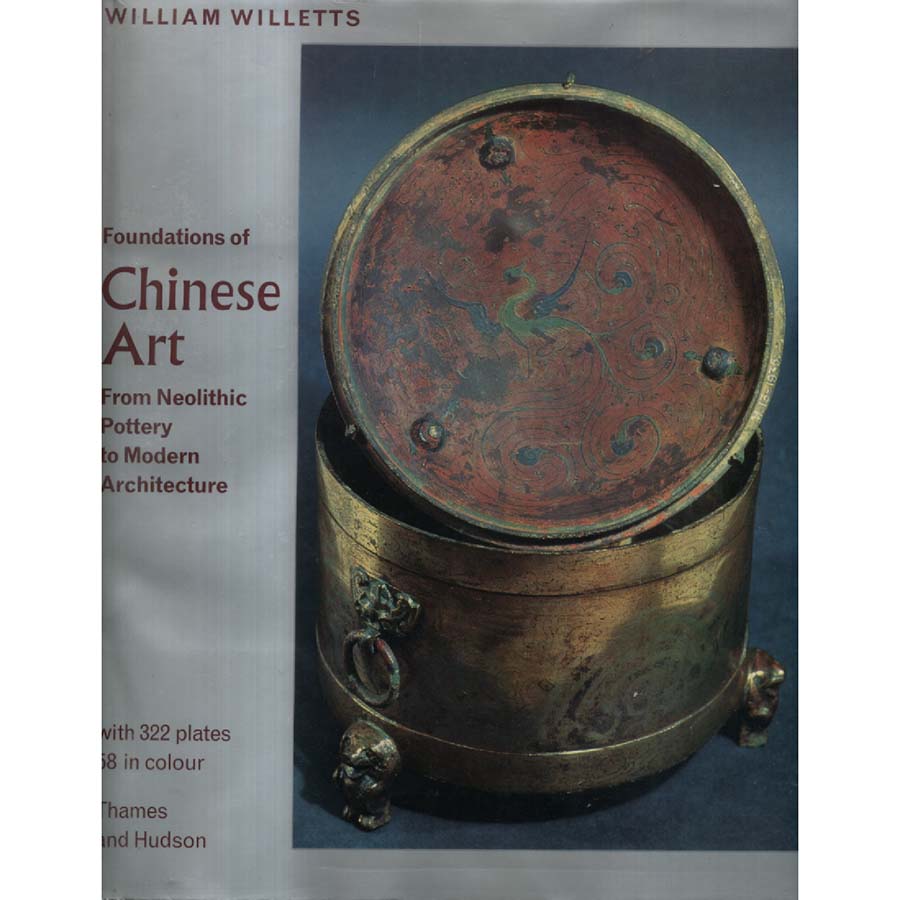
“Foundations of Chinese Art from Neolithic Pottery to Modern Architecture” by William Willetts is a fascinating yet uneven exploration of the rich tapestry of Chinese artistic heritage. Published in 1965 by Thames and Hudson, the book serves as both a historical survey and a cultural commentary, all while exhibiting the characteristic charm and limitations of mid-20th-century art literature. The cover design, typical of the era, features a collage of images that hint at the diverse forms of Chinese art discussed within. Its muted colour palette, combined with a slightly textured surface, captures the essence of the book’s scholarly intent while also appealing to the aesthetics of the time. However, the paperback vibe often leaves much to be desired, with a flimsy quality that reflects the mass-market production of the period rather than an enduring collectible piece.
The author William Willetts appears to be somewhat obscure, with limited biographical information readily available. It seems he was primarily an academic and writer focused on art history, but the specifics of his career trajectory and literary contributions remain largely unchronicled. This lack of documentation may detract from the reader's ability to fully appreciate the author's perspective and expertise. Willetts' apparent absence from major literary movements or critical discourse suggests that he may not have made significant waves in the broader art historical community. His work, however, stands as a testament to the era's fascination with non-Western art forms, attempting to bridge a gap in understanding between Eastern and Western art traditions.
Published in 1965, this book emerges from a time when Western interest in Chinese culture was gaining momentum, particularly in the wake of the earlier waves of Orientalism. The post-war era saw a burgeoning curiosity about Asian art and philosophy, spurred by geopolitical changes and cultural exchange. Willetts’ work can be viewed as part of this larger trend, as it seeks to educate Western audiences about the depth and complexity of Chinese art. The 1960s were marked by a growing awareness of cultural diversity, yet they also reflected the limitations of a Eurocentric viewpoint that often oversimplified or misrepresented the nuances of non-Western traditions. Willetts’ presentation, while earnest, occasionally falls prey to these broader cultural blind spots.
The content of the book is ambitious, aiming to cover an extensive timeline from Neolithic pottery through to modern architectural practices. This breadth is both a strength and a weakness. On one hand, Willetts provides a sweeping overview that exposes readers to a variety of artistic forms and historical contexts. From the delicate aesthetics of ancient ceramics to the monumental structures of contemporary China, the transitions are marked with an academic enthusiasm that is palpable. Yet, the challenge of such an expansive scope is that it often leads to a lack of depth in analysis. Key artistic movements, styles, and individual artists are sometimes glossed over, leaving the reader craving a more detailed exploration of significant works and influences.
The text is peppered with visuals that include photographs and illustrations, which are crucial for understanding the art forms discussed. However, the quality of these reproductions varies, reflecting the publishing standards of the time. Some images are striking and effectively enhance the narrative, while others suffer from poor resolution or inadequate captions, making it difficult for readers to fully grasp their relevance. The integration of text and image serves as a reminder of the challenges inherent in art historical scholarship, particularly when attempting to represent such a visually rich and diverse culture.
Willetts’ prose is scholarly yet accessible, maintaining a balance that caters to both academic audiences and general readers. He employs a descriptive style that brings to life the various art forms, although at times it can feel overly simplistic or lacking in critical engagement. This is particularly evident in his discussions of modern architecture, where the author struggles to contextualise contemporary developments within the broader historical narrative. The tension between tradition and modernity in Chinese art is a central theme, yet Willetts’ treatment of this topic can feel somewhat superficial, missing opportunities for deeper analysis.
The book also touches on the philosophical underpinnings of Chinese art, exploring how concepts such as harmony, balance, and nature inform artistic expression. Willetts attempts to connect these ideas to specific examples, but the execution often falls short. The insights provided could benefit from a more robust engagement with philosophical texts and artistic theory, which might lend greater weight to his arguments. Instead, the discussions sometimes feel like cursory nods to these deeper issues, leaving readers wanting a more substantial investigation.
In conclusion, “Foundations of Chinese Art from Neolithic Pottery to Modern Architecture” is a noteworthy attempt to introduce Western audiences to the complexities of Chinese artistic traditions. While the book is not without its flaws—especially in its breadth over depth and occasional oversimplification—it remains a valuable artefact of its time, reflecting the cultural currents of the 1960s. Its publication by Thames and Hudson assures a certain level of quality, but the overall presentation and execution reveal the challenges faced by authors attempting to convey the richness of non-Western art to a predominantly Western audience. For those with an interest in art history, Willetts’ work offers a starting point, albeit one that may require further reading for a more nuanced understanding. Crappy Old Books encourages readers to explore this and other cultural objects that, despite their imperfections, contribute to our appreciation of art's diverse landscape.