AI-assisted note, based on the text and a physical inspection of this copy.
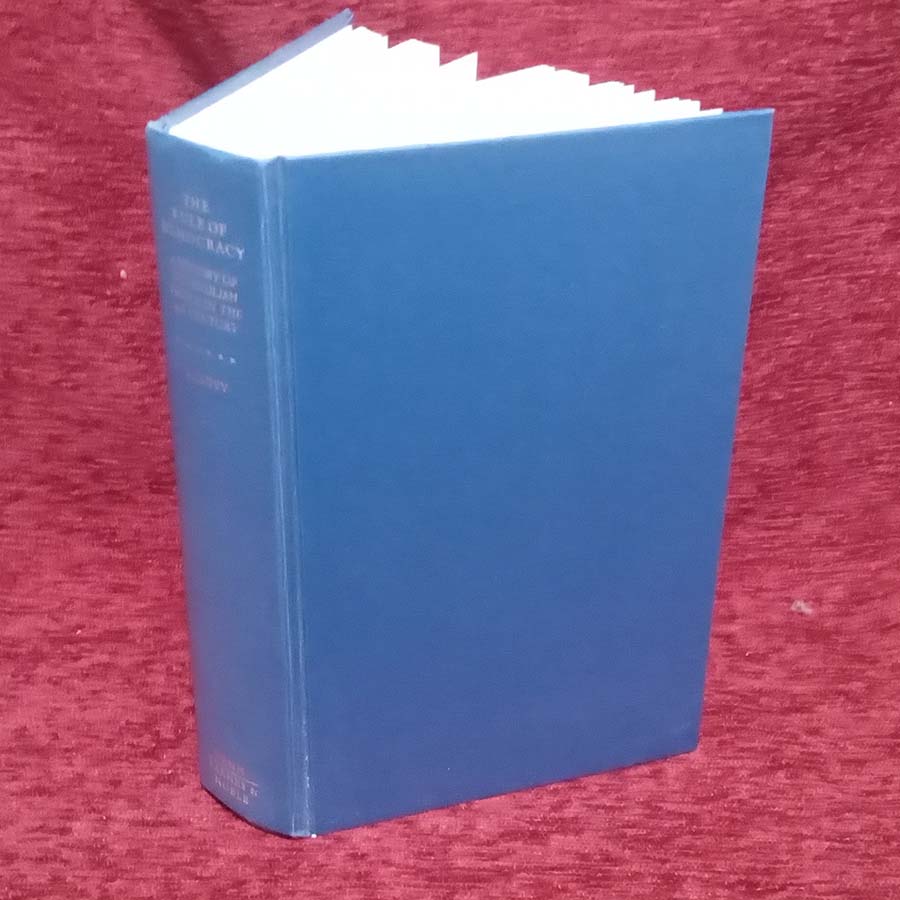
Elie Halevy's "The Rule of Democracy 1905-1914," published in 1968 by Ernest Benn Limited, is an intriguing exploration of a transformative period in history. The book’s cover design, with its muted tones and classical typography, evokes a sense of gravitas befitting the subject matter. The paperback format lends it a certain casual charm, making it accessible to readers who wish to delve into the complexities of early 20th-century political thought without the intimidation of a hardback tome. However, the overall aesthetic is somewhat dated, reflecting the era of its publication rather than the vibrancy of the democratic movements it discusses.
The era in which Halevy wrote this book, the late 1960s, was marked by significant social and political upheaval. The world was grappling with the ramifications of the Cold War, the civil rights movement, and a burgeoning counterculture that questioned authority and traditional power structures. These themes resonate with the content of Halevy’s work, as he scrutinises the evolution of democracy during a time when many nations were either solidifying their democratic institutions or wrestling with authoritarianism. The timing of his analysis may have been intended to reflect and critique contemporary democratic practices by drawing parallels with the past. However, the book sometimes feels more like a historical artifact than a vigorous commentary, which may limit its appeal to modern readers.
Elie Halevy himself occupies an interesting position within the literary and academic culture. He appears to be a somewhat obscure figure in the annals of modern thought, with limited widely documented biographical information available. While he is not a household name, Halevy’s contributions to political philosophy and history, particularly regarding democracy, have garnered some recognition among scholars. It seems he was primarily a French philosopher and historian, although details of his career and broader literary impact remain elusive. This obscurity may affect how his works are received today, as readers often gravitate towards authors with a more prominent or accessible profile.
The book’s exploration of democracy, particularly during the years between 1905 and 1914, is significant in understanding the political landscape of the early 20th century. This was a period marked by the rise of mass political movements, the expansion of suffrage, and the burgeoning influence of socialist ideas across Europe. Halevy’s analysis attempts to contextualise these developments within a broader historical narrative, focusing on the tensions and contradictions inherent in democratic governance. However, it must be noted that the academic rigour and depth of his analysis may not meet the expectations of all modern readers, who have become accustomed to contemporary scholarship that embraces a more diverse array of voices and perspectives.
The text itself is dense and scholarly, which may alienate casual readers. Halevy’s writing style is formal, reflecting the scholarly conventions of his time. This formality, while valuable for academic discourse, can sometimes obscure the urgency and relevance of the themes he addresses. The lack of engaging anecdotes or relatable examples may further distance the reader from the material, leaving them to grapple with dense theoretical concepts without sufficient anchoring in lived experiences or compelling narratives.
In terms of print culture, "The Rule of Democracy 1905-1914" stands as a testament to the era's publishing trends. The 1960s saw a proliferation of academic texts aimed at both scholars and the educated public, a trend that Ernest Benn Limited contributed to by publishing works that straddled the line between scholarship and general interest. The choice of a paperback format reflects a democratization of knowledge, allowing wider access to complex ideas that were previously confined to the ivory towers of academia. However, this accessibility does not necessarily equate to readability, and Halevy’s dense prose may deter some readers.
In conclusion, while Elie Halevy's "The Rule of Democracy 1905-1914" offers a valuable historical perspective on the evolution of democratic thought, its appeal may be limited by its dated presentation and scholarly style. The obscurity of Halevy as an author, combined with the context of its 1968 publication, raises questions about its relevance in contemporary discussions of democracy. For those interested in the period's intellectual currents, the book may provide a wealth of information, but readers looking for a more engaging or accessible exploration of democracy might find it falls short. This is a classic example of what Crappy Old Books often highlights: the tension between scholarly ambition and reader engagement in historical texts.