AI-assisted note, based on the text and a physical inspection of this copy.
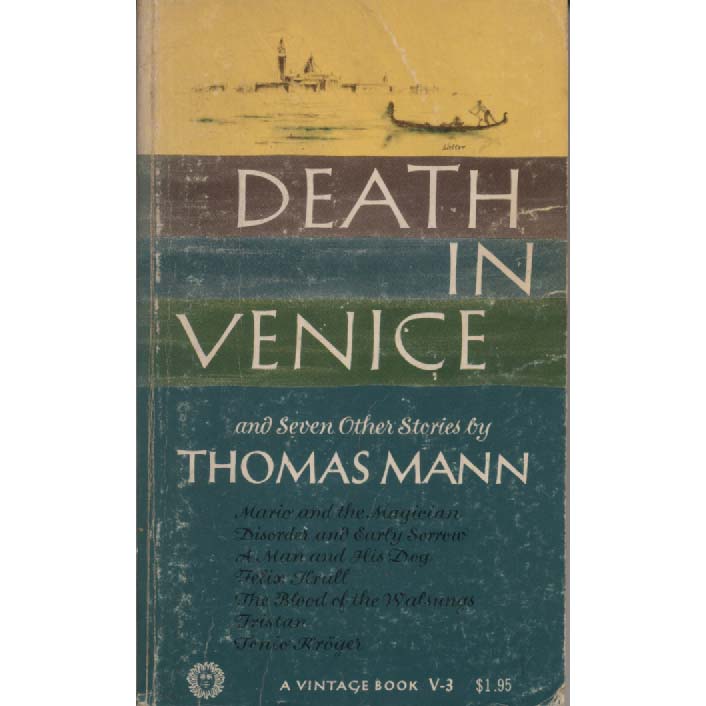
“Death in Venice and Seven Other Stories” by Thomas Mann, published in 1954 by Vintage Books, serves as a fascinating artefact of mid-20th-century literature, encapsulating both the aesthetic and thematic preoccupations of its time. The cover design is notably understated, typical of the Vintage Books brand, which often favours minimalist art over elaborate imagery. The typography is elegant yet accessible, reflecting the intellectual rigor of Mann's work while simultaneously inviting a broader readership. The paperback format, with its somewhat brittle pages and faded spine, evokes a sense of nostalgia for a time when literature was often shared, discussed, and cherished in physical form. This particular edition manages to convey both a vintage charm and a sense of permanence, making it a fine addition to any bookshelf.
Thomas Mann, a towering figure in German literature, is perhaps best known for his exploration of complex psychological and philosophical themes. Born in 1875 in Lübeck, Germany, Mann was awarded the Nobel Prize in Literature in 1929, recognising his profound impact on the literary landscape. His works often delve into the intricacies of human experience, particularly the tension between the artistic impulse and the demands of society. While Mann is widely acknowledged for novels such as “The Magic Mountain” and “Buddenbrooks,” “Death in Venice,” originally published in 1912, remains one of his most celebrated stories, reflecting his keen insights into the nature of obsession, beauty, and mortality. The presence of this particular story within the 1954 collection serves to highlight Mann's continued relevance, even as the world around him was undergoing significant transformation.
The year 1954 was marked by significant cultural shifts, particularly in post-war Europe. The aftermath of World War II had left a profound imprint on the psyche of nations, influencing art and literature in ways both overt and subtle. The existential concerns that permeate Mann's works resonated strongly during this period, as individuals grappled with questions of identity, morality, and the human condition in a rapidly changing world. The mid-1950s also witnessed the rise of modernism and a growing fascination with psychological realism, trends that Mann had long embodied in his writing. The publication of this collection during such a tumultuous time underscores its relevance, as readers sought solace, understanding, and perhaps even a sense of connection through the literary explorations of the past. Mann's contemplative narratives provided a means for readers to engage with their own internal struggles, making the book a cultural touchstone of its era.
The stories within this collection, while varied, echo common themes of desire, decay, and the philosophical underpinnings of existence. “Death in Venice,” with its haunting portrayal of an artist's obsession with beauty and youth, serves as a poignant exploration of the duality of the human experience. The remaining stories also reflect Mann's preoccupation with the complexities of emotions and societal constraints. Each narrative invites readers to contemplate the often fraught relationship between personal aspiration and external expectations. In a world where the ideals of beauty and success are frequently at odds with reality, Mann’s work provides a critical lens through which to examine these tensions.
In terms of print culture, the 1954 edition represents a time when literature was becoming increasingly accessible to the general public. Vintage Books, known for its dedication to quality literature, played a pivotal role in promoting literary works that may have otherwise been relegated to academic circles. This collection not only reflects Mann's literary prowess but also marks an important moment in the publishing landscape, where the merging of high art and popular culture began to take root. Readers in 1954 were not merely passive consumers; they were active participants in a broader cultural dialogue, and Mann’s stories provided a rich backdrop for that engagement.
As a cultural object, “Death in Venice and Seven Other Stories” is emblematic of a transitional period in literature. The physical book, with its worn edges and slightly yellowed pages, invites readers to engage with its contents not merely as texts but as vessels of experience and reflection. The narrative style, steeped in introspection and philosophical inquiry, encourages a slow, deliberate reading, reminiscent of a bygone era where literature was savoured rather than consumed. The stories within this collection serve not only as a means of entertainment but also as a mirror reflecting the complexities of human existence, making it a valuable addition to any literary canon.
In conclusion, Thomas Mann’s “Death in Venice and Seven Other Stories” stands as a testament to the enduring power of literature to explore the depths of human experience. Its publication in 1954 by Vintage Books positions it within a significant cultural moment, while the stories themselves resonate with timeless themes that continue to engage readers today. For those interested in delving into the intricacies of life, art, and the human condition, this book remains a vital resource. In the spirit of uncovering the treasures of literary history, Crappy Old Books celebrates this collection, reminding us that great literature transcends time and continues to invite reflection and discussion.