AI-assisted note, based on the text and a physical inspection of this copy.
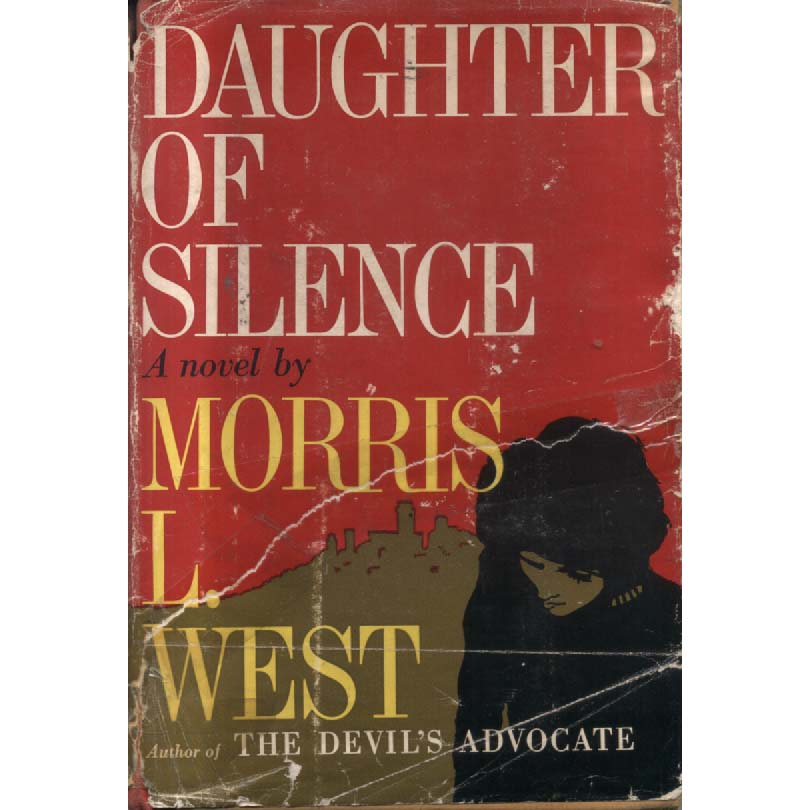
"Daughter of Silence" by Morris L. West, published in 1961 by William Morrow, is a work that encapsulates the essence of its era while offering a rather lacklustre narrative experience. The cover design, typical of early '60s paperback aesthetics, features a stark illustration that hints at themes of intrigue and emotional struggle, which are never fully realised in the text. The muted colour palette and somewhat abstract representation invite curiosity, yet ultimately mislead potential readers about the depth of the content within. There’s a certain charm in the physicality of the book; its creased spine and weathered pages exude a sense of history, evoking the tactile pleasure of handling a vintage paperback. However, the overall reading experience feels like a missed opportunity, as the novel fails to engage meaningfully with its audience.
Morris L. West, an Australian author, is perhaps best known for his works that often blend themes of religion, politics, and personal conflict, tackling the complexities of human experience. While he wasn't a household name in the way some literary figures are, his contributions to the literary scene during the mid-20th century are noteworthy. West’s works have often been characterised by their moral dilemmas and philosophical undertones, reflecting the tumultuous societal changes of his time. However, "Daughter of Silence" seems to lack the punch that characterises his more celebrated novels, possibly due to the constraints of its genre or the expectations of its readership.
The year 1961 was a pivotal moment in cultural history, marked by significant events that shaped the social landscape. The Cold War was at its height, and global tensions were palpable, influencing literature as authors sought to address the complexities of human relationships amidst political unrest. The counterculture movement was also beginning to take root, setting the stage for a wave of literary experimentation. Within this context, "Daughter of Silence" emerges as a curious artefact. While other authors were boldly exploring new themes and styles, West's offering feels somewhat conventional and restrained. It tries to navigate the emotional landscape of its characters but often gets mired in melodrama, leading to a lack of resonance that might capture the zeitgeist effectively.
The narrative itself is a blend of personal and political themes, yet it often succumbs to clichés that dilute its potential impact. Characters are presented with the kind of emotional baggage that should create depth, but instead, they frequently become caricatures of the struggles they face. The dialogue is stilted at times, lacking the natural flow that can elevate a story from mere plot to something more profound. This may reflect West’s intent to discuss heavy themes, but the execution leaves much to be desired. The emotional stakes never feel entirely genuine, leading to a sense of detachment from the characters’ journeys.
In terms of print culture, "Daughter of Silence" contributes to the larger tapestry of literary works produced during a time when mass-market paperbacks began to proliferate. The rise of paperback novels in the post-war era marked a significant shift in accessibility to literature, allowing a broader audience to engage with various genres. However, while it was a time of experimentation, West's work does not seem to have fully embraced this spirit. Instead, it clings to the more traditional narratives and structures that were becoming increasingly outdated as the decade progressed.
One can’t help but notice a certain irony in the title "Daughter of Silence." It suggests a narrative that might delve into themes of repression and the struggle for voice. Yet, the novel does not explore these themes with the depth they warrant. Rather than providing a profound commentary on the silencing of individuals within societal structures, it skims the surface, offering platitudes that fail to resonate. This missed opportunity to engage with the complexities of its title could be seen as a reflection of the wider literary trends of the time, where many authors were grappling with how to articulate the nuances of their characters' experiences amidst a rapidly changing world.
In conclusion, "Daughter of Silence" serves as a reminder of the literary landscape of the early 1960s, where many authors were still finding their footing in a world that was shifting under their feet. While Morris L. West may have had the potential to produce a compelling narrative, this particular work falls short, offering more in terms of cultural context than narrative innovation. It stands as a cultural object reflective of its time, yet fails to leave a lasting impression. For those interested in exploring the nuances of mid-20th-century literature, this book is a curious addition to one's collection, albeit one best approached with tempered expectations. As we delve into the annals of Crappy Old Books, "Daughter of Silence" exemplifies the challenges faced by authors navigating the turbulent waters of their eras while also reminding us that not all literary attempts achieve the resonance they strive for.