AI-assisted note, based on the text and a physical inspection of this copy.
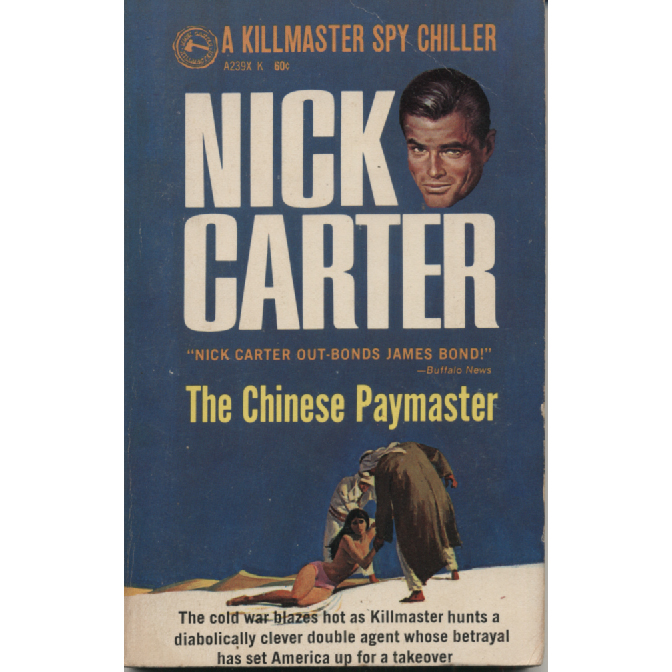
The Chinese Paymaster, penned by Nick Carter and published in 1967 by Universal Publishing, stands as a curious artefact of its time, embodying the pulp fiction aesthetic that characterised much of the era's popular literature. The book features a cover design typical of 1960s thrillers, complete with bold, eye-catching typography and an illustration that hints at espionage and intrigue, possibly involving exotic locales and shadowy figures. This visual presentation effectively evokes the genre's penchant for adventure and danger, drawing readers into a world rife with suspense. The paperback format, with its slightly worn edges and a faint scent of nostalgia, lends a certain charm that resonates with collectors and enthusiasts of vintage literature.
Nick Carter, whose name might evoke a sense of familiarity among certain readers, is a somewhat nebulous figure within the literary landscape. While he is not a household name in the way many contemporary authors are, he is part of a long tradition of pulp writers who focused on thrilling narratives aimed at a popular audience. His work often found its place in the mass market, appealing to readers who sought escapism through action-packed plots and engaging characters. However, specific details about Carter’s life and career remain elusive, indicating that he may not have achieved significant recognition beyond the confines of his genre. This obscurity contributes to the allure of his work, as it allows readers to engage with the text without preconceived notions of the author’s literary pedigree.
The year 1967 was a significant moment in cultural history, marked by a wave of social upheaval and a burgeoning counterculture movement. The political landscape was shifting, with the Vietnam War intensifying and civil rights movements gaining momentum worldwide. In literature, the 1960s saw the emergence of more experimental forms of writing, yet traditional genres like thriller and espionage remained popular. The Chinese Paymaster, arriving in this context, reflects the zeitgeist of its era, capturing a fascination with Cold War tensions and the complexities of international relations. The book likely resonated with readers who were both entertained by the thrilling escapades within its pages and intrigued by the geopolitical implications of its narrative.
The narrative itself, while not detailed here, can be anticipated to follow the conventions of the spy genre, perhaps featuring a protagonist embroiled in a web of deceit and betrayal, set against a backdrop of espionage that was particularly resonant during the Cold War. Such stories often play on the fears and anxieties of their time, and The Chinese Paymaster likely taps into the mistrust and uncertainty surrounding international diplomacy in the 1960s. This interplay of fiction and reality can elevate a seemingly straightforward narrative into a commentary on the era's political climate, making the book not only a piece of entertainment but also a cultural document reflective of its time.
The production quality of The Chinese Paymaster, consistent with Universal Publishing's offerings, showcases the typical traits of mass-market paperbacks of the period. The paper is moderately thick, with a slightly coarse texture that is characteristic of its age, and the print is clear, though faintly yellowed with time. Such details contribute to its status as a "crappy old book," a designation that celebrates the quirks and imperfections of older publications. Readers may find the text peppered with the occasional typographical error or awkward phrasing, common in pulp literature, which adds to the charm and authenticity of the reading experience.
In examining the book's cultural significance, it is essential to consider how it fits within the broader tapestry of 1960s literature. The rise of spy novels during this time was not merely a reflection of public interest in espionage but also served as a vehicle for exploring themes of loyalty, betrayal, and the moral complexities of power. The Chinese Paymaster, while aimed at entertainment, likely engages with these themes, albeit in a manner that prioritises action and suspense over deep philosophical inquiry. Such narratives were instrumental in shaping popular perceptions of espionage, often romanticising the life of spies while glossing over the more sinister realities of geopolitical machinations.
Overall, The Chinese Paymaster stands as a fascinating relic of its time, offering a glimpse into the cultural preoccupations of the 1960s while delivering a dose of thrilling escapism. Its somewhat obscure author, Nick Carter, embodies the era's pulp tradition, while the book itself serves as a reminder of the enduring appeal of spy fiction. For those who appreciate the aesthetics and narratives of bygone eras, this book is a worthy addition to any collection of Crappy Old Books, capturing the essence of a time when literature was often as much about adventure as it was about understanding the world around us.