AI-assisted note, based on the text and a physical inspection of this copy.
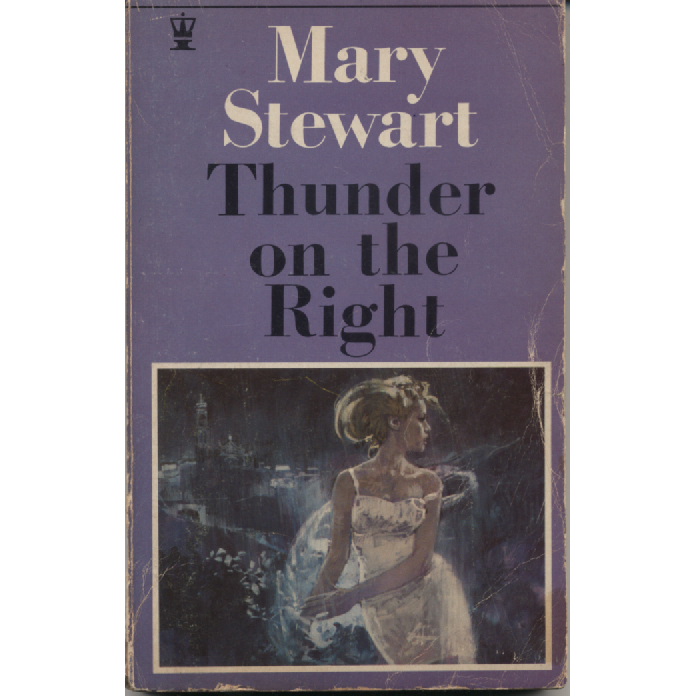
Thunder On The Right by Mary Stewart, published in 1969 by Hodder Paperbacks, is a curious blend of mystery and romance, embodying the essence of its era while offering a glimpse into the captivating world of mid-20th-century fiction. The book features a cover design typical of its time, with bold typography and a somewhat enigmatic illustration that draws the reader in. This aesthetic choice complements the genre's penchant for suspense and intrigue, making it an appealing addition to any bookshelf. The paperback format evokes a certain nostalgia, as it was during this period that paperbacks began to flourish, becoming more accessible to the average reader. The tactile experience of flipping through its pages, the faint smell of aged paper, and the slightly yellowed edges all contribute to its vintage charm, reminding us of a time when reading was not just a pastime but an experience to be savoured.
Mary Stewart, the author of this work, is often recognised for her significant contributions to the genre of romantic suspense. Born in 1916 in the United Kingdom, she rose to prominence in the 1950s and 1960s, a time when women authors were beginning to carve out their spaces in literature. Stewart is celebrated for her ability to weave intricate plots with strong, intelligent female protagonists. While there is a wealth of information about her successful career, including several bestsellers and adaptations of her works into film, Thunder On The Right is often considered a lesser-known entry in her bibliography. This obscurity may stem from the overshadowing success of some of her more prominent titles, yet it showcases her hallmark writing style and thematic concerns that resonate throughout her oeuvre.
The year 1969 was a transformative period, not just for literature but for society as a whole. The cultural landscape was shifting dramatically, marked by a burgeoning counterculture movement, the rise of feminism, and significant advancements in technology and communication. Readers of Thunder On The Right would likely have been navigating a world in flux, grappling with new ideas about gender roles and personal freedom. Stewart's narrative may have provided an escape into a beautifully crafted world, while also reflecting the complexities of the era. The story's undertones of adventure and romance can be seen as a response to the changing gender dynamics, offering a strong female character who navigates her own fate amidst external challenges.
As a cultural object, Thunder On The Right serves as a fascinating study of its time. The plot intertwines elements of travel, danger, and romance, echoing the escapist literature that thrived during the late 1960s. The book’s pages are filled with richly detailed descriptions of landscapes, particularly the lush settings of the Mediterranean, which evoke a sense of wanderlust so characteristic of the period. Stewart's prose is imbued with a vividness that transports readers to a different time and place, making it easy to understand why her works captured the imaginations of many. The emotional depth and character development offer a nuanced portrayal of relationships, which may resonate with readers seeking both adventure and introspection.
While Thunder On The Right may not be as widely discussed today as some of Stewart's other works, its place in the pantheon of 1960s literature is noteworthy. The book reflects a transitional moment in publishing history, where the paperback format was gaining traction and changing the landscape of book consumption. The physicality of the book itself, with its slightly worn cover and the feel of the pages, speaks to a time when literature was cherished and shared among friends, often passed around like a beloved secret. This tangible connection to the past is not only nostalgic but also serves as a reminder of the enduring power of storytelling.
In conclusion, Thunder On The Right by Mary Stewart is more than just a work of fiction; it is a cultural artefact that encapsulates the essence of its time. The book's aesthetic, coupled with its engaging narrative, mirrors the sociocultural currents of the late 1960s. Stewart's ability to blend suspense with romance, alongside her strong female characters, makes this book a noteworthy read for those interested in exploring the literary landscape of the era. As we delve into the pages of this Crappy Old Book, we uncover not just a story, but a snapshot of a transformative period in literature and society.