AI-assisted note, based on the text and a physical inspection of this copy.
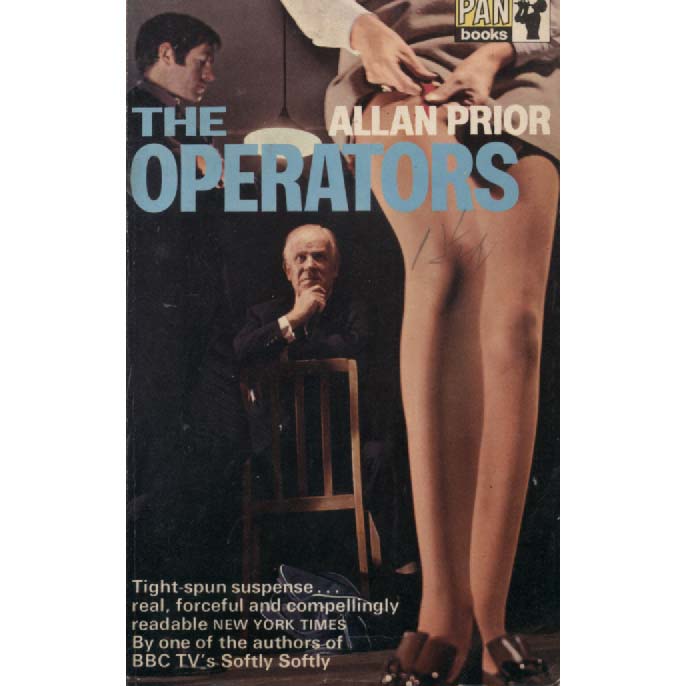
Allan Prior’s The Operators, published in 1966 by Cassell, is an intriguing specimen of mid-20th-century British literature that reflects a certain gritty realism associated with its time. The cover design, typical of the era, features bold typography set against a backdrop that suggests tension and intrigue—elements that are often present in military or espionage narratives. The paperback itself feels slightly worn, with the kind of creases and dog-eared pages that evoke a sense of history, making it a perfect candidate for the Crappy Old Books collection. This book exemplifies the sort of paperback vibe that was prevalent during the 1960s, where utilitarian designs often masked the complexity of the stories within.
Allan Prior, while perhaps not a household name, occupies a notable niche within British literature, particularly in the realm of television writing and crime fiction. His contributions to the genre—especially in the context of British television—were significant during the 1960s and 1970s, with several adaptations of his works making their way onto screens. However, detailed records of his literary career remain sparse, which suggests that while he may not have achieved the same level of fame as some contemporaries, he still played a role in shaping the narrative landscape of his time. His work often explored themes of authority and the human condition, characteristics that are also likely present in The Operators.
Published during a period marked by social upheaval and changing attitudes in Britain, 1966 was a year ripe for stories that examined the complexities of human behaviour against a backdrop of international tension. The Cold War was in full swing, and the literary landscape was dotted with reflections on authority, power, and the often murky motivations of individuals within those systems. This context is crucial to understanding The Operators, which likely taps into the anxieties and moral ambiguities of its time, resonating with readers who were navigating a world increasingly defined by conflict and uncertainty.
The narrative of The Operators delves into the lives of its characters, likely depicting the dualities of personal ambition and moral compromise. While specifics about the plot and characters are not elaborated upon here, one can surmise that Prior’s storytelling is infused with the essence of the 1960s ethos—marked by questioning authority and exploring the darker sides of human nature. The book's themes may echo the societal disillusionment present during the era, making it not just a story, but a commentary on the complexities of the human experience.
The physicality of the book also plays a role in how it is perceived as a cultural object. The slightly yellowed pages and the smell of old paper evoke nostalgia for a time when books were sometimes the only escape from the mundanity or turmoil of everyday life. The tactile experience of holding a book like this—especially in an age dominated by digital media—grants it a certain charm that modern readers may find appealing. It is a reminder of the era’s print culture, which celebrated the written word as a primary means of storytelling and information dissemination.
In terms of publishing history, Cassell was known for producing a variety of works, from fiction to non-fiction, during a time when paperbacks were gaining popularity. Their imprint signifies a commitment to quality storytelling, and while The Operators may not have reached the heights of literary acclaim, it nonetheless occupies space in the conversation about mid-century British literature and its evolution.
Overall, The Operators serves as a fascinating artefact, capturing a moment in time through its narrative and presentation. It invites readers to reflect on the complexities of the era it was written in, while also serving as a reminder of the power of storytelling in the context of societal change. For those interested in exploring the lesser-known corners of literary culture, this book is a worthy addition to any collection.
Crappy Old Books appreciates the opportunity to highlight titles like The Operators, which might otherwise fade into obscurity, yet offer valuable insights into the past. The book stands not only as a reading experience but also as a cultural marker, encapsulating the essence of its time and the enduring power of the written word.