AI-assisted note, based on the text and a physical inspection of this copy.
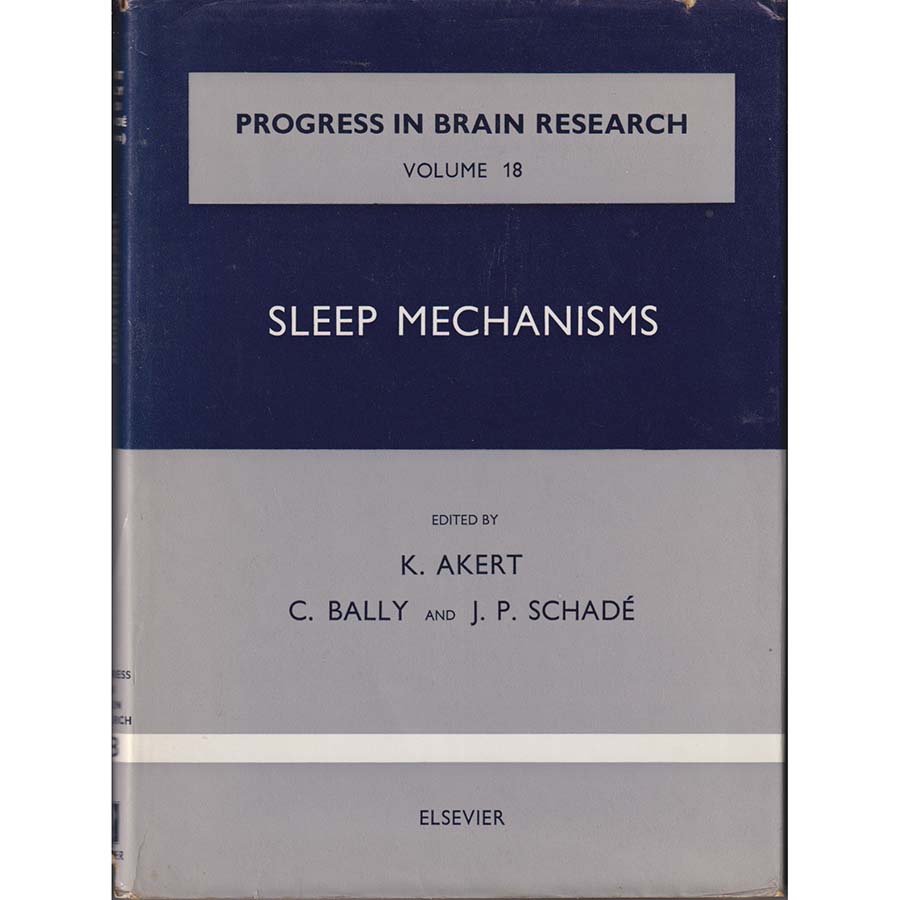
Published in 1964, "Progress in Brain Research - Volume 18 - Sleep Mechanisms" by K Akert, C Bally, and JP Schade stands as a noteworthy specimen of academic publishing from the mid-20th century. This volume captures a specific moment in the evolution of neuroscience, particularly the study of sleep. The cover design, typical of the Elsevier branding of the era, is a no-frills affair: a stark, utilitarian approach that prioritises information over aesthetics. The title is emblazoned in bold typeface against a muted background, evoking a sense of seriousness and scholarly intent. The paperback vibe resonates with a time when scientific literature was increasingly accessible yet still retained an air of exclusivity; it beckons the reader with the promise of cutting-edge research while reminding them of the weighty nature of the topics explored within.
The authors of this volume, K Akert, C Bally, and JP Schade, appear somewhat obscure in the broader landscape of scientific literature. While K Akert has been noted for contributions to neuroscience, particularly in the realms of neuroanatomy, the individual profiles of C Bally and JP Schade are less documented. This lack of detailed biographical information raises intriguing questions about their contributions to the field and whether they were instrumental in shaping the discourse surrounding sleep mechanisms during the time. The absence of a more substantial record might suggest that they were prominent within specific academic circles without having achieved widespread fame or recognition. This leaves the reader curious about their influences and the collaborative dynamics that may have existed during the writing of this volume.
The year 1964 was a pivotal time in both scientific inquiry and societal interest in the workings of the human brain. The post-war era had ushered in a new age of exploration in psychology and neuroscience, with advancements in technology facilitating deeper investigations into previously uncharted territories of the mind. The study of sleep was beginning to gain traction, spurred by a growing recognition of its importance to overall health and well-being. This volume contributes to a burgeoning body of knowledge, reflecting the zeitgeist of an era eager to unravel the mysteries of human consciousness and behaviour. The research compiled within showcases the methodologies and theories prevalent at the time, encapsulating the scientific fervour that characterised the 1960s.
Within "Progress in Brain Research - Volume 18 - Sleep Mechanisms," the authors delve into the complexities of sleep, examining various physiological and psychological aspects. The text is dense with technical terminology and research findings, making it a challenging read for the layperson but a valuable resource for scholars and practitioners in neuroscience. The structure of the book reflects the academic conventions of the time, with chapters dedicated to specific studies, findings, and implications, allowing for a comprehensive understanding of the subject matter. The interplay of theoretical frameworks and empirical findings illustrates the authors' commitment to advancing knowledge in their field, even if the presentation may lack the modern flair of contemporary scientific texts.
In terms of print culture, this volume exemplifies the shift towards greater accessibility of academic research that characterised the 1960s. With the proliferation of paperback editions, scholarly work began to reach a wider audience, including not just academics but also students and interested readers. This shift was vital in fostering a culture of inquiry and intellectual engagement, encouraging dialogue and further exploration of specialised topics like sleep mechanisms. The production quality of the book, while not lavish, reflects a practical approach that prioritises the dissemination of information over decorative elements. The typesetting and layout adhere to the conventions of the time, with a focus on clarity and readability, essential for conveying complex scientific ideas.
As a cultural object, "Progress in Brain Research - Volume 18 - Sleep Mechanisms" serves as a historical artefact that encapsulates the scientific climate of the 1960s. Its publication marks a time when the scientific community was beginning to more fully appreciate the intricacies of sleep, paving the way for future research that would continue to evolve and expand our understanding of this fundamental aspect of human biology. The book stands as a testament to the intellectual pursuits of its time, reflecting both the aspirations and limitations of mid-20th-century neuroscience. In this regard, it holds a unique place within the annals of scientific literature, even if it may not have achieved the widespread acclaim of more popular works.
In conclusion, while "Progress in Brain Research - Volume 18 - Sleep Mechanisms" may not be a household name, it represents a significant contribution to the field of neuroscience during a transformative period in scientific exploration. The authors, though not widely recognised, played a role in advancing the discourse surrounding sleep, offering insights that remain relevant in contemporary discussions. For those interested in the history of brain research and the evolution of sleep studies, this volume offers a window into the past, reminding us of the foundational work that continues to inform modern science. Crappy Old Books invites readers to reflect on such forgotten gems, as they reveal the rich tapestry of intellectual pursuit that shapes our understanding of the world.