AI-assisted note, based on the text and a physical inspection of this copy.
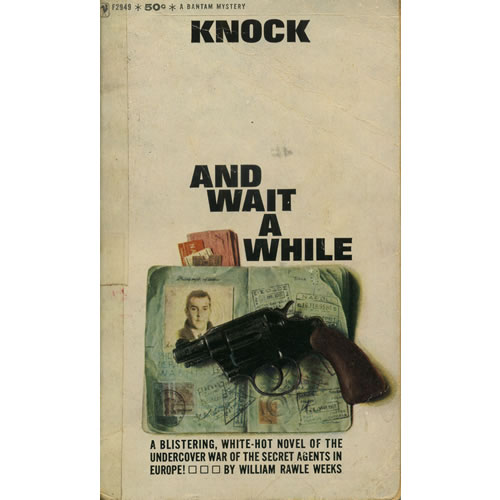
"Knock And Wait A While," authored by William Rawle Weeks, is a title that embodies the era of its publication while offering a glimpse into the cultural fabric of the 1960s. Published by Bantam Books in 1965, the book presents itself with the typical aesthetic of mid-century paperback novels. The cover design features bold, eye-catching typography set against a background that hints at a narrative rich in intrigue and perhaps a touch of melodrama. This visual appeal is characteristic of the time, where publishers leaned heavily on striking graphics that would entice readers browsing the shelves of their local bookshops.
The condition of the paperback itself reflects the durability often found in books of this era, yet it bears the marks of time, with yellowing pages and a slightly dog-eared cover. Such physical attributes evoke a sense of nostalgia, transporting readers not only to the narrative within but also to the period when paperbacks became a staple in popular culture. The tactile experience of holding this book—its lightweight, flexible cover, and the distinct smell of aged paper—is something that modern readers might find both charming and quaint. In today’s digital age, there is a certain allure to the physicality of a paperback, especially one that has seen its share of readers, each leaving a mark on its pages.
William Rawle Weeks appears to be a relatively obscure figure within literary culture, with limited biographical information readily available. This lack of documentation makes it challenging to place him definitively within the broader context of publishing history or literary movements. It suggests that he may have been more of a niche author, appealing to a specific readership rather than achieving widespread recognition. This obscurity often adds a layer of mystery to the reading experience, allowing readers to engage with the text without preconceived notions about the author's intent or literary prowess.
Published during a transformative period in American and British culture, 1965 was a year marked by significant social upheaval and change. The Vietnam War was escalating, civil rights movements were gaining momentum, and youth culture was evolving rapidly. Literature from this time often reflects the tensions and aspirations of the era, and while it is unclear how "Knock And Wait A While" fits into this narrative, it is possible that the book engages with the themes of its time in a way that resonates with the reader. The title itself suggests an invitation to pause and reflect, a notion that could be interpreted as a commentary on the hurried pace of modern life in the 1960s.
As one delves into "Knock And Wait A While," the prose unfolds with a simplicity that mirrors the directness of its title. The narrative flow, while occasionally meandering, captures moments of introspection and dialogue that feel emblematic of the time. The characters are sketched in broad strokes, allowing for a quick engagement with their motivations and desires. This writing style may not appeal to those seeking literary depth, but it does provide a snapshot of the author's intent to reach a wide audience, fitting in with the popular literature of the day.
The book’s themes, while not groundbreaking, resonate with universal experiences of waiting and anticipation, perhaps reflecting the societal restlessness of the 1960s. Readers might find themselves relating to the characters' desires and frustrations, even if the narrative does not delve deeply into the psychological complexity one might expect from more recognised literary works. The cultural object that is "Knock And Wait A While" serves as a reminder of the era’s literary trends—often focused on accessibility and entertainment rather than profound introspection.
In conclusion, "Knock And Wait A While" is a cultural artifact that encapsulates a moment in time, showcasing the paperback format's evolution and the broader cultural landscape of the 1960s. While William Rawle Weeks may not hold a prominent place in literary history, his work offers a unique glimpse into a specific readership and moment. For those who appreciate the quirks of past literature, this book stands as a testament to Crappy Old Books, inviting readers to engage with a piece of history that is both reflective and representative of its time.