AI-assisted note, based on the text and a physical inspection of this copy.
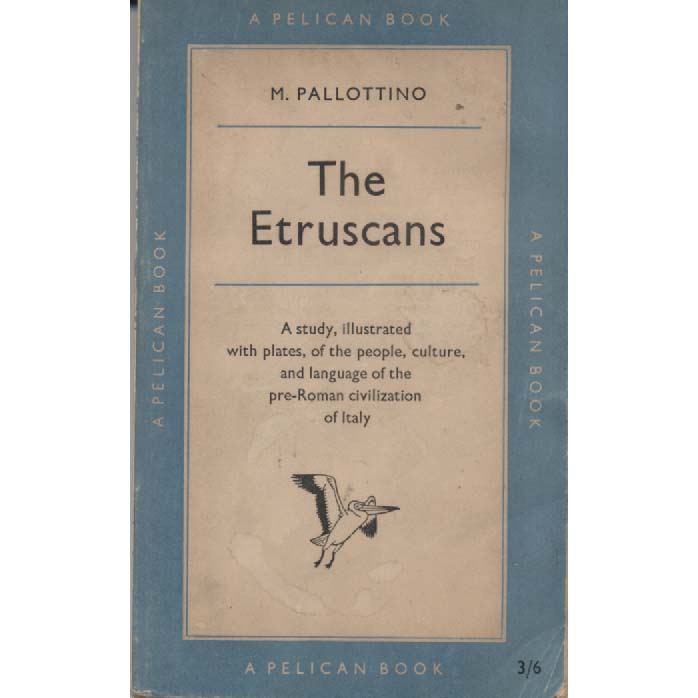
Published in 1955 by Pelican Books, "The Etruscans" by M Pallottino is a curious blend of scholarly insight and mid-20th-century publishing aesthetics. The paperback edition showcases a cover design typical of the era: a minimalist yet striking illustration that hints at the rich history contained within. The muted colours and bold typography evoke a sense of both academic seriousness and accessibility, which Pelican Books aimed to achieve with their series—making knowledge approachable for the general reader. As a cultural object, this book embodies the spirit of post-war intellectual curiosity, where there was a thirst for understanding ancient civilisations amidst the backdrop of modernity. The feel of the book, with its slightly aged texture and faint scent of old paper, adds to its charm, making it a delightful artifact for collectors and casual readers alike.
M Pallottino, while not a household name, occupies an interesting place in the literary landscape, particularly concerning historical scholarship. He is known for his work on Etruscan history and has contributed significantly to the understanding of this ancient culture through various publications. However, details about Pallottino’s life and broader contributions appear limited, suggesting that he may not have achieved the same level of recognition as some of his contemporaries. His work seems to cater to an audience interested in delving deeper into the nuances of ancient civilisations, yet he remains somewhat obscure in the wider context of 20th-century historical writing.
The year 1955 marked a period of cultural transformation in many parts of the world, with post-war optimism permeating various aspects of life, including literature. In the wake of World War II, there was an increased interest in exploring history and human achievements, perhaps as a way to understand and prevent the atrocities of the recent past. The rise of paperback books during this time made literature more accessible to a broader audience, allowing works like "The Etruscans" to reach readers who may not have been able to afford hardcovers. This cultural milieu fostered a spirit of inquiry and learning, making Pallottino's exploration of the Etruscans particularly relevant as readers sought to connect with the roots of Western civilisation.
The content of "The Etruscans" itself is indicative of the era's scholarly approach to ancient cultures. Pallottino meticulously examines Etruscan society, art, and influence on Roman culture, providing a comprehensive overview that would appeal to both casual readers and those with a more serious interest in archaeology and history. The book often conveys a sense of reverence for the subject matter, inviting readers to appreciate the intricacies of Etruscan life and its eventual legacy. Yet, while the scholarship reflects a solid grasp of the subject, it may come off as dry or overly academic to those expecting a more narrative-driven exploration of the ancient world.
The format of the book, typical of Pelican's offerings, also plays a significant role in its impact. The paperback binding, while practical, may be seen as a double-edged sword. On one hand, it enhances accessibility; on the other, it lacks the durability of hardback editions, leading to concerns about the longevity of the text. Readers who cherish the tactile experience of flipping through pages may find themselves frustrated by the fragility of the book, especially as time takes its toll on paper products. Nevertheless, for those who appreciate the history of print culture, this book serves as a reminder of the transitional phase in publishing during the mid-20th century.
Readers interested in the Etruscans will find "The Etruscans" to be a valuable addition to their collection, though they may need to temper their expectations regarding the narrative style. Whether approached as a scholarly text or a casual read, it offers a window into an ancient civilization that shaped much of what would eventually become the Roman Empire. The blend of Pallottino's academic rigour and the book's mid-century design makes it a noteworthy piece for both historians and enthusiasts of vintage literature.
In the end, "The Etruscans" by M Pallottino stands as a testament to the era of its publication, both in terms of content and form, and serves as a fascinating example of how ancient cultures continue to inspire scholarly inquiry. For those who relish the charm and quirks of Crappy Old Books, this title is certainly worth a look.