AI-assisted note, based on the text and a physical inspection of this copy.
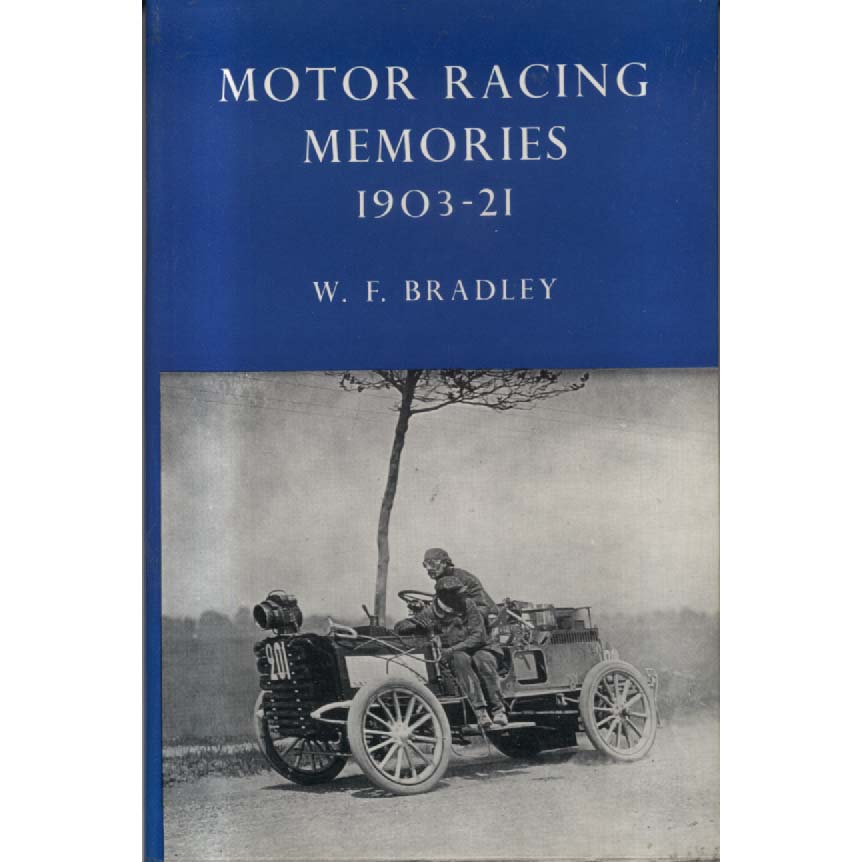
“Motor Racing Memories” by WF Bradley is a curious cultural artifact that encapsulates the vibrant, yet often chaotic, world of motorsport in the late 1950s. Published in 1960 by Motor Racing Publications, this book serves as a nostalgic look back at the thrilling events and personalities that defined an era of racing when speed and danger were intertwined like the very curves of a racetrack. The cover design is a striking representation of its time, featuring bold typography and a dynamic illustration of a racing car that seems to leap off the page—an aesthetic that captures the adrenaline rush associated with motor racing. The paperback format, with its slightly worn edges and faded colours, not only adds to its charm but also speaks to the tactile relationship readers had with print culture during this period, inviting them to hold onto a piece of history.
WF Bradley is not a household name in the literary world, and information about him appears to be scant. He seems to occupy a niche space in the publishing history of motor racing literature, often overshadowed by more prominent figures in the genre. This lack of biographical detail raises questions about his background and contributions to the field, making him an intriguing figure, albeit one that remains largely obscure. His work in “Motor Racing Memories” suggests a passion for the sport, and it is evident that he had a keen eye for detail, but the absence of extensive records leaves readers speculating about his influence and standing within the broader context of motorsport literature.
The year 1960 was a pivotal moment in both motorsport and publishing culture. The world was still reeling from the post-war innovations that had influenced automobile design and racing strategies, which were becoming increasingly sophisticated. Internationally, motorsport was gaining popularity, with events like the Formula One World Championship capturing the imagination of fans. This was also a time when print media was flourishing, with specialised publications catering to niche interests such as motor racing. “Motor Racing Memories” fits neatly into this cultural landscape, serving as both a historical document and a reflection of the enthusiasm surrounding the sport. The book captures the mood of an era when motorsport was both a dangerous pursuit and a burgeoning spectacle, drawing in audiences eager to experience the thrill through the written word.
As one delves into the pages of “Motor Racing Memories,” the narrative unfolds with a series of anecdotes, reflections, and insights that offer a glimpse into the lives of those who lived and breathed motor racing. The text is peppered with vivid descriptions that evoke the sound of roaring engines and the smell of burning rubber, transporting readers to the heart of the action. Bradley’s prose, while perhaps not polished by the standards of literary greats, carries a certain authenticity that resonates with the fervour of racing enthusiasts. The book reads as both a memoir and a tribute, capturing the passion and peril that defined the sport during its formative years.
In examining the cover design, it is clear that Motor Racing Publications aimed to attract a specific audience. The bold graphics and energetic imagery mirror the excitement of the sport itself, appealing to both avid fans and casual readers alike. However, there is a certain kitsch quality to the design that may not stand the test of time for modern sensibilities. The colour palette, while vibrant, reflects the era’s aesthetic choices that can feel dated today. Yet, therein lies its charm; it serves as a time capsule, reminding readers of the past while evoking a sense of nostalgia for a simpler time in motorsport.
Moreover, the physicality of the paperback edition enhances the reading experience. Its worn spine and slightly dog-eared pages suggest that it has been cherished, passed through hands eager to devour the stories within. This tactile quality is an essential part of the book's appeal, as it invites readers to engage with the text on a more personal level. In an age of digital convenience, there is something inherently satisfying about holding a book that bears the marks of its history, offering a connection to those who have come before.
The structure of “Motor Racing Memories” is somewhat disjointed, with chapters that vary in length and focus. While this may frustrate some readers seeking a coherent narrative, it reflects the nature of memory itself—fragmented and nonlinear. This aspect could be interpreted as a metaphor for the unpredictable world of racing, where one moment can change everything. Bradley’s ability to capture these fleeting moments, even if imperfectly, allows for a deeper appreciation of the sport's unpredictability.
Ultimately, “Motor Racing Memories” stands as a testament to a pivotal moment in motorsport history. Its publication in 1960, amidst a backdrop of cultural and technological change, positions it as an important piece within the canon of racing literature. The book not only preserves the memories of a bygone era but also serves as a reminder of how far the sport has evolved. For those who revel in the world of motorsport, this book offers a glimpse into the past that is both charming and enlightening.
In conclusion, “Motor Racing Memories” by WF Bradley is more than just a collection of stories; it is a cultural object that encapsulates the spirit of a time when motor racing was at a crossroads. Its aesthetics, coupled with the author’s obscure yet passionate contribution to the genre, make it a worthwhile read for enthusiasts and historians alike. As part of the Crappy Old Books collection, it invites readers to dive into the nostalgia of a thrilling world that continues to captivate audiences today.