AI-assisted note, based on the text and a physical inspection of this copy.
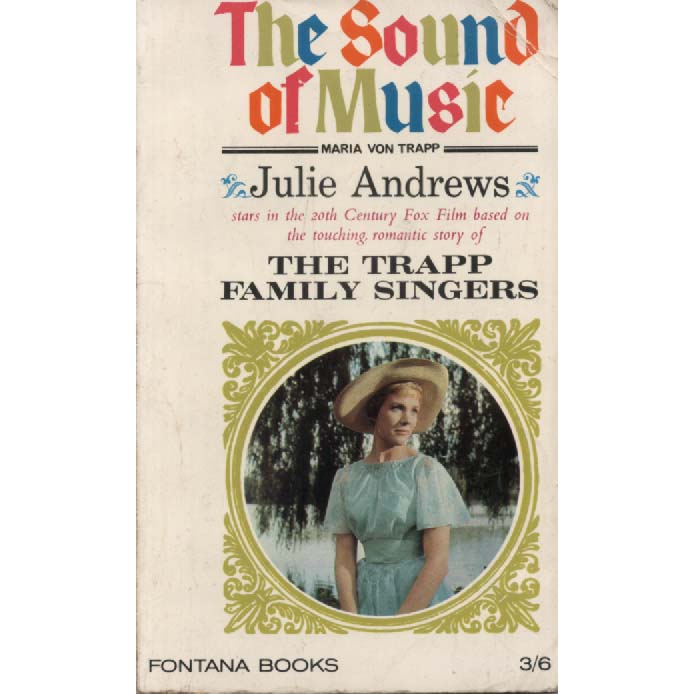
The Trapp Family Singers, penned by Maria von Trapp and published in 1968 by Fontana Books, presents a rather peculiar snapshot of cultural nostalgia wrapped in the allure of a bygone era. This book, with its rather unassuming cover design, captures the essence of mid-20th century publishing aesthetics. The paperback edition features a somewhat faded photograph of the Trapp family, exuding a sense of warmth and familial charm that invites readers into a world filled with music and heartwarming tales. The colours are muted, indicative of the time, and the font is straightforward, reflecting a practical approach to design typical of that period's mass-market paperbacks. The book's physical presence, with its slightly worn feel and the characteristic smell of aged paper, suggests a beloved item that has been thumbed through by many over the decades, adding to its charm as a cultural object.
Maria von Trapp, the author, is perhaps best known as the matriarch of the Trapp Family, whose story was immortalised in the musical and film The Sound of Music. While many readers may associate her primarily with this cinematic portrayal, her literary contributions, particularly in this volume, provide a deeper insight into the family's musical journey. Von Trapp's narrative is enriched by her experiences as a mother, a singer, and a refugee, yet she remains somewhat of an enigmatic figure. Much of her life story is intertwined with the family's escape from Austria during the rise of the Nazis, yet little detailed biographical information exists outside of her published works. It seems that while she enjoyed a brief moment in the limelight, her broader influence within literary culture remains underexplored and lightly documented.
The year 1968 marked a period of significant cultural upheaval and transformation. The world was in the throes of social revolutions, with movements advocating for civil rights, gender equality, and anti-war sentiments gaining momentum. In this context, The Trapp Family Singers stands out as an artifact of a more conservative, idyllic vision of family life, contrasting sharply with the turbulent realities of the time. The book encapsulates a yearning for simplicity and togetherness, values that resonated with a public seeking solace amidst chaos. It reflects a nostalgia for pre-war Europe, where music and family were seen as integral to happiness and stability. This longing is particularly evident in the Trapp family's performances and experiences, which von Trapp recounts with a tone that oscillates between reverence and reflection.
The narrative itself is a blend of memoir and musical history, detailing the family's rise to fame as they toured and performed across the United States. Von Trapp’s prose is imbued with a sense of wonder, capturing the joy of singing together and the bonds that music creates within familial relationships. However, the writing can sometimes feel overly sentimental, veering into saccharine territory. While this might appeal to certain readers, others may find it lacking in depth, as it glosses over more complex emotions and struggles faced by the family during their tumultuous journey. The style is straightforward, devoid of literary flourishes, which may reflect both the author’s intention to communicate directly and the expectations of mainstream readers at the time.
The book's reception can be seen through the lens of its cultural impact rather than its literary merit alone. It paved the way for the family’s continued legacy, further solidifying their place in American pop culture. The enduring popularity of the film adaptation has ensured that the Trapp family story remains alive in public consciousness, yet the book itself often takes a backseat in discussions about their legacy. This phenomenon highlights the tension between literary works and their adaptations into more commercially appealing formats, which often overshadow the original texts. The Trapp Family Singers, while a significant memoir, struggles to maintain its own identity amidst the shadows cast by its cinematic counterpart.
In terms of print culture, the 1968 edition of The Trapp Family Singers belongs to a genre of autobiographical works that gained traction in the post-war era. This period saw a surge in personal narratives as a means of understanding collective experiences, particularly in the context of war and displacement. Von Trapp's account fits neatly within this framework, as it recounts the experiences of a family navigating the tumult of their times through the unifying power of music. The book's publication by Fontana Books, a publisher known for producing affordable paperbacks, ensured that it reached a wide audience, further embedding the Trapp family's story into the fabric of popular culture.
The legacy of The Trapp Family Singers is a testament to the power of storytelling and the human experience. It serves as a reminder of the comforts of family, music, and shared experiences, even in the face of adversity. While the book may not stand out as a literary masterpiece, it occupies a unique place in cultural history, bridging the gap between personal narrative and collective memory. Readers seeking a glimpse into the lives of the Trapp family will find warmth and charm in von Trapp’s recounting, even if it lacks the depth and complexity that some might desire.
In conclusion, The Trapp Family Singers, as reviewed by Crappy Old Books, exemplifies a cultural artifact that reflects its time, resonating with themes of nostalgia, simplicity, and the familial bond through music. Although Maria von Trapp’s literary contributions may not be deeply explored in mainstream literary circles, her story continues to captivate audiences, ensuring that the Trapp family’s legacy endures in both literature and popular culture.