AI-assisted note, based on the text and a physical inspection of this copy.
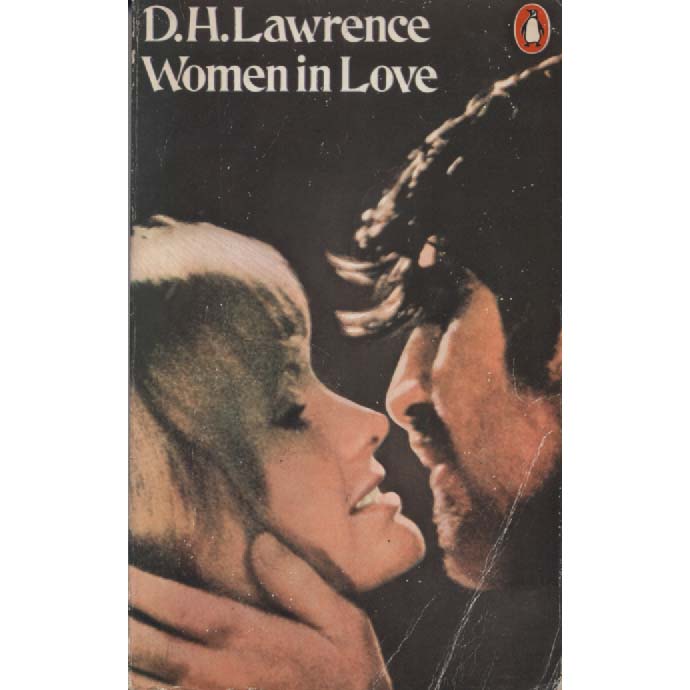
“Women In Love,” published in 1969 by Penguin Books, is a novel that has been both lauded and loathed in literary circles. This particular edition features a vibrant cover design typical of Penguin’s mid-century aesthetic, with bold colours and a minimalist style that draws the eye. The paperback format adds a certain fragility to the book, a reminder of the transient nature of print culture in the late 20th century. The tactile experience of flipping through its pages, with their slightly yellowed edges and the faint smell of aged paper, evokes a nostalgic connection to a time when literature was more intimately experienced in physical form.
D.H. Lawrence, the author, is a prominent figure in 20th-century English literature, known for his explorations of human relationships and the complexities of love and sexuality. Born in 1885, Lawrence’s works often reflect his controversial views on society and human nature, placing him at the intersection of modernist and post-Victorian literature. “Women In Love” is regarded as one of his masterpieces, continuing to provoke discussion about gender roles and emotional depth. Despite his prominence, Lawrence's life was marked by conflict, both personally and in his reception by critics. His avant-garde ideas often put him at odds with conventional sensibilities, leading to a complex legacy that is still debated today.
The year 1969, when this edition was published, was a period of significant cultural upheaval. This was the era of the counterculture movement, a time when traditional norms were being challenged, and the exploration of individual freedom became paramount. The themes in “Women In Love,” including the quest for identity and the complexities of relationships, resonate deeply with the sentiments of the late 1960s. Lawrence’s portrayal of love as something that transcends societal boundaries and expectations aligns with the broader cultural shifts occurring at the time, making this novel not just a work of literature but a reflection of its historical moment.
In “Women In Love,” Lawrence delves into the lives of two sisters, Ursula and Gudrun Brangwen, as they navigate their relationships with two men, Gerald Crich and Birkin. The narrative is dense with psychological insight and explores the nuances of emotional and sexual connections. Lawrence’s prose is a blend of poetry and stark realism, creating an immersive experience that captures the intensity of human emotion. However, readers may find the pacing uneven; some sections burst with vibrancy, while others meander into lengthy philosophical musings. This duality can be both a strength and a weakness, depending on the reader’s patience and literary preferences.
The cover design of this particular edition is emblematic of the Penguin brand, known for its commitment to making literature accessible. However, one might argue that the cover does little to encapsulate the tumultuous emotional landscape that Lawrence navigates within its pages. The illustration may seem somewhat simplistic in contrast to the complex themes explored, possibly leading to misconceptions about the book’s depth and substance. The visual representation does, however, serve as a reminder of the era in which it was published, blending modern design with classic literary heritage.
As for the cultural impact of “Women In Love,” it is both a product of its time and a timeless exploration of love and relationships. Lawrence’s candid treatment of sexuality was ahead of its time, and while it has been influential in literary circles, it also raised eyebrows among more conservative audiences. The book’s exploration of the psychological dimensions of love, particularly in the context of the early feminist movements, makes it a relevant read even today. Many contemporary readers may approach it with a modern lens, interpreting its themes in ways that resonate with current discussions around gender and power dynamics.
While D.H. Lawrence remains a well-documented figure in literary history, it is worth noting that some aspects of his life and works have been subject to varied interpretations. Despite this, his contribution to literature, especially in works like “Women In Love,” is undeniable. The book continues to spark conversations about the nature of love, the role of women in society, and the existential struggles that define human relationships. In a way, Lawrence's work reflects the ongoing dialogue about personal freedom versus societal expectations, which remains relevant in contemporary discourse.
In conclusion, “Women In Love” serves as a fascinating cultural object that encapsulates the complexities of love and human connection against the backdrop of its time. The 1969 Penguin edition, with its distinctive cover and paperback charm, invites readers into Lawrence’s richly textured world. While the book may polarise opinions, its exploration of the intricacies of relationships ensures its place in the literary canon. For those interested in the interplay of literature and culture, “Women In Love” is a significant work worth revisiting, especially through the lens of Crappy Old Books, which celebrates such literary artefacts from our past.