AI-assisted note, based on the text and a physical inspection of this copy.
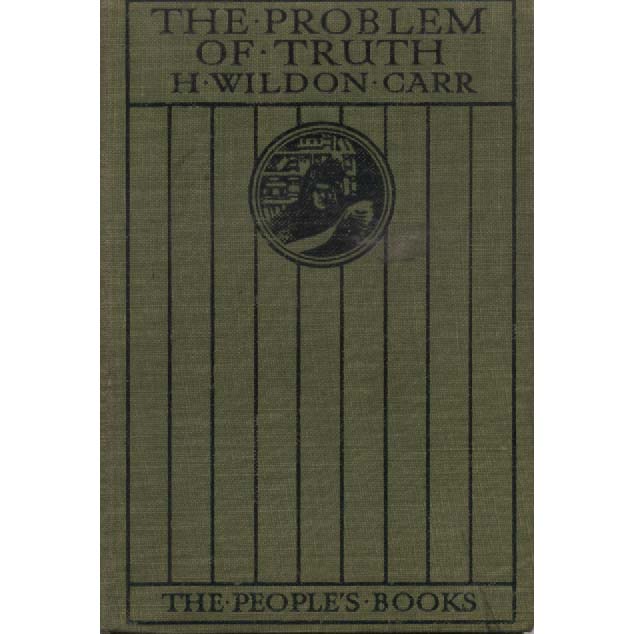
"The Problem of Truth" by H Wilsob Carr is a fascinating relic from 1913, a year that teetered on the brink of modernity while still clinging to the vestiges of Victorian thought. The book is a paperback, typical of its time, with a cover design that reflects the aesthetic sensibilities of the early twentieth century. The cover features muted colours and an ornate font that invokes a sense of serious contemplation, suggesting that the content within grapples with weighty philosophical themes. The physicality of the book, with its slightly yellowed pages and soft spine, evokes a sense of nostalgia, as if it has been lovingly thumbed through by a series of intellectual seekers over the past century.
One cannot help but appreciate the cultural context surrounding the publication of "The Problem of Truth." In 1913, the world was undergoing seismic shifts, with the onset of modernist thought challenging traditional narratives and established beliefs. The First World War was looming, and there was a palpable tension in the air as society wrestled with questions of morality, truth, and the human condition. Carr’s work emerges from this milieu, likely engaging with the philosophical debates of the time, which included existentialism and the nature of reality itself. The early twentieth century was a fertile ground for such discussions, as writers, artists, and thinkers sought to redefine what it meant to understand truth in a rapidly changing world.
As for H Wilsob Carr himself, there appears to be scant information available. His presence in the literary landscape of the early twentieth century is subtle, almost elusive, suggesting he may not have achieved significant notoriety or widespread recognition. This obscurity might indicate that Carr was a minor figure in the philosophical discourse of his time, or perhaps a writer who published works that did not resonate deeply with the broader cultural currents. The lack of a substantial biographical record creates a sense of mystery around his motivations and influences, leaving readers to ponder the extent of his contributions to philosophical thought and print culture.
The book's content, while not extensively documented in terms of reviews or scholarly discussion, can be inferred to engage with the complexities of truth, a theme that has permeated philosophical inquiry for centuries. The early 1900s were rich with debates about the nature of truth, perception, and reality—ideas that were being explored by contemporaries such as Bertrand Russell and Henri Bergson. Carr’s examination of these topics could serve as a reflection of the socio-political climate of his time, grappling with the consequences of war, industrialisation, and the shifting paradigms of knowledge.
Within the pages of "The Problem of Truth," Carr likely employs a style that is both reflective and analytical, characteristic of philosophical texts of the era. The prose may be dense, requiring careful reading, and possibly laced with references to earlier philosophical traditions. The book's structure might also mirror the conventions of its time, with chapters that methodically dissect various aspects of truth, inviting readers to engage deeply with complex ideas.
Moreover, the production quality of the book itself is worth noting. Dodge Publishing, known for its emphasis on literary and educational works, adds a layer of credibility and seriousness to Carr's text. The physical format—a softcover printed on relatively durable paper—suggests an intention to circulate ideas widely, making philosophical discourse accessible to a broader audience than might have been possible with more expensive, hardbound editions.
In the context of print culture, "The Problem of Truth" occupies an interesting position. The early twentieth century saw an explosion of printed materials, with newspapers, pamphlets, and books proliferating. This democratization of literature allowed for a wider range of voices, including those like Carr, to enter the conversation. However, it also meant that many works, like this one, could easily fade into obscurity, overshadowed by more prominent figures and trending ideas.
In conclusion, "The Problem of Truth" by H Wilsob Carr serves as an intriguing cultural object, encapsulating the philosophical inquiries of its time while also reflecting the tangible qualities of early twentieth-century print culture. Carr remains a somewhat enigmatic figure, with little documented about his life or works, which adds to the allure of this book. The examination of truth, particularly during a period of significant upheaval, resonates strongly even today. For those interested in the nuances of philosophical thought and the historical context of literature, this book offers a glimpse into a world grappling with the very essence of reality. It stands as a testament to the myriad voices that sought to explore profound questions in an era of transformation. Crappy Old Books invites readers to rediscover such hidden gems and reflect on their enduring relevance.