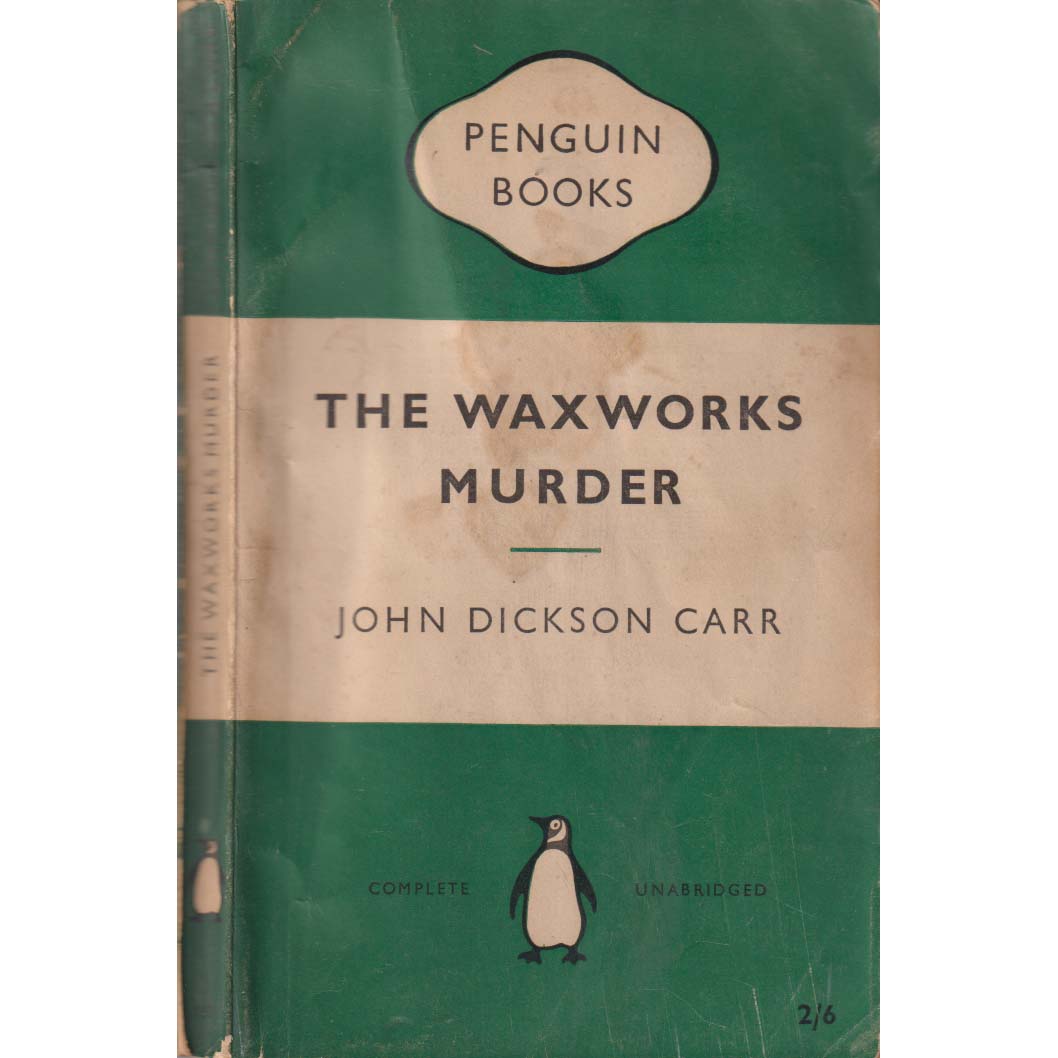
AI-assisted note, based on the text and a physical inspection of this copy.
The Waxworks Murder is one of those curious novels where the murky depths of crime fiction collide with a peculiar fascination for the macabre, all wrapped up in a paperback that bears the hallmarks of mid-20th century publishing. The cover design of this edition from Penguin Books, with its striking yet slightly garish artwork, encapsulates a period that thrived on sensationalist narratives. The paperback itself feels like a relic, its pages yellowed with time, which adds an air of nostalgia and authenticity. Printed in the era when paperbacks were gaining traction and mass-market appeal, it is a product of a time when the genre was evolving and adapting to new audiences eager for thrilling escapism.
John Dickson Carr, the author, is best known as a master of the locked-room mystery, a niche within the detective genre that challenges readers to unravel enigmas that seem impossible. Born in 1906, Carr's career spanned several decades, and he produced a plethora of works throughout his life, establishing a reputation that endures, albeit somewhat overshadowed by his contemporaries. He often incorporated elements of historical settings and psychological complexity into his narratives, making him a unique figure in crime fiction. However, while some readers might have encountered his name through various anthologies or literary retrospectives, Carr remains less prominent in the broader cultural consciousness compared to other mystery writers of his time. His obscurity outside dedicated genre circles raises questions about how literary legacies are formed and remembered.
Published in 1956, The Waxworks Murder emerges from a cultural landscape rife with post-war anxieties and a burgeoning fascination with the grotesque. The 1950s were marked by significant shifts in societal norms, and the genre of crime fiction often mirrored these changes, delving into the darker aspects of human nature. This period also saw the rise of television and mass media, which began to shape public perception of crime and morality. As readers turned to fiction for both entertainment and a reflection of their tumultuous world, Carr's work provides a curious intersection of traditional mystery elements with a more sinister twist, as the title suggests. The notion of waxworks—a blend of artistry and eeriness—serves as an apt metaphor for the duality of appearances versus reality, a theme that resonates with the anxieties of the era.
The Waxworks Murder is set in a world that draws heavily on atmospheric tension, and Carr’s prose is adept at building suspense while weaving together intricate plots. The narrative unfolds with a deliberate pace, allowing for a careful layering of clues that invite readers to engage actively with the mystery. The waxworks themselves become a character of sorts, their lifelike representations posing questions about identity and mortality. This interplay between the living and the inanimate creates an unsettling backdrop for the story, enhancing the reader's sense of unease and intrigue. However, the book can feel weighed down by its adherence to genre conventions, occasionally sacrificing character depth for plot complexity, which may leave some readers feeling distanced from the unfolding drama.
The cultural significance of The Waxworks Murder extends beyond its narrative structure. It reflects a moment in time when literature was grappling with the implications of human behaviour in a rapidly changing world. The waxworks, often associated with both entertainment and horror, mirror society's fascination with death and decay, themes that were becoming increasingly relevant in the mid-20th century. The book's exploration of these themes, while rooted in genre tropes, allows it to resonate with readers who seek more than just a straightforward mystery.
As we delve deeper into Carr's stylistic choices, it becomes evident that the author excels in creating an immersive atmosphere. His ability to evoke sensory details—from the chilling ambiance of the wax museum to the unsettling silence surrounding the murder—adds layers to the reading experience. Yet, the book occasionally suffers from a lack of pacing, particularly in its middle sections, where the plot can feel overly convoluted. This unevenness might frustrate some readers, particularly those who prefer a more streamlined narrative. Nonetheless, Carr’s dedication to crafting a complex puzzle is commendable and showcases his skill as a puzzle-maker, a trait that endeared him to mystery aficionados.
In examining the book's legacy, it is clear that The Waxworks Murder occupies a unique space within Carr's oeuvre. While it may not be his most celebrated work, it exemplifies his penchant for intricate plotting and atmospheric storytelling. Additionally, the book serves as a fascinating artefact of its time, offering insights into the cultural preoccupations of the 1950s. The convergence of art, death, and the uncanny within its pages mirrors the societal explorations of an era grappling with the remnants of war and the anxieties of modernity.
In conclusion, The Waxworks Murder is a compelling exploration of crime fiction that captures the spirit of its time while also providing an engaging mystery for readers. The combination of a striking cover, atmospheric writing, and the underlying themes of identity and mortality contribute to its cultural significance. While John Dickson Carr may not be a household name, his work continues to resonate within the genre, and this novel stands as a testament to his craftsmanship. For those intrigued by the darker corners of literary history, Crappy Old Books offers a window into this curious cultural object, inviting readers to reflect on both the story and the era from which it emerged.