AI-assisted note, based on the text and a physical inspection of this copy.
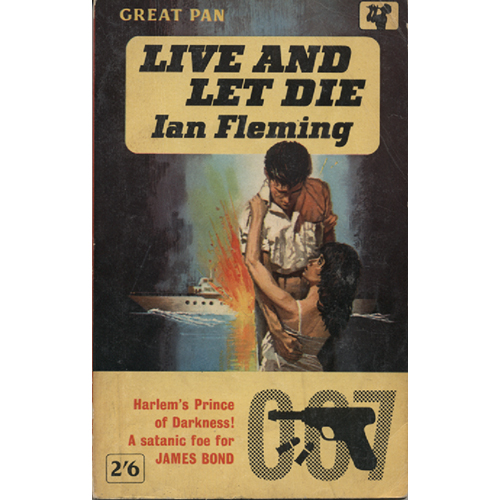
“Live And Let Die” by Ian Fleming is a quintessential piece of mid-20th century literature that captures the spirit of its era while also reflecting the author’s flair for thrilling narrative. Published in 1962 by Pan, this paperback edition is adorned with a cover that exudes a retro charm—bright colours and bold graphics typical of the time, enticing readers with a sense of adventure and intrigue. The design encapsulates the essence of the James Bond franchise, which had begun to permeate popular culture, making the book not just a novel but a cultural artefact that resonates with the glamour and espionage of its subject matter.
The era in which “Live And Let Die” was published was characterised by significant social and political changes. The early 1960s were a time of heightened tension during the Cold War, a backdrop that often influenced literature and film. The Bond novels offered escapism, featuring a suave protagonist navigating a world of danger, betrayal, and seduction. This particular book follows Bond as he embarks on a mission that takes him from the glitzy world of New York City’s high society to the voodoo-infused landscape of Jamaica. Fleming’s ability to blend exotic locales with high-stakes intrigue reflects the popular fascination with adventure and danger in a rapidly changing world.
Ian Fleming, the mastermind behind the James Bond series, was born in 1908 and had a colourful life that included a stint in naval intelligence during World War II. This background undoubtedly influenced his writing, lending authenticity to the espionage elements of his stories. While Fleming achieved considerable fame for creating the iconic character of James Bond, his life outside of writing remains somewhat obscured by the larger-than-life persona of 007. Despite his prolific output, there is little recorded about his personal philosophy or literary aspirations beyond the Bond franchise. This makes his position in literary culture both prominent and somewhat enigmatic; he is often discussed more in terms of the cultural phenomenon he created rather than his individual literary merit.
The cover design of the Pan edition of “Live And Let Die” is emblematic of the paperback revolution of the time, which made literature more accessible to the masses. The book’s dimensions fit comfortably into the hands of readers, a style that became increasingly popular in the post-war era. The tactile experience of holding a paperback, with its slightly worn edges and the faint smell of aged paper, evokes a sense of nostalgia. One can almost imagine the readers of the time, perhaps lounging in a sun-drenched garden or on a crowded train, turning the pages in anticipation of the next twist in Bond’s escapades. This tactile quality adds a layer of intimacy that digital formats often fail to replicate.
Fleming’s writing style in “Live And Let Die” is straightforward yet engaging. He employs a mixture of sharp dialogue and vivid descriptions, crafting a narrative that pulls readers into the heart of the action. While some critics have pointed out that his prose occasionally leans towards the formulaic, this is arguably part of the charm—Fleming knows his audience and delivers precisely what they seek: excitement, glamour, and a touch of danger. The pacing of the book is brisk, and the plot unfolds with a sense of urgency that keeps readers on their toes, making it a gripping read even by contemporary standards.
However, it is essential to acknowledge the cultural sensitivities present in “Live And Let Die.” Written during a time when racial stereotypes were prevalent in literature, the depiction of certain characters and settings can be problematic by today’s standards. The portrayal of voodoo culture and the characters associated with it has sparked discussions about representation and cultural appropriation. While Fleming may have intended to create an exotic and thrilling narrative, modern readers must grapple with the implications of these portrayals, considering how they reflect the prejudices of the time.
The publication year of 1962 also places “Live And Let Die” within a specific context of popular entertainment. This was a time when the Cold War was shaping international relations, and the notion of the 'enemy' was often depicted in stark, binary terms. Fleming’s work feeds into this narrative, presenting a world where good and evil are clearly delineated, and where heroes like Bond operate in a morally ambiguous landscape. The book not only captures the zeitgeist of its time but also contributes to the ongoing dialogue about masculinity, power, and the ethics of espionage.
As we reflect on “Live And Let Die” today, it becomes evident that its legacy is twofold: it is both a thrilling adventure and a reminder of the complexities of its cultural context. While it may not stand as a paragon of literary greatness, it certainly holds a place in the pantheon of popular literature, influencing countless works in the spy genre. Crappy Old Books serves as a reminder that while some texts may not be critically lauded, they offer invaluable insights into the cultural fabric of their time, inviting readers to explore the nuances of their narratives.