AI-assisted note, based on the text and a physical inspection of this copy.
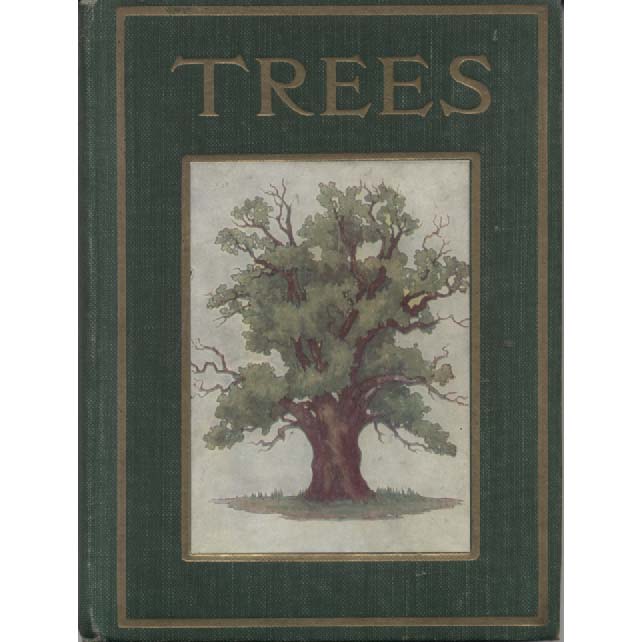
In a world increasingly eager to embrace the digital, the charm of physical books remains undeniable, especially when they transport us back to a time of simplicity and reverence for nature. Janet Harvey Kelman’s Trees, published around 1920 by Thomas Nelson, epitomises this nostalgia, presenting itself as both an educational resource and a tribute to the majesty of trees. The cover, adorned with an intricate illustration of various tree species, evokes a sense of wonder and invites the reader into a green sanctuary, reminding us of the beauty that lies in the natural world. The design captures the essence of early 20th-century aesthetics, with its muted colour palette and graceful typography, offering a comforting paperback vibe that many modern readers may find appealing.
Kelman’s work occupies a somewhat obscure niche within the literary culture of her time. Little is widely documented about her life or career, which raises intriguing questions about her motivations and influences. It is speculated that as a nature enthusiast, her writing was driven by a desire to connect readers with the environment. This absence of extensive biographical details only adds to the allure of her work, allowing one to imagine her as a pioneer of sorts in nature writing, even if she remains largely unknown in the broader literary canon. Her focus on trees suggests a deep appreciation for the environment, which may resonate with contemporary ecological concerns.
Published in the aftermath of the First World War, Trees appeared during a period of significant social and cultural upheaval. The early 1920s were marked by a growing interest in nature and conservation, as people sought solace in the outdoors amidst the chaos of modernisation and urbanisation. The book reflects a zeitgeist that favoured reconnecting with the earth, which was likely a response to the trauma of the war. This was the era when the Arts and Crafts movement had left an indelible mark on design and literature, celebrating craftsmanship, natural materials, and organic forms. Kelman’s book fits neatly within this context, as it not only serves as a botanical guide but also as a manifesto advocating for an appreciation of the natural world.
The content of Trees is rich with descriptions and illustrations, making it a captivating read for those interested in botany and nature. Kelman’s prose is accessible yet infused with a sense of reverence for the subject matter. The book is structured in a way that allows readers to explore various tree species systematically, often accompanied by detailed illustrations that enhance the text. This blend of visual and written information contributes to the book's educational value, appealing to both amateur naturalists and children alike. The language, while reflective of its time, retains a timeless quality that speaks to the enduring relationship humans have with trees.
While the book may not be a critical darling in the realm of literary analysis, its cultural significance cannot be overlooked. It serves as a historical document, encapsulating the values and aesthetics of the early 20th century. The craftsmanship of the binding and the quality of the paper used by Thomas Nelson further elevate the reading experience. There’s something inherently comforting about the tactile nature of a physical book, and Trees embodies this with its sturdy construction and pleasing weight in the hands.
The illustrations within Trees warrant special mention as they not only complement the text but also stand alone as works of art. The detailed depictions of leaves, bark, and entire tree forms are reminiscent of the botanical illustrations that were popular in previous centuries, yet they carry with them a fresh perspective that reflects the era’s artistic sensibilities. These images serve as a visual feast, capturing the intricate beauty of trees and inviting readers to engage with nature on a deeper level.
As the book navigates through various species, it also touches upon their ecological significance, hinting at the interconnectedness of all living things. This theme is particularly poignant today, as environmental concerns have become central to contemporary discourse. Kelman’s ability to weave ecological awareness into her narrative, albeit subtly, demonstrates an early understanding of the importance of trees in our ecosystem. In this way, Trees transcends its time, speaking to issues that remain relevant nearly a century later.
In conclusion, Janet Harvey Kelman’s Trees is a delightful representation of early 20th-century nature writing, offering readers a glimpse into a world where trees were celebrated not just for their utility but for their inherent beauty and majesty. The book’s production quality, combined with its engaging illustrations and accessible prose, makes it a noteworthy addition to the landscape of botanical literature. While the author may remain somewhat obscure, her work deserves recognition for its contribution to environmental awareness and appreciation. For those who cherish the tactile experience of a physical book and the joys of nature, Trees stands as a delightful reminder of the simple pleasures found within the pages of Crappy Old Books.