AI-assisted note, based on the text and a physical inspection of this copy.
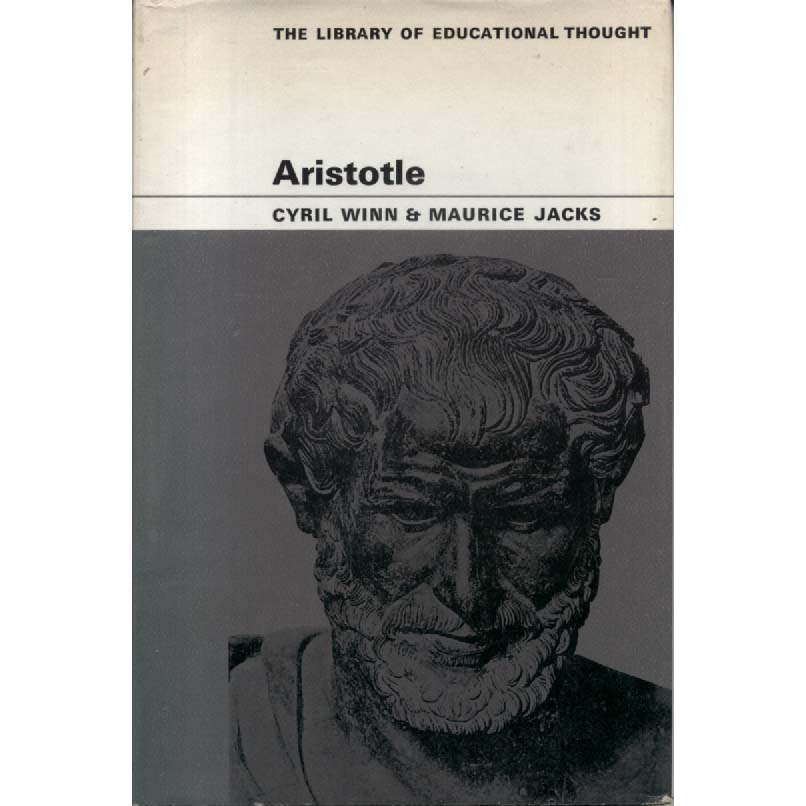
Published in 1967, "Aristotle" by Cyril Winn and Maurice Jacks emerges from the era of educational reform and the push for more accessible philosophical texts. The book is printed in a modest paperback format, typical of its time, with a cover design that captures a certain utilitarian aesthetic. The front features a stark portrait of Aristotle, framed by a simple border, reflecting the no-frills approach of mid-20th century educational literature. The cover lacks the vibrant illustrations or flashy graphics that characterise contemporary publications, instead evoking a sense of earnest academic intent. The paper quality is acceptable, though the text is printed in a small, somewhat cramped font, making it less inviting to read for extended periods. As a cultural artifact, it embodies the period's educational aspirations, aiming to distil complex philosophical ideas into a format palatable for students and lay readers alike.
Cyril Winn and Maurice Jacks, while not household names in the literary or philosophical realms, are nonetheless significant figures within the context of educational literature. Their collaboration reflects a broader movement in the 1960s, where educators sought to bridge the gap between ancient philosophies and modern educational practices. The authors appear to be somewhat obscure, with limited documentation available about their careers or other works, which casts a shadow over their prominence in the literary landscape. This obscurity may contribute to the perception that they were part of a collective effort rather than individual luminaries. The absence of extensive biographical detail suggests that they may have been more involved in pedagogical initiatives rather than producing groundbreaking philosophical texts.
The year 1967 was a significant period in Western culture, marked by social upheaval and a questioning of traditional values. The counterculture movement was in full swing, and educational institutions were increasingly scrutinised for their curricula. This backdrop may explain the publication of "Aristotle," as educators sought to reintroduce classical philosophical thought in a time when many were turning away from established norms. The book's aim to present Aristotle's ideas in a digestible format aligns with the educational zeitgeist of the time, which prioritised accessibility in knowledge dissemination. This reflects a societal desire to understand the foundations of Western thought, even amidst the radical shifts of the 1960s.
The book itself is structured in a straightforward manner, offering insights into Aristotle's life, works, and philosophical contributions. However, it often skims over the complexities of his ideas, which may lead to oversimplification. The authors attempt to provide context for Aristotle's thoughts, but the brevity can leave readers craving more depth. The text might serve as a useful introduction for students or those unfamiliar with Aristotle, yet it risks alienating those seeking a more nuanced exploration of his philosophy. In this regard, the book feels like a stepping stone rather than a substantial contribution to philosophical literature.
In terms of print culture, "Aristotle" represents a transitional phase in educational publishing, where the emphasis began shifting from dense, academic tomes to more approachable texts aimed at a broader audience. The paperback format signifies a move towards affordability and accessibility, aligning with the changing educational landscape of the 1960s. However, this transition also raises questions about the dilution of philosophical content in favour of broader appeal. The book's production quality reflects a time when educational resources were often produced with practicality in mind, prioritising availability over aesthetic considerations.
Ultimately, "Aristotle" by Cyril Winn and Maurice Jacks serves as a cultural object representative of its time, reflecting the educational ambitions of the 1960s. While it may not stand as a definitive exploration of Aristotle's philosophy, it offers a glimpse into the efforts to make complex ideas accessible to a wider audience. For readers interested in the intersection of philosophy and educational literature, this book provides a curious artefact from a significant moment in history. Crappy Old Books appreciates the value of such texts, recognising their role in shaping our understanding of intellectual heritage, even when they fall short of their lofty ambitions.