AI-assisted note, based on the text and a physical inspection of this copy.
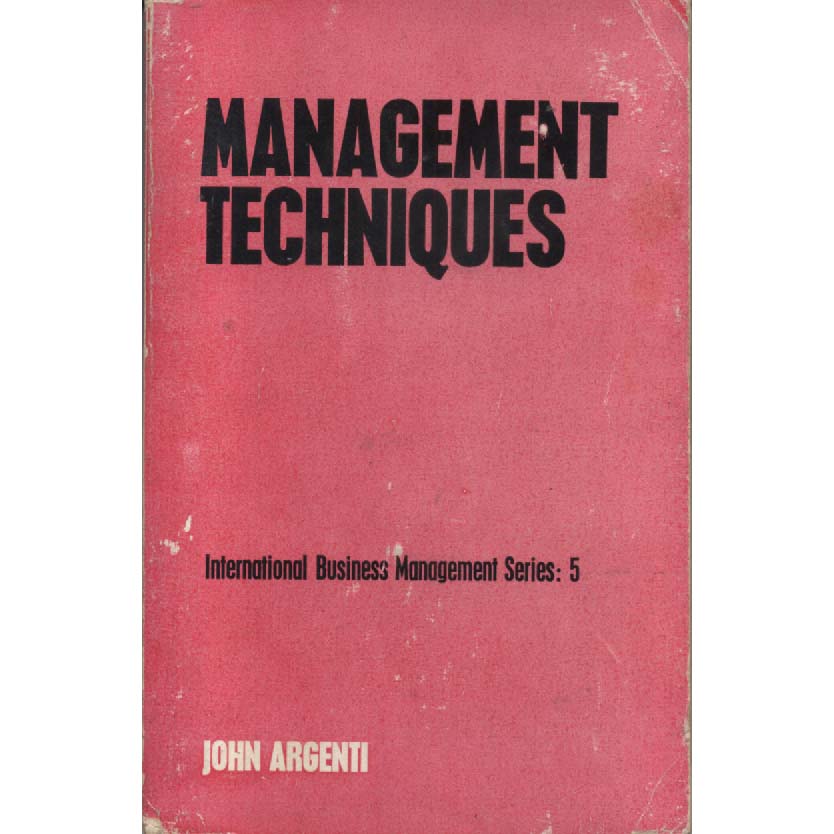
“Management Techniques” by John Argenti, published in 1969 by Allen and Unwin, is a curious artifact from an era marked by significant shifts in management theory and corporate culture. The book stands as a testament to the evolving nature of business practices during the late 1960s, a time when the world was beginning to wake up to new ideas about leadership, efficiency, and the human factor in the workplace. The cover design, typical of its time, features a stark, minimalist aesthetic with bold typeface that reflects the no-nonsense attitude often associated with business literature of the period. The paperback format, somewhat utilitarian in feel, echoes the straightforward approach of the text within, designed for practical application rather than literary flourish.
John Argenti himself remains a somewhat obscure figure within the realm of management literature. While there is little documentation surrounding his biography or career, he appears to have been a voice in the conversation surrounding management techniques during a pivotal time in business history. His contributions, particularly in the context of this book, suggest a focus on practical methods and strategies aimed at improving organisational efficiency. However, specific details about his background, other works, or influence within the field of management are scant, leaving one to wonder about the broader context of his insights and their reception among contemporaries.
The year 1969 was a transformative time, not only in terms of corporate management but also within the wider socio-political landscape. The post-war economic boom had given way to a more complex business environment characterised by changing employee expectations and increasing competition. This was the era when many companies began to reconsider hierarchical structures and the importance of employee morale, a theme that resonates throughout Argenti’s work. As businesses sought to adapt to a rapidly changing world, texts like “Management Techniques” became crucial in disseminating new ideas and practices. The book captures a moment when management was beginning to be viewed not just as an administrative function but as a strategic discipline vital to the health and sustainability of organisations.
The content of “Management Techniques” is a blend of practical advice and theoretical underpinnings. Argenti’s approach is notably straightforward, aiming to demystify the complexities of management for a broader audience. While the book may not dive deeply into any one theory, it provides a smorgasbord of techniques that can be implemented across various organisational contexts. This breadth may be both a strength and a weakness; while it allows readers to pick and choose strategies that resonate, it also risks leaving them wanting a more rigorous exploration of any particular concept.
The language used throughout the book is indicative of the era—somewhat formal yet accessible, reflecting the norms of business communication at the time. Argenti’s prose is devoid of the jargon that would later become commonplace in management literature, making “Management Techniques” feel refreshingly clear. This clarity is particularly beneficial for those new to the field, as it sidesteps the pretentiousness that often accompanies discussions of management theory. However, readers well-versed in the subject might find the content somewhat simplistic, lacking the depth and nuance found in later works that build upon Argenti’s foundational ideas.
In terms of print culture, “Management Techniques” is emblematic of the late 1960s publishing landscape, where practical guides and self-help books were gaining traction. The accessibility of this paperback aligns with the growing consumer culture that sought to empower individuals in both their personal and professional lives. As more people entered the workforce during this period, the demand for resources that could aid in career advancement and efficiency naturally increased. Argenti’s book thus occupies a niche role in the broader narrative of business literature, serving as a stepping stone for many who would go on to explore more advanced theories and methodologies.
The book’s reception at the time of publication is difficult to ascertain due to the lack of comprehensive records regarding Argenti's impact. However, it can be speculated that “Management Techniques” contributed to the larger discourse on management during a period of rapid change. The concepts presented, while perhaps basic by today’s standards, likely resonated with readers seeking to navigate the complexities of a modern workplace that was just beginning to embrace the principles of human resource management and employee engagement.
In conclusion, “Management Techniques” by John Argenti is a cultural object that encapsulates a moment in time when management practices were beginning to evolve. Its straightforward approach and practical advice provide valuable insights for those interested in the history of management thought, despite its limitations in depth and complexity. As a product of the 1960s, it reflects the broader socio-economic changes of the era and serves as a reminder of how far the field has come since then. Although John Argenti remains a somewhat enigmatic figure, his contributions are nonetheless significant within the context of the development of management literature. For those exploring the foundations of contemporary management practices, “Management Techniques” is a worthy addition to any collection of Crappy Old Books.