AI-assisted note, based on the text and a physical inspection of this copy.
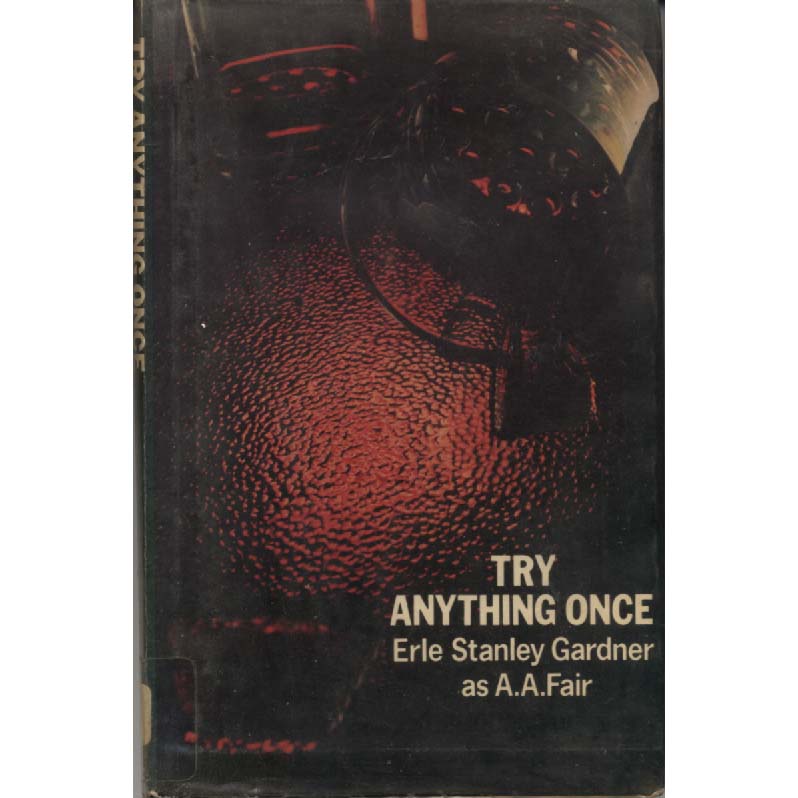
“Try Anything Once” by Erle Stanley Gardner presents itself as an interesting cultural artefact from the early 1960s, encapsulating a time when the world was undergoing significant changes. The cover design features bold, eye-catching typography typical of the era, with a striking illustration that draws the reader's attention. The paperback format has that familiar, slightly worn feel that suggests it has been passed around through various hands over the decades, embodying the essence of a well-loved novel rather than a pristine collector's item. This tactile experience of the book adds to its charm, a reminder of the print culture that once dominated the literary landscape.
Erle Stanley Gardner is a name that resonates within the realm of detective fiction, most notably for creating the iconic character of Perry Mason. While “Try Anything Once” may not be as widely recognised as his legal thrillers, it still reflects the author's penchant for intricate plots and unexpected twists. Gardner was prolific, with a career that spanned several decades, producing an astonishing number of novels, short stories, and screenplays. He enjoyed a significant following during his lifetime, and his works contributed to the popularity of the mystery genre in mid-20th century America. However, Gardner’s presence in contemporary literary discussions seems to have waned, suggesting that while he was once a titan of genre fiction, his legacy has become somewhat obscured over time.
Published in 1963, “Try Anything Once” emerges from a pivotal moment in history. The world was in a state of flux, with the civil rights movement gaining momentum in the United States, the Cold War influencing global politics, and cultural revolutions beginning to stir. This backdrop is essential to understanding the book's themes and character motivations, as societal changes often inform the narratives of the time. Readers in the 1960s were eager for escapism, but they were also grappling with the complexities of a rapidly evolving world. This novel, while crafted in the realm of fiction, mirrors some of these societal tensions, making it not just a piece of entertainment but also a reflection of its time.
The narrative style Gardner employs is straightforward yet engaging, a hallmark of his writing that appeals to a wide readership. The pacing is brisk, ensuring that the reader remains hooked from start to finish. Gardner’s ability to weave suspense with relatable characters has long been his strength, and in “Try Anything Once”, he continues to explore themes of morality, justice, and human nature. The dialogue is often sharp, with a certain wit that adds layers to the otherwise serious undertones of the plot. Although the book may not push the boundaries of literary innovation, it stands as a testament to Gardner’s skill in crafting entertaining narratives that resonate with a broad audience.
The era of the 1960s was also significant for publishing, with mass-market paperbacks beginning to dominate the shelves, making literature more accessible than ever before. The presence of novels like “Try Anything Once” in this format speaks to the democratization of reading, allowing a wider range of people to engage with fiction. The tactile nature of the paperback, combined with its affordability, contributed to a reading culture that was both communal and individualistic, where stories could be shared, discussed, and enjoyed in various social settings. This reflects a shift in consumer culture, with books becoming not just luxury items but essential companions for the burgeoning middle-class reader.
In terms of literary significance, “Try Anything Once” occupies a curious space. While it may not capture the critical acclaim of Gardner’s more famous works, it offers a glimpse into the author's versatility and willingness to explore different themes beyond his well-trodden legal dramas. This willingness to branch out may resonate with readers familiar with Gardner’s oeuvre, who might appreciate the opportunity to see another side of his storytelling prowess. However, for those unacquainted with his work, this novel may not serve as the best introduction, as it lacks the iconic status of Perry Mason tales.
In conclusion, “Try Anything Once” serves as both a reflection of its time and a reminder of Erle Stanley Gardner's contributions to the mystery genre. The paperback format and its well-loved appearance contribute to its cultural significance, inviting readers to delve into the world Gardner created while also offering insight into the changing landscape of literature in the 1960s. Although the author may not be as prominently discussed in contemporary literary circles, his work remains an important part of the fabric of American fiction, particularly in the realm of detective stories. Crappy Old Books shines a light on such cultural artefacts, encouraging readers to revisit the lesser-known works that help shape literary history.