AI-assisted note, based on the text and a physical inspection of this copy.
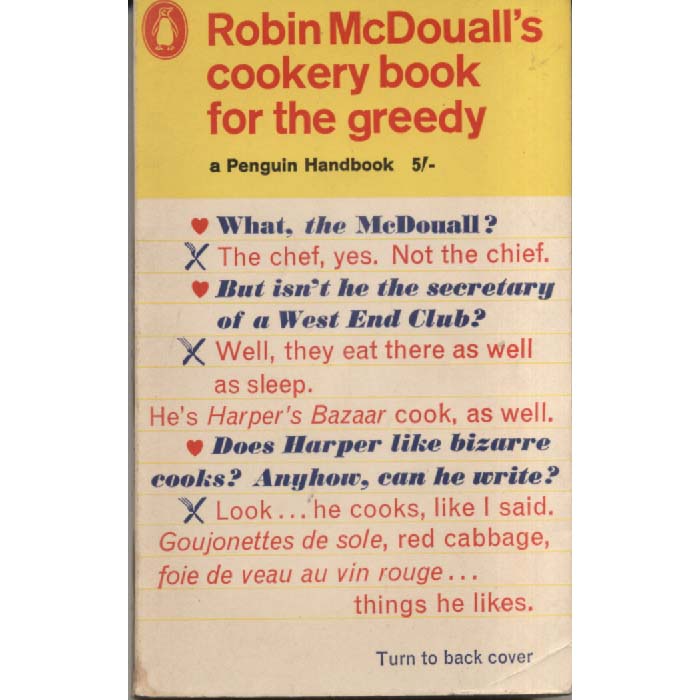
“Robin McDouall’s Cookery Book for the Greedy,” published in 1965 by Penguin Books, is an intriguing specimen from the 1960s culinary landscape. The cover design is a vibrant explosion of colour, typical of the era, featuring bold typography and whimsical illustrations that beckon the reader with promises of delicious indulgence. This paperback exudes a certain charm, with its slightly worn edges and a texture that speaks to countless hands flipping through its pages, evoking the nostalgia of a time when home cooking was a cherished art. The overall aesthetic is both inviting and slightly kitschy, resembling a well-loved recipe book that has seen its fair share of kitchen disasters and triumphs.
Robin McDouall remains a somewhat obscure figure in the culinary literature world. Little is widely documented about his life or career, which adds an air of mystery to the book itself. It appears he may not have achieved the same level of fame as contemporaries like Delia Smith or Elizabeth David, possibly relegating him to the realm of lesser-known culinary authors. This obscurity may reflect a broader trend in the publishing history of cookery books, where certain voices become overshadowed by more prominent ones despite offering unique perspectives and recipes. McDouall’s work seems to occupy a niche that caters specifically to those who revel in the joys of indulgent eating, rather than the more health-conscious trends that would later dominate the culinary scene.
Published during a transformative period in British society, 1965 was marked by a burgeoning interest in food culture that coincided with the post-war era’s fascination with convenience and abundance. The cookbook reflects the era’s desires, as the British public began to venture beyond traditional fare, exploring new flavours and cooking techniques. McDouall’s recipes are a testament to this shift, showcasing a variety of ingredients and methods that invite readers to indulge without reservation. This was a time when the concept of “greed” in cooking was perhaps viewed in a more whimsical light, rather than the more critical lens it may attract today. The 1960s also saw the rise of television cooking shows, which may have influenced the way cookbooks were written, promoting accessible and entertaining approaches to cuisine that McDouall appears to embrace.
The content of “Robin McDouall’s Cookery Book for the Greedy” is as eclectic as its title suggests. Each recipe is designed to appeal to those who appreciate generous portions and hearty flavours, capturing a spirit of culinary exuberance. The book features a mix of traditional dishes and more adventurous fare, reflecting McDouall's desire to satisfy the appetites of the “greedy” cook. The recipes are often accompanied by anecdotes or tips that lend a personal touch, creating a sense of connection between the author and the reader. This style is a hallmark of cookbooks from that period, where the narrative aspect of cooking was increasingly celebrated alongside the technicalities of food preparation.
The text itself is peppered with casual instructions and a light-hearted tone, making it accessible to novice cooks while still appealing to more experienced chefs looking for inspiration. The emphasis on enjoyment over precision resonates with the ethos of the 1960s, a decade that embraced experimentation and pleasure in the kitchen. However, the book is not without its quirks; some recipes may feel dated or overly rich by modern standards, which could leave contemporary readers questioning the intent behind the “greedy” label. Nevertheless, this very aspect adds to its charm, capturing a snapshot of culinary trends that may seem foreign to today’s health-conscious consumers.
As a cultural artifact, “Robin McDouall’s Cookery Book for the Greedy” serves as a fascinating reflection of its time. It encapsulates a moment when British cooking was evolving, moving towards a more inclusive and experimental ethos. The book is a reminder of a period when indulgence was celebrated rather than shamed, and the kitchen was a space for creativity and exploration. For those interested in the history of cookery books, McDouall’s work provides an intriguing lens through which to examine the changing attitudes towards food and cooking.
In conclusion, “Robin McDouall’s Cookery Book for the Greedy” is a delightful exploration of mid-20th-century culinary culture. Its vibrant design, coupled with a whimsical approach to cooking, ensures that it remains a charming relic from a bygone era. While Robin McDouall himself may not have left a substantial mark on the culinary literary landscape, this book stands as a testament to the joys of cooking for pleasure rather than necessity. For those keen on delving into the past through the lens of food, this book is an excellent addition to any collection of Crappy Old Books.