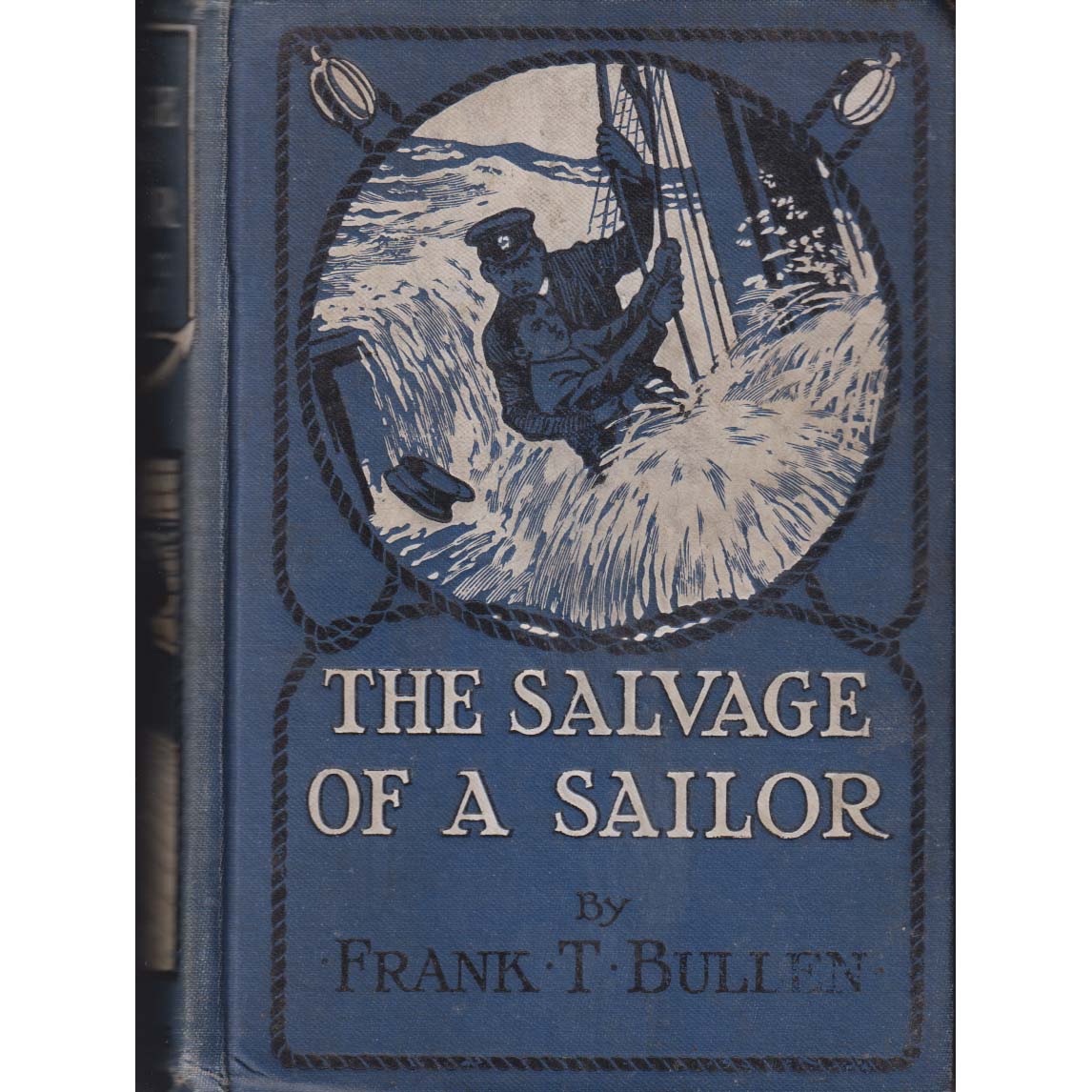
AI-assisted note, based on the text and a physical inspection of this copy.
Frank T. Bullen’s The Salvage of a Sailor, published by SW Partridge in the early 1900s, is a fascinating relic of maritime literature that captures the essence of adventure and peril at sea. The cover design, characteristic of its era, features bold typography and an illustration that evokes a sense of nostalgia for a time when adventure stories were a staple of popular culture. The simplicity of the paperback vibe, with its slightly worn edges and yellowing pages, adds to the charm of this cultural object, embodying the spirit of early 20th-century print culture. It is a book that feels well-loved, as if it has sailed through the hands of many eager readers, each drawn to its promise of high seas and human resilience.
Bullen himself is an intriguing figure in the literary world, though not widely celebrated in contemporary discussions. He was born in 1857 and lived until 1915, a period during which he transitioned from a sailor to an author. His personal experiences at sea undoubtedly coloured his writing, lending authenticity to his narratives. Despite his contributions to maritime literature, he remains relatively obscure, with limited documentation available about his life and career. Unlike many of his contemporaries, Bullen did not achieve lasting fame, which may reflect the niche appeal of his subject matter and the competitive nature of early 20th-century publishing.
The context of the book's publication is equally compelling. The Salvage of a Sailor was likely released between 1907 and 1912, a time when the British Empire was at its zenith, and tales of exploration, naval warfare, and adventure were immensely popular. The early 1900s were marked by a fascination with the sea, spurred by both the romanticism of nautical life and the real dangers that sailors faced. This era was also witnessing significant technological advancements in shipping and exploration, which would have influenced public perception and interest in maritime narratives. Bullen’s work fits snugly within this cultural milieu, appealing to a readership eager for stories that reflected their own aspirations and fears.
The book’s narrative can be interpreted as a reflection of the period's values, particularly the ideals of bravery and perseverance in the face of adversity. Readers of the time may have been drawn to the depiction of sailors not just as adventurers, but as heroes navigating the unpredictable waters of life. This theme resonates with the broader societal context, where determination and grit were highly esteemed virtues. Bullen’s writing style, while perhaps not as polished as that of his more famous contemporaries, captures the raw emotion and struggle inherent in the sailor’s life, making it a poignant addition to the canon of maritime literature.
One cannot overlook the physicality of the book itself, which serves as a testament to the era’s publishing practices. The paper quality, the binding, and even the smell of the old pages contribute to the reading experience, transporting readers back in time. The tactile nature of The Salvage of a Sailor invites one to engage with it not merely as a story to be consumed but as a piece of history to be cherished. In an age of digital distractions, holding a book like this offers a sense of connection to the past, a reminder of the enduring allure of storytelling.
Moreover, the illustrations within the book, likely designed to complement the text, provide a visual context that enhances the narrative. They serve not just as decoration but as a means to further immerse the reader in the world of the sailor, making the dangers and beauties of the sea tangible. Such illustrations were common in books of this period, reflecting a print culture that valued visual storytelling alongside written word.
In terms of literary influence, while Bullen may not have sparked a significant movement, his work contributes to the broader tapestry of maritime literature, which includes notable authors like Joseph Conrad and C.S. Forester. These writers explored similar themes but often with a more modernist lens, presenting complex characters and moral dilemmas. Bullen’s straightforward narrative style, however, aligns with the more romantic views of seafaring life, focusing on adventure as a primary draw rather than delving into psychological complexity.
As we consider The Salvage of a Sailor within the framework of Crappy Old Books, it becomes evident that this text is more than just a story; it is a cultural artifact that captures the zeitgeist of its time. Its existence prompts reflections on the nature of adventure, the human spirit, and the stories we tell about ourselves. The book's charm lies not only in its narrative but also in its ability to connect us to a bygone era, making it a worthy addition to any collection that values historical context alongside literary merit.
In conclusion, while Frank T. Bullen’s The Salvage of a Sailor may not occupy a prominent place in the literary canon, it certainly deserves recognition as a significant piece of maritime literature. Its publication during a time of great fascination with the sea, coupled with Bullen's authentic reflections of sailor life, create a narrative that resonates across the ages. Whether you’re a seasoned collector of Crappy Old Books or a casual reader, this title invites exploration and appreciation for the stories that have shaped our understanding of bravery, adventure, and the human experience at sea.