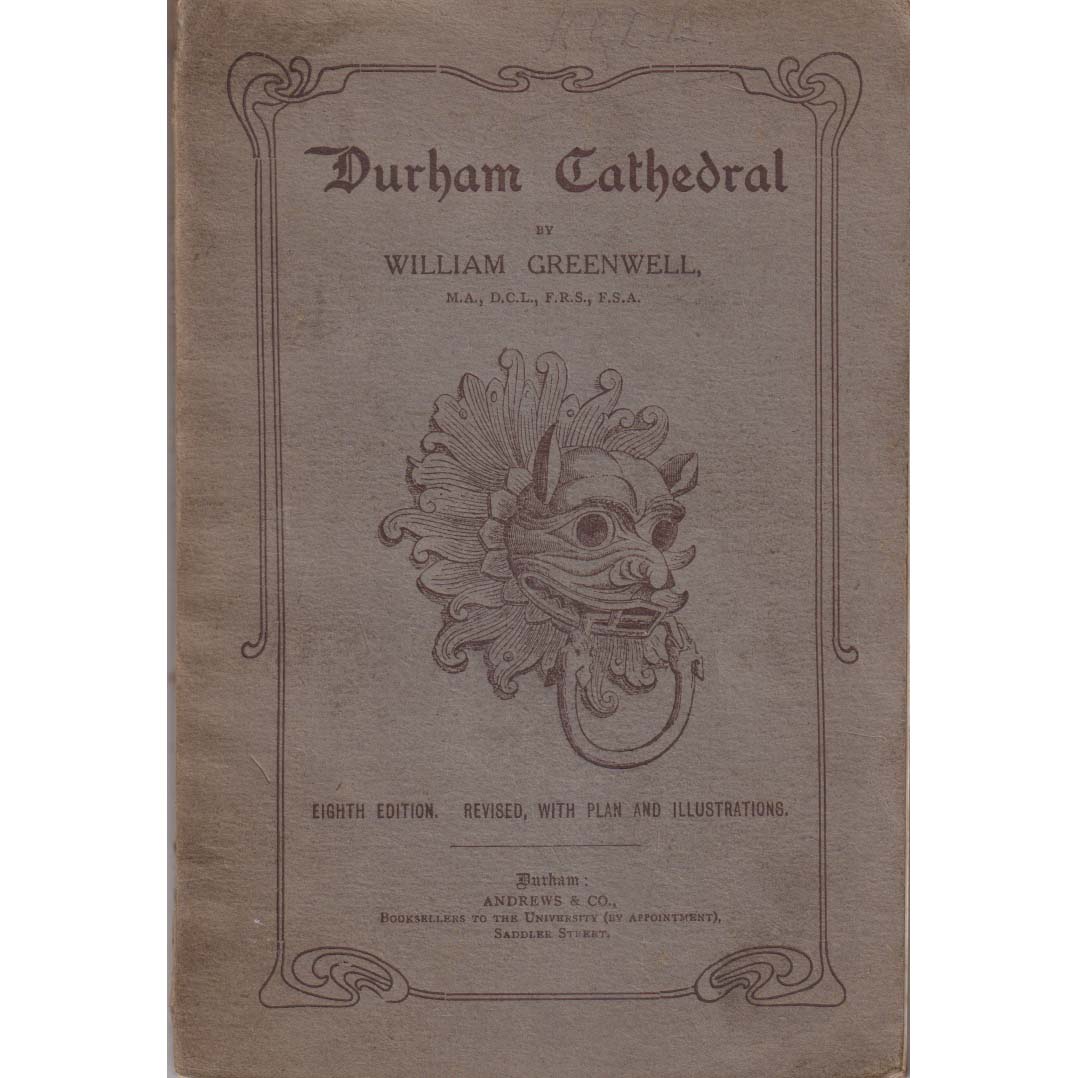
AI-assisted note, based on the text and a physical inspection of this copy.
William Greenwell's Durham Cathedral, published in 1913 by Andrews and Co, serves as a visual and textual homage to one of England's most iconic ecclesiastical structures. This work is steeped in a palpable sense of reverence, reflecting not only the grandeur of the cathedral itself but also the cultural milieu of early 20th-century Britain. The cover design, likely a product of its era, embodies the aesthetic sensibilities of the time, favouring a simple yet elegant presentation that hints at the historical significance of its subject matter. The paperback format, with its slightly yellowed pages and fragile spine, invites readers to handle it with care, epitomising the wear and tear of a beloved, if somewhat neglected, volume.
Greenwell, while not a household name in the annals of literary history, appears to be a figure with a distinct yet obscure presence. There is scant documentation about his life and works, making it challenging to place him within the broader context of literary culture. However, it is suggested that he had a keen interest in architecture and history, which he sought to convey through his writing. His focus on Durham Cathedral showcases not only a passion for Gothic architecture but also a desire to preserve the narratives tied to such monumental edifices. Unfortunately, without extensive biographical records or a significant body of work, Greenwell remains an enigmatic figure, veiled in the shadows of more prominent literary contemporaries.
The year 1913 was a pivotal time in British history, situated just before the tumult of the First World War. The cultural landscape was rich with artistic experimentation, as movements such as Modernism began to take root. In this context, Durham Cathedral can be seen as a counterpoint to the rapidly changing world. While avant-garde literature and art were beginning to challenge traditional forms, Greenwell's reverent exploration of the cathedral speaks to an enduring fascination with heritage and the physical manifestations of faith. The book thus captures a moment of transition, preserving a sense of the past while hinting at the uncertainties that lay just ahead.
In terms of content, Greenwell's text is both descriptive and evocative, drawing readers into the cathedral's architectural wonders. The prose, while not overly ornate, effectively conveys the majesty of the structure, allowing readers to envision its soaring arches and intricate stonework. Accompanying illustrations, likely sourced from the period or original sketches, enhance the textual descriptions, providing a visual dimension that complements the written word. However, one cannot overlook the sense that the book occasionally slips into the realm of the overly reverential, risking a loss of critical engagement with its subject. This sentiment may resonate with today's readers, who often seek a more nuanced exploration of cultural artifacts.
Additionally, the book's production values reflect the standards of its time. The choice of paper, binding, and typography speaks to a certain level of craftsmanship that has been largely lost in the modern publishing landscape. Each page turns with a delicate rustle, a reminder of the tactile pleasures of reading a physical book, particularly one that has undoubtedly been cherished by previous readers. The ink, slightly faded yet still legible, adds to the charm of the volume, inviting one to ponder the hands that have turned these pages before.
However, it is essential to acknowledge that the book may not resonate with all readers. Those seeking a contemporary analysis of historical architecture or a critical approach to cultural heritage may find Greenwell's treatment somewhat lacking. His focus on reverence rather than critique could alienate modern audiences, who often expect a more balanced discourse. Nevertheless, for those with an appreciation for historical texts and a love of ecclesiastical architecture, Durham Cathedral remains a noteworthy, if imperfect, artifact of its time.
In conclusion, William Greenwell's Durham Cathedral stands as a testament to the enduring allure of one of England's most celebrated landmarks. Through its rich descriptions and evocative illustrations, the book captures the spirit of both the cathedral and the era in which it was produced. While Greenwell himself may not be a well-documented figure in literary history, his work offers a glimpse into the early 20th-century fascination with heritage and architecture. Ultimately, Durham Cathedral holds a unique place within the realm of Crappy Old Books, inviting readers to engage with a bygone era and reflect on the legacies that continue to shape our cultural landscape.