AI-assisted note, based on the text and a physical inspection of this copy.
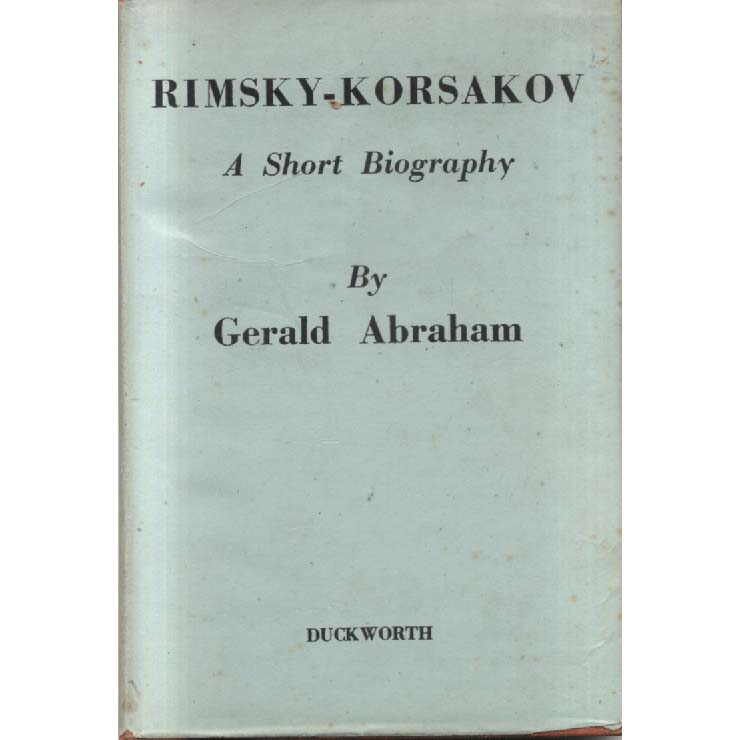
“Rimsky-Korsakov - A Short Biography” by Gerald Abraham, published in 1945 by Duckworth, presents a compact yet insightful look into the life of the renowned Russian composer Nikolai Rimsky-Korsakov. The biography is marked by its utilitarian paperback design, typical of mid-20th century literature, featuring a simple cover that lacks the flamboyance often associated with modern biographies. The muted colour palette and straightforward typography may lack the artistic flair one might expect from a book about a composer, but they effectively embody the post-war aesthetic of practicality over flamboyance, reflecting a time when people sought clarity and substance in literature.
Abraham’s writing is characterised by a clear and accessible style, making the biography suitable for both music enthusiasts and casual readers. The 1945 publication date places the book in a period of significant cultural shifts, particularly in the sphere of classical music. The aftermath of World War II saw a renewed interest in the arts as societies sought to rebuild and redefine themselves. Rimsky-Korsakov's music, rich with nationalistic themes and vibrant orchestration, resonated with audiences eager to reconnect with their cultural heritage amidst the devastation of war. Abraham’s work thus serves as both a homage to the composer and a reflection of the changing cultural landscape of the time.
Gerald Abraham is an esteemed figure in the realm of musicology, known for his contributions to the understanding of Russian music and composers. While he may not be as widely recognised as some of his contemporaries, his work has significantly influenced the study of music history. Abraham’s scholarship is marked by a dedication to clarity and educational value, aiming to make complex musical ideas accessible to a broader audience. His efforts in editing and writing about various composers have solidified his place within the literary culture surrounding music, particularly in the mid-20th century. However, despite his contributions, the specific details of his career outside this biography may be less documented, leaving a sense of intrigue about his broader influence.
The cultural context of 1945, especially in relation to the arts, cannot be overstated. This was a year marked by both the end of hostilities in Europe and the beginning of a new era in music and arts. Rimsky-Korsakov was already a historical figure by this time, having passed away in 1908, but his music was experiencing a revival. The war had instilled a yearning for artistic expression that was both poignant and celebratory. Abraham’s biography captures this zeitgeist, serving not only as an informative piece about the composer but also as a reflection of the hopes and aspirations of a society looking to heal through art.
One notable aspect of the book is its structure, which provides a chronological account of Rimsky-Korsakov's life interspersed with analyses of his major works. This approach helps to contextualise the personal events in the composer’s life alongside his professional achievements. Readers gain insight into not only the man behind the music but also the influences that shaped his compositions. However, the brevity of the biography may leave some readers wanting more depth, particularly regarding the social and political influences on Rimsky-Korsakov’s music. This limitation is typical of shorter biographies from the era, which often aimed to provide a snapshot rather than an exhaustive exploration.
In terms of print culture, the book sits comfortably within the traditions of mid-20th century publishing, which often favoured affordable paperback editions to reach a wider audience. Duckworth, known for its commitment to quality literature, aligns well with the educational intent of Abraham’s biography. The use of black-and-white photographs and illustrations further enhances the historical aspect, providing readers with visual context to accompany the text. However, the lack of colour and modern graphic design sensibilities may render it less appealing to contemporary readers accustomed to visually dynamic publications.
In conclusion, “Rimsky-Korsakov - A Short Biography” is a valuable addition to the canon of music literature, offering insights into the life of a beloved composer during a pivotal time in history. Gerald Abraham’s clear prose and structured narrative make it an accessible read, though it may not satisfy those seeking an in-depth analysis. The book’s publication in the immediate post-war period allows it to serve as both a biography and a cultural artifact, reflecting the broader societal shifts of its time. As readers explore the pages of this biography, they engage not only with Rimsky-Korsakov’s life and works but also with the enduring power of music to transcend hardship and inspire hope. Crappy Old Books serves as a reminder of the importance of these cultural relics, allowing us to appreciate the context in which they were created.