AI-assisted note, based on the text and a physical inspection of this copy.
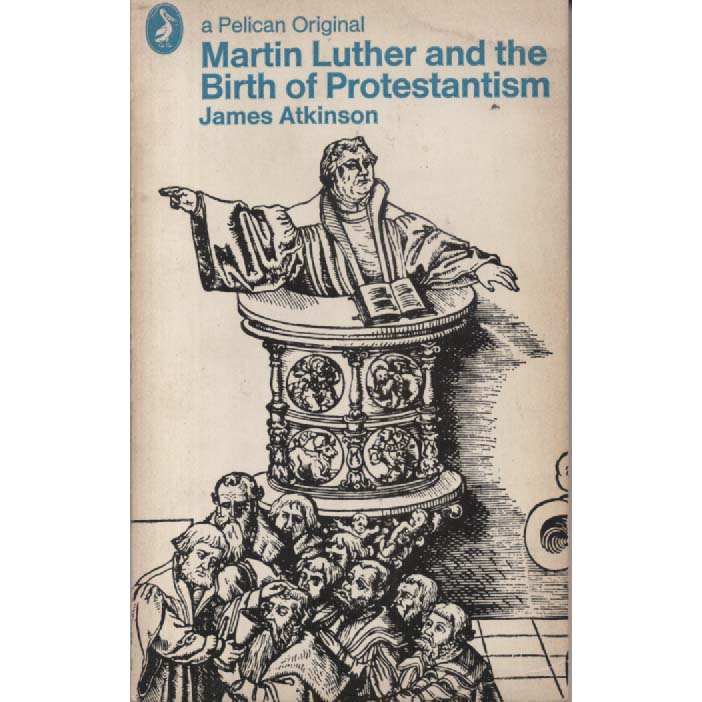
“Martin Luther And The Birth Of Protestantism” by James Atkinson is a paperback that captures the historical moment when Protestantism began to take root in Europe. Published in 1968 by Pelican Original, this book serves as a window into a tumultuous era, with its cover design reflecting the aesthetic sensibilities of the late 1960s. The cover is both utilitarian and visually striking, featuring bold typography that is characteristic of Pelican’s commitment to making educational literature accessible. The book's physicality, with its slightly yellowed pages and a sturdy yet flexible spine, embodies the essence of a well-loved paperback, perfect for casual reading or academic reference.
Atkinson, while not a household name, appears to have carved out a niche in the field of religious history. Little is known about his broader literary contributions or his standing within the academic community. This obscurity does not detract from the quality of the work presented; however, it does leave readers curious about the author’s background and the influences that shaped his perspective. The absence of extensive biographical records makes it challenging to contextualise Atkinson within the wider landscape of theological scholarship, but it also invites readers to engage with the text on its own merits, without preconceived notions about the author.
Published during a period marked by social upheaval and a quest for identity, the late 1960s was a time when historical narratives were being re-evaluated and reinterpreted. The Protestant Reformation, often framed within the context of religious transformation, took on new meanings as contemporary society grappled with questions of authority and individualism. Atkinson's exploration of Martin Luther's life and his pivotal role in the Reformation resonates with the spirit of the 1960s, a decade that sought to challenge established norms and embrace new ideologies. The book serves as a reminder that the struggle for religious freedom and expression is not merely a relic of the past but continues to influence modern thought and belief systems.
The text itself delves into the complexities of Luther’s character and his theological disputes with the Catholic Church, outlining how his actions ignited a movement that would forever alter the course of Western Christianity. Atkinson’s prose is accessible, making the intricacies of theological debates understandable to a general audience. The structure of the book is logical, guiding readers through Luther's formative years, his theological innovations, and the broader socio-political context of his time. However, the narrative occasionally suffers from a lack of depth in certain areas, which may leave well-versed readers craving a more nuanced exploration of the Reformation’s implications.
In terms of print culture, “Martin Luther And The Birth Of Protestantism” contributes to the broader discourse surrounding the Reformation, a topic that has been revisited numerous times in various forms. The Pelican Original series is known for its educational focus, making this particular title a fitting addition to their catalogue. The book reflects a period when educational publishing sought to democratise access to knowledge, making significant historical and theological works available to the general populace. This mission resonates in Atkinson's straightforward approach to a complex subject, making it an essential read for those interested in understanding the roots of Protestantism.
While the book may not delve into the minutiae of Luther's life or the Reformation with the scholarly depth found in more recent works, it nonetheless serves as a valuable introduction to the topic. Atkinson’s ability to distill complex ideas into digestible narratives makes the book suitable for both casual readers and students beginning their exploration of religious history. The cultural implications of the Protestant Reformation continue to echo in today's discussions around faith and modernity, making Atkinson's work relevant even decades after its publication.
In conclusion, “Martin Luther And The Birth Of Protestantism” stands as a testament to a pivotal moment in history, encapsulated within the context of its time. While Atkinson may not be a widely recognised figure in literary circles, his contribution to the understanding of Protestantism holds merit. The book, with its vintage paperback charm, invites readers to reflect not only on the life of Martin Luther but also on the enduring impact of his legacy. For those seeking a starting point in the study of religious history, this title is a commendable choice, offering insights that remain pertinent in contemporary discussions. Crappy Old Books celebrates such works, reminding us of the value found in texts that may not have garnered widespread acclaim but nonetheless provide a foundation for understanding complex cultural phenomena.