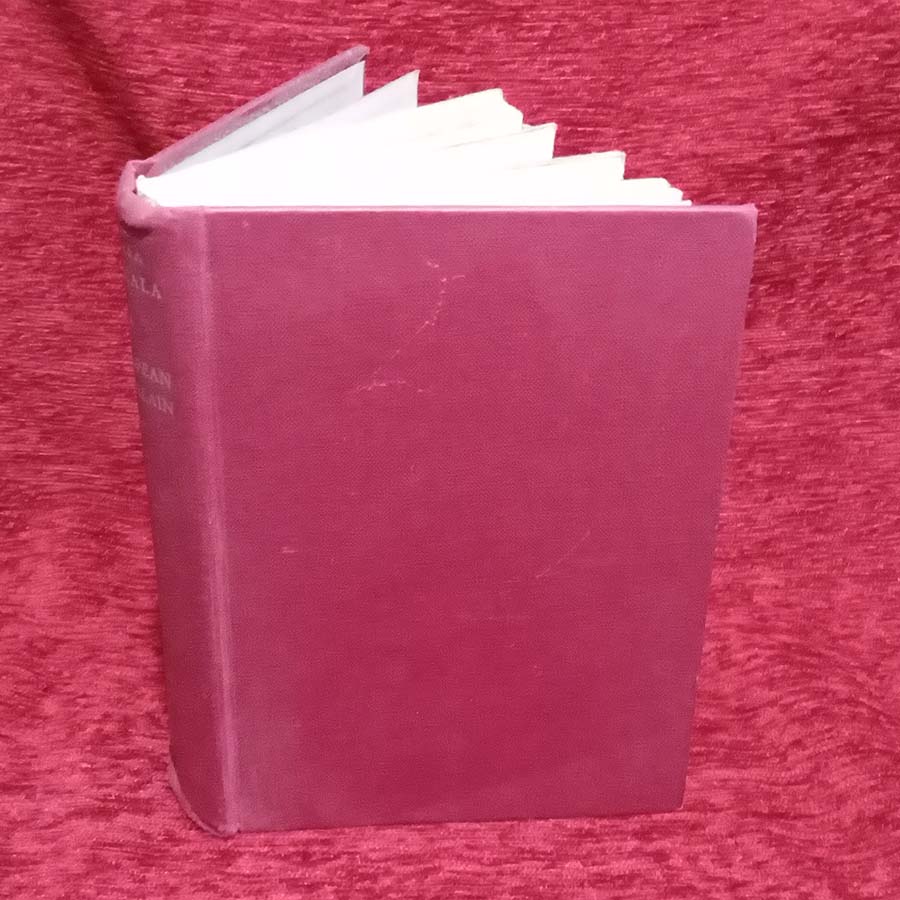
AI-assisted note, based on the text and a physical inspection of this copy.
“European Porcelain” by Maria Penkala, published in 1947 by RW Haentjens Dekker, is an intriguing encapsulation of mid-20th-century aesthetics and the cultural significance of porcelain in European art and trade. The book presents itself as a scholarly yet accessible exploration of the subject, appealing to collectors, historians, and casual enthusiasts alike. The cover design, typical of its era, features muted hues and elegant typography that hints at the refined subject matter within, inviting readers into a world where porcelain is not merely a decorative item but a symbol of cultural sophistication.
The book's paperback format, slightly worn with age, reflects its journey through the decades. The paper itself carries the unmistakable scent of vintage print culture, with a grainy texture that speaks to the production methods of the time. Inside, the pages are a mix of black and white photographs and illustrations, capturing the intricate details of porcelain craftsmanship alongside historical context. There’s a certain charm to the imperfect reproduction of images, a reminder of a time when technology was not as advanced as today, yet still managed to convey beauty and artistry.
Maria Penkala appears to be a somewhat obscure figure in the realm of publishing, with limited information available about her life and works. There is little known about her beyond this publication, which may suggest that she was a specialist or an enthusiast rather than a widely recognised author in the field of art history or ceramics. The lack of extensive biographical details poses an intriguing question about her motivations for writing this book and her depth of knowledge on the subject of European porcelain. It is plausible that she contributed a unique perspective to the genre, albeit without the acclaim that often comes with more prominent authors in the art historical canon.
Published in the wake of World War II, “European Porcelain” finds itself situated in a cultural landscape marked by recovery and a re-evaluation of artistic values. The post-war era was a time when many sought to rediscover the beauty of craftsmanship and heritage, as societies grappled with the scars of conflict. The fascination with porcelain during this period may also be seen as a reflection of a desire for stability and refinement amidst the chaos of modern life. Penkala’s exploration of the history, techniques, and significance of porcelain aligns well with the era's artistic revival and the growing interest in traditional craftsmanship, making her work a valuable contribution to the understanding of material culture in Europe.
The text dives into various aspects of porcelain, including its historical origins, the evolution of styles, and the techniques involved in its creation. Penkala’s writing, while perhaps not groundbreaking, is clear and informative, providing a thorough overview that is accessible even to those without prior knowledge of the topic. The book is filled with anecdotes and historical tidbits that enhance the narrative, giving readers a sense of the importance of porcelain in social and economic contexts across Europe. This blend of scholarly insight and engaging storytelling is what ultimately makes the book a worthwhile read, despite its occasional lapses into dry academic language.
Moreover, the book’s layout, with its practical organisation and index, allows for easy navigation, making it a handy reference for those delving into the world of porcelain. The inclusion of timelines and key figures within the porcelain industry enriches the reader’s understanding of the broader historical narrative, situating individual pieces within a larger framework of artistic development. This thoughtful design stands as a testament to the careful consideration Penkala put into crafting her work, ensuring it serves both as an educational text and a source of inspiration for collectors and art lovers.
The cultural significance of porcelain cannot be understated; it has long been associated with luxury and artistry, often serving as a status symbol among the elite. In the context of post-war Europe, the appreciation for such items can be seen as a yearning for the elegance and refinement that had been disrupted by the war. Penkala’s exploration of this theme adds depth to the book, inviting readers to reflect on the societal implications of their fascination with porcelain. The book not only serves as a historical account but also as a commentary on the human condition—a testament to our enduring desire for beauty and craftsmanship in an increasingly mechanised world.
In conclusion, “European Porcelain” by Maria Penkala stands as a significant cultural object from the mid-20th century. While the author may not be widely recognised, her contribution to the understanding of porcelain and its place within European culture is noteworthy. The book offers a valuable perspective on a material that has fascinated collectors and historians for centuries, inviting readers to appreciate the artistry and history behind each piece. For those interested in the intersections of art, culture, and history, this work is a delightful addition to any bookshelf. Crappy Old Books celebrates such hidden gems, reminding us that even lesser-known works can hold immense value in the tapestry of literary and cultural history.