AI-assisted note, based on the text and a physical inspection of this copy.
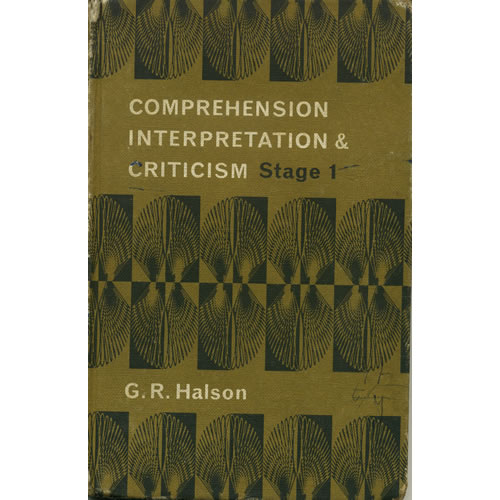
“Comprehension Interpretation & Criticism Stage 1” by GR Halson is an intriguing artifact of educational literature from the mid-1960s. The book’s cover design is indicative of its era, featuring a minimalist aesthetic that was prevalent in many educational texts of the time. The subdued colours and straightforward typography reflect a no-nonsense approach to learning, which was characteristic of the period's educational philosophy. Its paperback format gives it a tactile, approachable quality, inviting readers to engage with the content in a casual manner, despite its academic intentions. The overall presentation feels somewhat austere, yet it possesses a charm that speaks to a bygone era of education.
Halson, as an author, appears to be relatively obscure, with little documented about his life or career in the wider literary or educational culture. This lack of biographical information may suggest that he was primarily known within specific educational circles rather than having made a significant impact on broader literary discussions. While he may not be a household name, the book itself serves as a testament to the type of instructional material that was being produced during the 1960s, aimed at helping students develop their comprehension and critical thinking skills. It is possible that his contributions were more impactful in educational settings than in literary criticism or creative writing.
Published in 1965, this book emerges from a cultural milieu that was heavily focused on educational reform and the expansion of critical thinking within academia. The 1960s were a time of significant change, not only socially and politically but also in terms of educational methodologies. The emphasis on comprehension and interpretation in literature was gaining traction, moving away from rote learning towards more analytical approaches. This book likely aimed to address the need for students to engage with texts in a more meaningful way, reflecting the shifting paradigms in educational philosophy during that period. The era’s broader cultural movements, including the push for civil rights and countercultural expressions, also influenced how literature was perceived and taught, propelling a desire for deeper understanding and critique.
The content of “Comprehension Interpretation & Criticism Stage 1” appears designed to guide students through the process of reading and interpreting texts, which was especially relevant at a time when educational systems were beginning to embrace more progressive teaching methods. The book likely includes exercises and examples aimed at fostering critical engagement, encouraging students to not only understand what they are reading but to think critically about the implications and contexts of those texts. This pedagogical approach aligns with the educational trends of the 1960s, where there was a conscious effort to cultivate independent thinkers rather than passive absorbers of information.
The physicality of the book itself, its dimensions, and weight reflect the design sensibilities of the time. The paper quality, while not particularly impressive by modern standards, offers a certain nostalgia for those familiar with the feel of textbooks from that era. The text is likely printed in a straightforward serif font, which was common in educational literature, promoting readability without unnecessary distractions. This consideration for clarity over flair encapsulates the essence of the book’s purpose—to facilitate understanding and interpretation rather than to dazzle with design.
Interestingly, the choice of publisher—Longmans—adds another layer to the book’s significance. Longmans, known for its educational publications, played a vital role in shaping the academic landscape during the 20th century. Their commitment to producing accessible educational resources made them a prominent figure in the dissemination of knowledge. This association lends a degree of credibility to Halson’s work, suggesting that it was part of a larger movement towards improving educational standards and methodologies in the UK.
In terms of its reception, it is difficult to ascertain how “Comprehension Interpretation & Criticism Stage 1” was initially received. Given the time of its publication, it likely found a niche audience among educators and students who were eager to embrace new pedagogical trends. However, as educational theories evolved, the book may have become overshadowed by more contemporary texts that addressed similar themes but with updated approaches. The transient nature of educational literature often means that such works may fade into obscurity, overshadowed by newer, more innovative resources.
Overall, “Comprehension Interpretation & Criticism Stage 1” offers a fascinating glimpse into the educational practices of the 1960s, embodying the spirit of an era that sought to empower students through critical engagement with texts. While GR Halson may not be widely recognised today, his work serves as a cultural object that reflects the pedagogical priorities of its time. For those interested in the evolution of educational literature, this book is a valuable piece of history, illustrating how the understanding and interpretation of literature were approached in a formative period for modern education. It stands as a reminder of the importance of comprehension and criticism in the literary culture of the past, a sentiment that resonates well into the present.
In the end, “Comprehension Interpretation & Criticism Stage 1” epitomises the essence of Crappy Old Books—a reflection of its time that, while perhaps not celebrated in contemporary discourse, offers insights into the development of educational practices and the enduring quest for understanding in literature.