AI-assisted note, based on the text and a physical inspection of this copy.
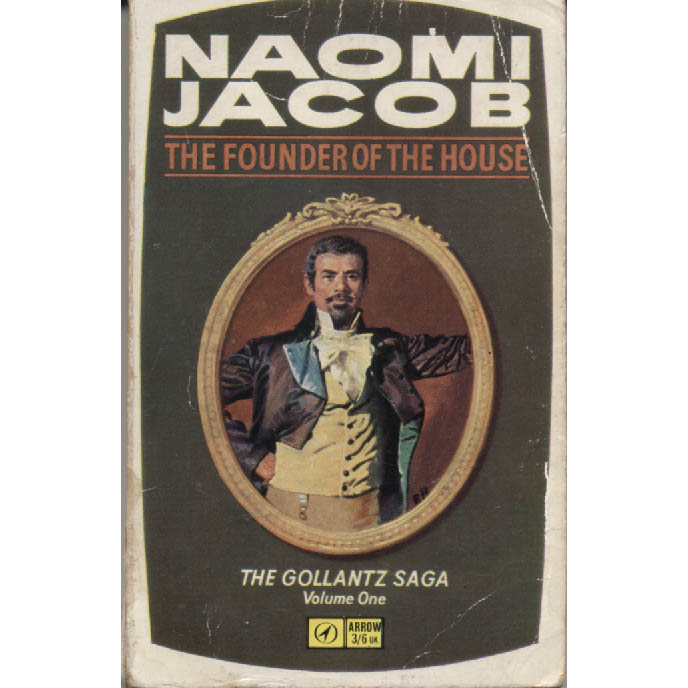
Naomi Jacob’s The Founder of the House, published in 1965 by Arrow Books, stands as an intriguing specimen of mid-20th-century literature, enveloped in the paperback aesthetic of its era. The cover design, featuring muted colours and a somewhat abstract illustration, evokes a sense of nostalgia, capturing the spirit of the 1960s when paperbacks became increasingly popular and accessible to the masses. This particular edition, printed on slightly yellowed paper, possesses a tactile charm that invites readers to engage with it, despite its somewhat forgettable visual appeal. The typography is straightforward, perhaps lacking the flair of contemporary designs, yet it reflects the utilitarian approach of its time, focusing more on content than on glamor.
The book’s premise and Jacob’s writing style, typical of her era, weave a narrative that, while not groundbreaking, seeks to explore themes of identity, legacy, and the foundational aspects of familial ties. Readers may find themselves immersed in a world that feels both familiar and distant, a reflection of societal norms and values from a time when traditional structures were beginning to be questioned. The prose exhibits a certain rhythm characteristic of the period, with dialogues that may strike modern readers as somewhat stilted or overly formal. Yet, therein lies a certain charm that offers a glimpse into the cultural fabric of 1960s Britain, where literature was often more concerned with moral lessons and societal roles than with the avant-garde experimentation that would soon follow in later decades.
Naomi Jacob herself appears to occupy a somewhat obscure position within literary history. While she is known to have penned several works, including novels and plays, and was active in the early 20th century, detailed biographical information is scant. Little is documented about her influences, literary movements, or the reception of her works in the context of her contemporaries. It seems that Jacob’s contributions, while notable, have not been extensively celebrated in literary circles, and her works have not achieved the same level of enduring recognition as those of her peers. This raises intriguing questions about why some authors fade into obscurity while others remain prominent figures in the literary canon.
Published in 1965, The Founder of the House emerges from a decade marked by considerable social upheaval and change in Britain. The 1960s were a time of cultural revolution, with movements advocating for civil rights, women’s liberation, and a questioning of traditional values. In this light, Jacob's exploration of familial ties and identity seems to resonate with the zeitgeist, albeit in a more conservative manner. The themes of legacy and the foundational aspects of family life may reflect a longing for stability amidst the chaos of changing societal norms. Yet, the novel does not fully engage with the radicalism that characterised much of the literature of the time, settling instead into a narrative that is reflective rather than revolutionary, perhaps indicating Jacob’s own literary leanings or her desire to appeal to a broader audience.
The paperback format of this novel is significant in itself. The rise of paperback books during this period made literature more accessible to the public, allowing a greater diversity of voices to be heard. Arrow Books, as a publisher, played a crucial role in this transformation, bringing works to readers who might not have otherwise engaged with literature. The physicality of the book, with its slightly worn edges and the smell of aged paper, adds to the reading experience, evoking a sense of history that is palpable with each turn of the page. This tangible connection to the past enhances the reader's journey through Jacob's narrative, as they are reminded of the cultural shifts that have occurred since its original publication.
Despite its many charms, The Founder of the House does not escape the trappings of its time. The characters may seem one-dimensional by today’s standards, and the plot can feel predictable, lacking the depth and complexity that modern readers often seek. Nevertheless, the novel serves as a window into the literary conventions of the 1960s, offering insights into the values and struggles of the era. It invites readers to reflect not only on the themes it presents but also on the broader context of literature and its evolution over the decades.
In conclusion, while Naomi Jacob may not be a household name, her work, particularly in The Founder of the House, holds a place in the tapestry of literary culture. This novel, with its characteristic 1960s paperback vibe, stands as a cultural artefact that reflects the societal norms and literary trends of its time. For those interested in exploring the quieter corners of literary history, or for fans of vintage paperbacks, this work is a worthwhile addition to any collection. Crappy Old Books celebrates such treasures, encouraging readers to delve into the past and discover the stories that may have been overshadowed by the towering figures of literature.