AI-assisted note, based on the text and a physical inspection of this copy.
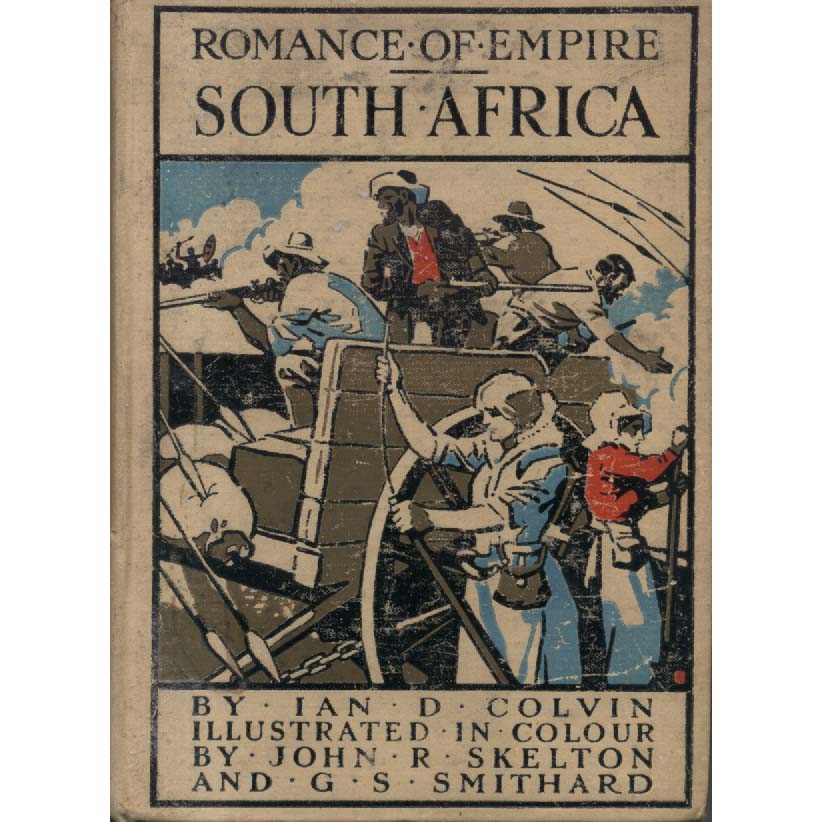
The book Romance Of Empire - South Africa by Ian D Covlin, published in 1909 by TC and EC Jack, is a striking cultural artifact that showcases the literary tendencies and imperial narratives of its time. The cover design is of particular note, featuring bold colours and ornate typographic elements typical of early 20th-century publishing. The aesthetics present a romanticised view of empire, reflecting the colonial mindset prevalent during this era. Such visual elements entice readers while simultaneously hinting at the underlying complexities and contradictions of the imperial project. The paperback format, with its slightly yellowed pages and sturdy binding, evokes a sense of nostalgia and authenticity, inviting one to delve deeper into its contents.
As for Ian D Covlin, information about the author is quite scarce, and he appears to be somewhat obscure within the larger context of literary history. There is little documented about his life, career, or other works, which raises questions about his influence or standing in the literary culture of the time. This lack of biographical detail makes it challenging to assess his contributions beyond the pages of this single title. Without a wider body of work or notable recognitions, Covlin's place in the annals of publishing history remains largely uncharted.
The year 1909 was a pivotal moment in history, sitting at the crossroads of the Victorian era and the modern age. The British Empire was at its zenith, and the narratives surrounding colonialism were often infused with a sense of adventure and heroism, as well as an undercurrent of moral justification for imperial expansion. The fascination with far-off lands and exotic cultures was a dominant theme in literature of the time, and Romance Of Empire - South Africa fits neatly into this genre. The book undoubtedly reflects the attitudes and ideologies of its era, providing insight into how South Africa was perceived by those in the metropole. It is worth noting that the romanticisation of colonialism often glosses over the harsh realities faced by indigenous populations, creating a stark contrast between the glorified narratives and the lived experiences of those subjected to imperial rule.
In terms of content, Covlin's work can be seen as a blend of travelogue and historical account, aiming to capture the spirit of South Africa during a time of significant change. While it is easy to dismiss the text as outdated or simplistic by contemporary standards, it serves as an important cultural document that illustrates the imperial mindset and the literary conventions of the early 20th century. Such works often perpetuate stereotypes and glorify colonial exploits, but they also provide modern readers with a lens through which to examine the evolution of cultural narratives over time.
The publisher, TC and EC Jack, was known for producing a variety of titles that catered to the popular market, often focusing on adventure and exploration. They played a role in shaping the public's understanding of colonial territories, and their publications frequently reflected the interests and anxieties of British society at the time. The company’s decision to publish Covlin's work suggests an eagerness to engage with the prevailing enthusiasm for stories of empire, underscoring the commercial viability of such narratives in the early 20th century.
In conclusion, Romance Of Empire - South Africa stands as a testament to the imperial imagination of its time, providing a window into the cultural attitudes that shaped perceptions of South Africa during a critical juncture in history. While the author Ian D Covlin may not be a household name, the book remains a significant piece of the puzzle in understanding early 20th-century literature and its role in disseminating imperialist ideology. As readers engage with this text, it is crucial to approach it with a critical eye, recognising both its historical context and the shifting perspectives on empire and colonisation. Crappy Old Books offers a fascinating exploration of such literary relics, encouraging us to reflect on the narratives that have shaped our world.