AI-assisted note, based on the text and a physical inspection of this copy.
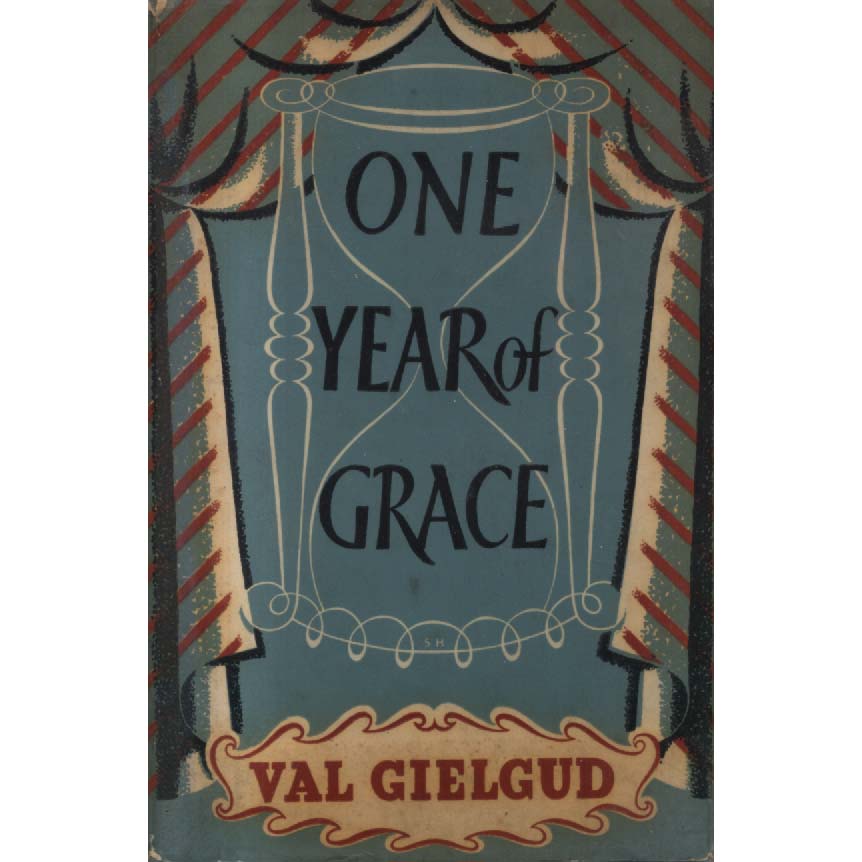
One Year of Grace, published in 1950 by Longmans Green and Co, presents a curious cultural artefact from the mid-20th century. The cover design reflects the stylistic tendencies of its time, featuring a subdued palette typical of post-war publications. The typography is both straightforward and elegant, managing to convey a sense of earnestness that might attract the reader's attention, albeit in a rather unremarkable manner. The paperback vibe of the book is palpably nostalgic, with a slightly yellowed paper that hints at its age, inviting readers to consider its history and the hands it has passed through. The overall presentation of the book encapsulates a period when literature was often treated as a serious, contemplative pursuit, in contrast to the more commercialised offerings of later decades.
Val Gielgud, the author of this work, remains a somewhat obscure figure within the literary landscape. While he may not have achieved the same level of fame as his contemporaries, Gielgud’s contributions, including this title, reflect a specific ethos of the time—a focus on introspection and spiritual exploration. The limited biographical information available suggests that he was less of a literary celebrity and more of a quiet observer, whose work may have resonated with a niche audience. This obscurity adds a layer of intrigue to One Year of Grace, inviting speculation about the motivations and experiences that shaped his writing.
The year 1950 serves as an intriguing backdrop for the publication of One Year of Grace. This was a time of significant social and cultural upheaval in Britain, as the nation began to rebuild itself following the devastation of World War II. The post-war era was marked by a yearning for stability, and Gielgud's work can be viewed as a reflection of this sentiment. Society was grappling with existential questions and a search for meaning, making a book that explores themes of grace particularly relevant. The publication year also coincided with the rise of new literary movements that would eventually challenge traditional forms, yet Gielgud appears to remain steadfastly rooted in a more classical approach to writing.
One Year of Grace is structured in a way that invites readers to reflect on their own experiences and the notion of grace as it intersects with daily life. The prose is marked by a contemplative tone, with passages that may strike the reader as both profound and overly earnest at times. Gielgud's style can feel heavy-handed, as he navigates complex themes with a certain solemnity that can come across as stilted. The book's pacing lends itself to a slow, meditative reading, which may appeal to some but could alienate those looking for a more dynamic narrative.
Despite its shortcomings, One Year of Grace offers a glimpse into the spiritual and philosophical struggles of its era. Readers may find themselves engaging with the text on a personal level, as Gielgud's reflections prompt introspection. However, the book occasionally feels like it is preaching rather than inviting dialogue, which may not resonate with modern sensibilities. The overall tone can sometimes verge on the didactic, a quality that may deter contemporary readers accustomed to more nuanced storytelling.
The cultural implications of the book extend beyond its text; it is a product of its time, embodying the struggles of a society that was seeking solace and understanding in the aftermath of conflict. The themes explored within One Year of Grace echo the broader societal quest for meaning and connection, making it a relevant, albeit flawed, piece of literature. The legacy of such works often lies in their ability to prompt reflection, and Gielgud's offering certainly fits this mold.
In summary, One Year of Grace encapsulates a specific moment in literary history, situated firmly within the post-war milieu of the 1950s. Its cover design, paperback nature, and contemplative themes make it a noteworthy cultural object, even if it does not stand out as a groundbreaking piece of literature. Val Gielgud's somewhat obscure status contributes to the book's allure, as readers may be curious about the man behind the words. While the writing may not resonate with everyone, it undeniably serves as a window into a time when literature sought to provide comfort and introspection. For those intrigued by the nuances of literary culture, Crappy Old Books offers a chance to explore this lesser-known gem and engage with the past through the lens of Gielgud's reflections.