AI-assisted note, based on the text and a physical inspection of this copy.
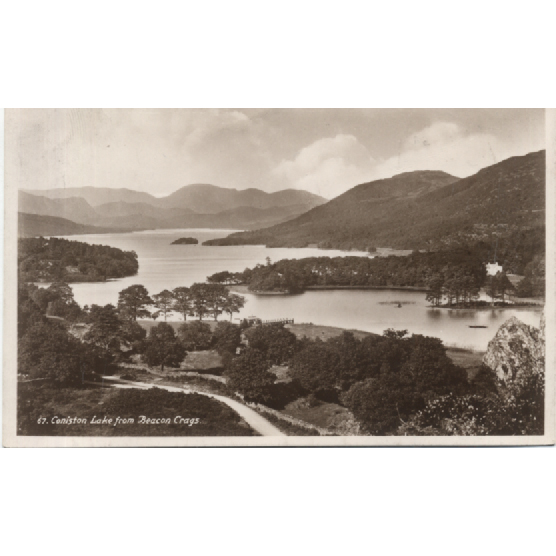
“Coniston Lake from Beacon Crags” is a curious relic from the mid-20th century, encapsulating a moment in British cultural history that resonates with nostalgia for the great outdoors and the beauty of the English landscape. The book, although lacking a specified author, presents itself as an earnest homage to the iconic vistas of the Lake District. Its cover design, a simple yet evocative illustration, captures the picturesque allure of Coniston Lake, framed by the rugged Beacon Crags. The muted colour palette, characteristic of the period, evokes a sense of tranquillity and timelessness, inviting readers to escape into a world where nature reigns supreme.
The book’s physicality aligns with the paperback vibe typical of post-war Britain. The pages, slightly yellowed with age, exude a certain charm, while the binding, though somewhat fragile, adds to its authenticity as a vintage object. The print style is representative of the era, with a serif typeface that lends a touch of elegance, even as it teeters on the edge of obsolescence. It feels as if each leaf turned is a whisper of the past, beckoning the reader to a simpler time when such serene landscapes were not just seen but felt profoundly.
While the lack of an identifiable author may raise eyebrows, it also suggests a collective cultural impulse rather than a singular artistic vision. This absence of authorship could imply that the book serves as a canvas for communal appreciation of the landscape, echoing the collective sentiments of a society emerging from the shadows of war and seeking solace in nature. The anonymity of the author adds an intriguing layer, as it allows readers to project their own experiences and memories onto the text, creating a shared connection that transcends individual narratives.
Published in 1948, this book occupies a pivotal place within the cultural landscape of post-war Britain. In the wake of World War II, there was a significant yearning for peace and beauty, a desire to reconnect with the natural world after years of conflict. This was a time when Britain was slowly rebuilding, both physically and emotionally. The Lake District, with its sweeping hills and serene lakes, became a symbol of hope and restoration. The book reflects this zeitgeist, capturing the essence of a nation seeking refuge in its own picturesque landscapes.
The 1940s also marked the beginning of a shift in British publishing, where the focus began to shift towards more accessible formats. The paperback revolution was just starting to take hold, making literature and art more widely available to the public. This book, while not a bestseller, fits neatly into that burgeoning trend, appealing to those seeking beauty without the constraints of highbrow exclusivity. The decision to publish such a work during this transformative period speaks volumes about the cultural priorities of the time, prioritising accessibility and community engagement over elitism.
The book’s exploration of Coniston Lake and its surroundings can be seen as part of a larger tradition of nature writing that flourished in the 20th century. While it may not have the literary flair of more renowned nature authors, its earnestness provides an authentic snapshot of a particular time and place. The simplicity of its language and the focus on the landscape itself allows readers to immerse themselves in the experience of being in nature, valuing the beauty of the scenery over complex narrative structures.
Despite the lack of a known author, “Coniston Lake from Beacon Crags” invites speculation about the creative forces behind its conception. It may well have been the work of a local artist or photographer, someone deeply connected to the landscape and motivated by a desire to share its beauty with others. The absence of detailed biographical information about the author leaves us with a sense of mystery, providing an opportunity for readers to engage with the book on a more personal level. The anonymity allows for a broad interpretation of the text, drawing in various perspectives and reflections.
In summary, “Coniston Lake from Beacon Crags” serves as a cultural object that embodies a specific moment in British history, capturing the allure of the Lake District within the context of post-war recovery. Its physical presence—a vintage paperback with its faded pages and simple design—contributes to its charm, creating an inviting space for readers to explore the beauty of nature. While the author remains shrouded in obscurity, the book's ability to resonate with the collective spirit of its time can’t be overlooked. It stands as a testament to the enduring power of landscapes to inspire and heal, and is a worthy addition to the collection of any admirer of Crappy Old Books.