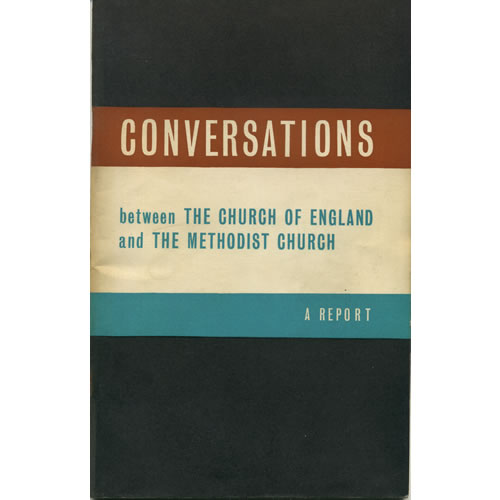
AI-assisted note, based on the text and a physical inspection of this copy.
The book titled Conversations Between The Church Of England And The Methodist Church, published in 1963 by Epworth Press, offers a unique glimpse into the dialogues and discussions surrounding two significant branches of Christianity in Britain. The cover design is rather utilitarian, reflecting the era's preference for straightforward presentation over flamboyant visuals. The paperback vibe is distinctly mid-20th century, with a simple yet effective layout that prioritises readability and accessibility. The physicality of the book, with its slightly yellowed pages and soft cover, echoes a time when religious discourse sought to engage a wider audience, aiming to bridge gaps between differing theological perspectives rather than alienate them. This is a cultural artifact that feels like it belongs to a time of earnest conversation, a far cry from today's often contentious religious debates.
The Church Information Office, though not widely celebrated as a literary figure, serves as the author of this work. This entity appears to be a somewhat obscure collective rather than an individual author, which complicates the task of providing a detailed biography. The Church Information Office likely played a role in facilitating dialogue and fostering understanding between various denominations, a function that aligns with the book's theme of unity. However, specific records about its members or their individual contributions seem scant, leaving the office somewhat in the shadows of religious publishing history. The lack of personal narrative or authorial voice in the text itself suggests a collective rather than individual intention, which may resonate with the communal spirit of the religious dialogue it seeks to illuminate.
Published in 1963, the book arrives at a time when the United Kingdom was grappling with a post-war identity, attempting to redefine itself amidst a rapidly changing social landscape. The 1960s were marked by significant cultural shifts, including the rise of youth culture, the questioning of traditional values, and the beginnings of ecumenical movements within Christianity. This period saw religious institutions confronting modernity and exploring ways to remain relevant to a society that was increasingly secular. The conversations documented in the book reflect a broader movement within the Church of England and the Methodist Church to engage with contemporary issues and foster a spirit of cooperation in the face of societal changes. This was a time when interdenominational dialogue was not merely a theological exercise but a necessary response to a world in flux, making the book a notable historical document in the context of British religious culture.
The contents of the book, while not a gripping narrative or a dramatic tale, provide valuable insights into the theological discussions and agreements reached between these two influential churches. The dialogues, as presented, are likely to appeal to those interested in ecclesiastical history, religious studies, or the evolution of Christian thought in Britain. The text is imbued with a sense of earnestness and a desire for understanding, which can be refreshing for readers accustomed to more contentious religious texts. It does, however, lack the dynamism or narrative flair that might engage a broader audience outside of its intended scholarly or ecclesiastical readership.
As for the cultural significance of the book, it stands as a testament to a time when religious bodies were actively seeking common ground. The 1960s also saw the rise of various social movements, and the churches' efforts to engage in dialogue can be viewed as a microcosm of larger societal changes. The conversations recorded in this text echo contemporary discussions about inclusivity and cooperation across different faiths and denominations. Thus, while it may not be a bestseller or a widely discussed work, it holds a niche place within the annals of religious literature, particularly for those studying the intersections of faith and social change.
In conclusion, Conversations Between The Church Of England And The Methodist Church may not have the allure of a gripping novel or the recognition of a celebrated author, but it serves as an important cultural object. It captures a moment in time, reflecting the earnest desire of two major religious bodies to understand and respect each other amidst a backdrop of societal change. As a piece of print culture, it invites readers to consider the historical context of religious dialogue, making it a worthwhile addition to the library of those interested in the evolution of Christian thought and interdenominational relationships. In the spirit of Crappy Old Books, this text stands as a reminder of the often-overlooked dialogues that shape our collective understanding of faith and community.