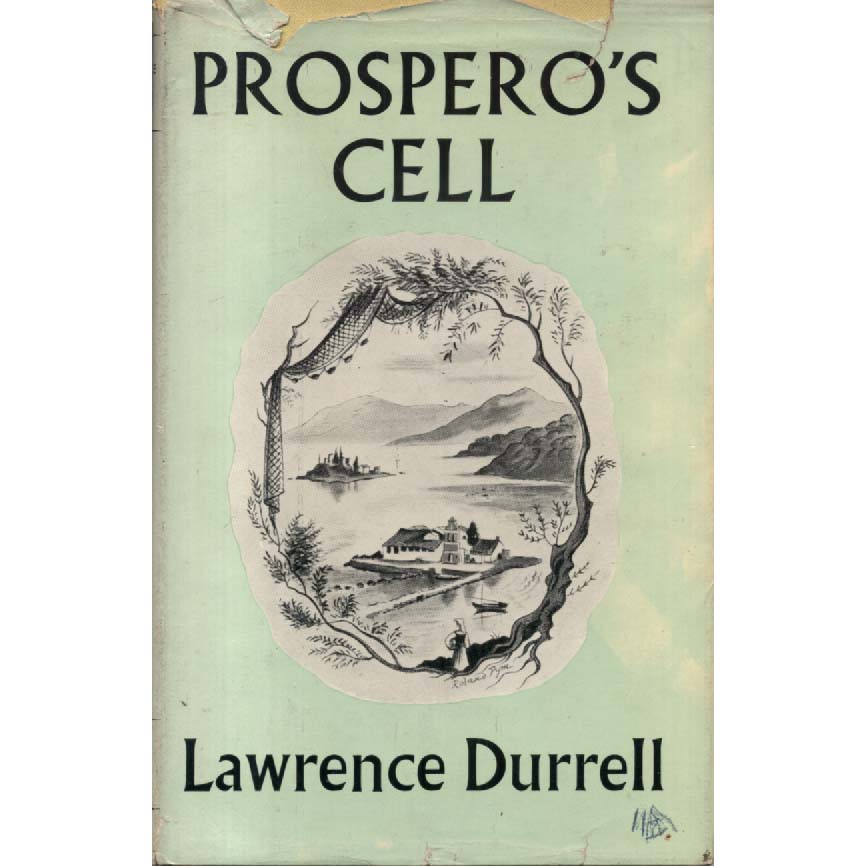
AI-assisted note, based on the text and a physical inspection of this copy.
Lawrence Durrell's "Prospero's Cell", published in the 1960s by Faber & Faber, stands as a curious artefact of literary travelogue, blending memoir with a deep appreciation for the Greek island of Corfu. The cover design, typical of Faber's aesthetic during this period, features a minimalist approach that highlights the allure of the Mediterranean landscape, inviting readers to dive into the sun-drenched prose within. The paperback edition boasts a satisfyingly tactile quality, the kind that feels sturdy yet pliable, embodying the spirit of its time—perfect for those who found solace in the written word while lounging in gardens or on beaches. This book encapsulates the escapism that many sought during the tumultuous 1960s, when society was grappling with rapid change and the allure of distant places became increasingly appealing.
Durrell, a British novelist, poet, and travel writer, is best remembered for his tetralogy "The Alexandrian Quartet", which delves into themes of love, art, and the complexity of human relationships. "Prospero's Cell" is often seen as part of his broader oeuvre, reflecting his lifelong fascination with the Mediterranean locale. While he is a well-documented figure within literary circles, his works are sometimes overshadowed by contemporaries like Henry Miller and Lawrence of Arabia, making him a somewhat niche interest for literary scholars. Durrell’s ability to weave picturesque descriptions with philosophical musings in "Prospero's Cell" illustrates his unique position in the literary culture of the mid-20th century, though he remains less widely celebrated than some of his peers.
Published during the 1960s, "Prospero's Cell" mirrors the cultural zeitgeist of the era, a time when traditional values were being called into question and many sought new experiences. The post-war world was shifting towards a more open and exploratory mindset, where travel literature blossomed, encouraging readers to seek adventure beyond their front doors. The book serves as both a personal narrative and a broader commentary on the enchantment of the Greek islands, capturing the spirit of a generation eager to embrace the joys of life and nature. Durrell’s vivid descriptions of Corfu's landscapes evoke a sense of longing and nostalgia, appealing to those who wished to escape the mundanity of their everyday lives.
The narrative style of "Prospero's Cell" is characterised by lyrical prose and rich, sensory imagery, making it a sensory experience rather than a straightforward account. Durrell’s ability to evoke the sights, sounds, and even scents of his surroundings immerses the reader in the island’s charm, creating a vivid backdrop against which his reflections on life, love, and art unfold. This immersive quality is one of the book’s strengths, although some readers might find Durrell's contemplative style meandering at times, straying from a linear narrative in favour of a more impressionistic approach.
Moreover, the book reflects Durrell's philosophy that the act of writing is not merely a recounting of events, but an exploration of the self in relation to the world. This notion resonates particularly well with readers who appreciate literature as a means of introspection and personal growth. However, the non-linear narrative and philosophical digressions may disconcert those looking for a traditional travelogue or a straightforward memoir.
In terms of print culture, "Prospero's Cell" is a testament to the mid-20th century's embrace of travel literature, a genre that flourished as more people sought to document their experiences abroad. The paper quality is commendable, allowing for a comfortable reading experience, and the font choice is elegant, complementing the overall aesthetic of the book. Faber & Faber's reputation as a publisher of high-quality literary works enhances the book's standing within the literary canon, as it was known for promoting significant voices of the time.
While "Prospero's Cell" may not have achieved the same level of acclaim as some of Durrell's other works, it remains an essential read for those curious about the intersection of travel and personal reflection. It captures a moment in time when literature was evolving and expanding its boundaries, much like the societal changes that surrounded it. This book acts as a bridge between the past and present, inviting readers to consider their own journeys in a world that continues to shift.
In conclusion, "Prospero's Cell" is more than just a travel narrative; it is a meditation on life, art, and the beauty of Corfu, woven through Durrell's intricate prose. For those who appreciate the atmosphere of the 1960s literary scene and the rich tapestry of travel literature, this book serves as a compelling addition to any collection. Crappy Old Books celebrates such works, as they not only offer a glimpse into the past but also provide a context for understanding the evolution of literary culture.