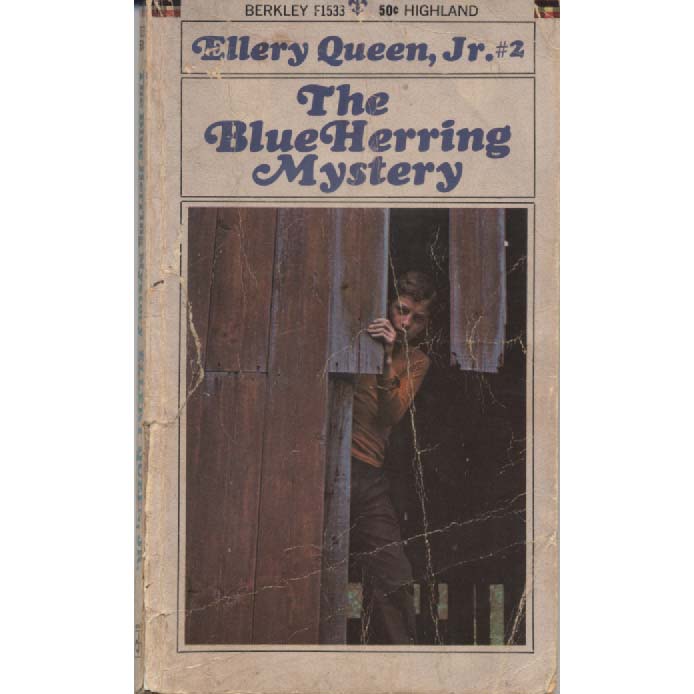
AI-assisted note, based on the text and a physical inspection of this copy.
The Blue Herring Mystery by Ellery Queen Jnr, published in 1968 by Berkley Publishing, presents a curious artefact of mid-20th century crime fiction. The cover design, with its vibrant hues and bold typography, encapsulates the visual aesthetic of the time—an era marked by vivid colours and striking graphics that aimed to attract readers’ attention on crowded bookstore shelves. The paperback format itself feels quintessentially '60s, with the slightly worn texture and the smell of aged paper that evokes a sense of nostalgia. This book embodies the cultural milieu of its release, reflecting both the fascination with mysteries and the growing popularity of paperback novels, which allowed readers access to thrilling narratives at a more affordable price.
The content of The Blue Herring Mystery aligns with the conventions of the genre, featuring intricate plots and clever resolutions that were hallmark traits of mystery novels from this period. However, one might argue that it does not break new ground or offer a particularly memorable reading experience. The dialogue can feel stilted at times, and the pacing leaves much to be desired, which may leave readers wanting more. While it does engage the reader in its narrative, it often falls into the traps of cliché and predictable plot twists that were prevalent in the crime genre during this period. The book’s title itself suggests an intriguing premise, yet it may not live up to the expectations one might have based solely on the cover and the allure of the mystery genre.
Ellery Queen Jnr appears to be a relatively obscure figure in the realm of literary culture, with scant biographical information available. It is unclear whether he is directly related to the more widely known Ellery Queen, the pseudonym for the writing team of Fredric Dannay and Manfred B. Lee, who created a celebrated series of detective novels and stories. The lack of documentation surrounding Ellery Queen Jnr raises questions about his contributions to the genre and whether he sought to build upon or diverge from the legacy of his namesake. This obscurity makes it difficult to evaluate his impact within the broader context of crime fiction, leaving readers to speculate about his intentions and literary significance.
Published in 1968, The Blue Herring Mystery arrived during a transformative era in both literature and society. The late 1960s were a time of cultural upheaval, marked by shifts in social norms and the rise of countercultural movements. In the literary world, this period saw the emergence of more experimental forms of writing and a challenge to traditional narrative structures. While mystery novels were still popular, they were beginning to face competition from more avant-garde literature, which often sought to challenge readers' expectations. The genre itself was evolving, and while The Blue Herring Mystery may have adhered to established conventions, it risks being overshadowed by more innovative works of its time.
Ultimately, The Blue Herring Mystery serves as a snapshot of its era—a blend of traditional crime narrative and the burgeoning paperback culture of the 1960s. While it may not leave a lasting impression on the reader, it offers a glimpse into the tastes and trends of a specific time period. For those who have an affinity for vintage mysteries or wish to explore the breadth of crime fiction, this book may still hold some appeal. However, readers seeking fresh narrative experiences or groundbreaking storytelling might be best served looking elsewhere.
In summary, The Blue Herring Mystery is a product of its time, charming in its own right but limited by the conventions of the genre. As we sift through the plethora of literature from the past, Crappy Old Books provides a platform to revisit such works, highlighting both their shortcomings and their place within literary history.