AI-assisted note, based on the text and a physical inspection of this copy.
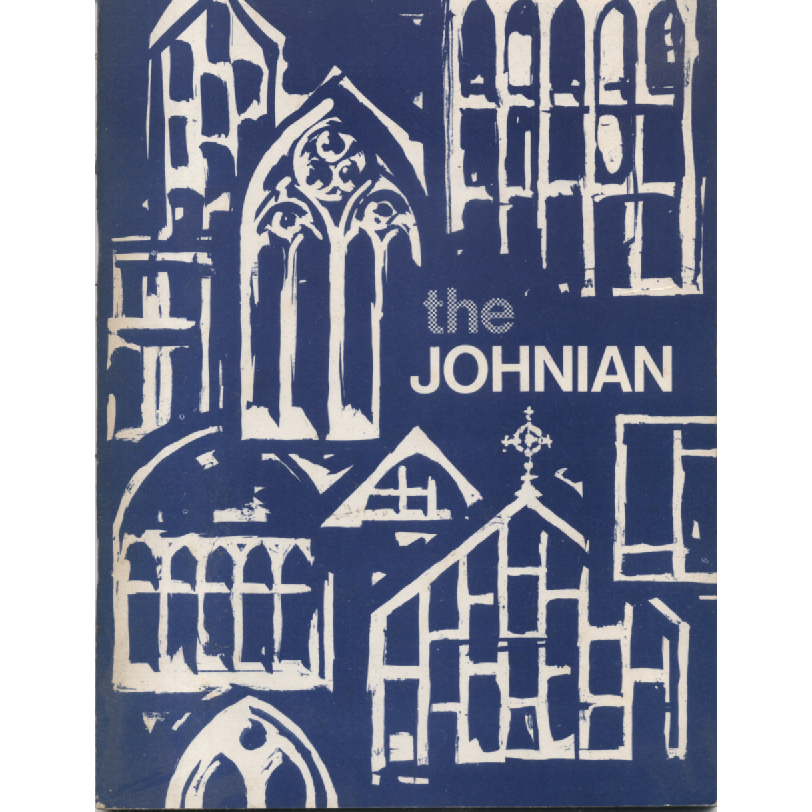
The Johnian - Vol 81 No 2 is an intriguing cultural artefact that provides a snapshot of the social fabric and educational milieu of St John's School, Leatherhead, in 1966. This edition of the school's magazine presents a blend of student essays, poetry, and illustrations that reflect the interests and concerns of its youthful contributors. The cover design is typical of the era, featuring a simple yet effective layout that captures the essence of a school publication from the mid-20th century. The paper quality is reminiscent of the period—slightly yellowed and brittle, hinting at the passage of time and the ephemeral nature of school life. The overall aesthetic is an authentic representation of the period, offering a tangible connection to the past for those who engage with it.
The absence of a specific author for this volume indicates that it is a collective effort by the students and faculty of St John's School. This anonymity is not uncommon in school publications, where the goal is often to showcase a broad swath of student talent rather than to highlight individual achievements. Such an approach creates a sense of community and shared experience, as every contributor, whether a budding poet or an aspiring journalist, has their moment to shine. The collaborative nature of The Johnian reinforces the school's emphasis on fostering creativity and expression among its students, a sentiment that resonates with educational ideals of the time.
Published in 1966, this edition of The Johnian captures a moment in British culture marked by significant social change and youthful exuberance. The mid-1960s were a period of experimentation, both in art and literature, as well as in broader societal attitudes. The rise of counterculture, the questioning of traditional values, and the burgeoning influence of youth culture are palpable in the writings and illustrations found within these pages. The content reflects a sense of optimism and exploration, traits characteristic of the era, as students grapple with their identities and aspirations in a rapidly changing world. This context enriches the reading experience, as each piece can be viewed as a microcosm of the larger cultural shifts occurring outside the school walls.
Interestingly, the publication serves not only as a showcase for student work but also as a historical document, preserving the voices of young people during a transformative time. The contributions range from poetry that encapsulates the hopes and dreams of adolescence to essays that engage with contemporary issues, perhaps echoing the concerns of the wider society. The presence of illustrations—likely crafted by students with a flair for art—adds a visual dimension that complements the written word, creating a vibrant tapestry of youthful expression.
While the specifics about the contributors remain largely undocumented, it is clear that the collective effort of the students and faculty at St John's School is a testament to the educational values of the time. Schools were increasingly seen as spaces for personal development and self-expression, and The Johnian stands as a testament to this ethos. The magazine provides a platform for students to articulate their thoughts and feelings, fostering a sense of ownership over their educational experience. This is a vital aspect of the school's identity and reflects broader trends in the British educational system during the 1960s.
In terms of its cultural significance, The Johnian - Vol 81 No 2 highlights the importance of school magazines as part of the print culture of the time. The process of producing such a publication not only cultivates writing and editing skills but also encourages teamwork and collaboration among students. The act of compiling, editing, and ultimately publishing a collection of works fosters a sense of pride and accomplishment, signalling to students their ability to contribute meaningfully to their community. This is a strong link to the heritage of educational publications that have emerged throughout the 20th century, reinforcing the idea that such ventures are more than mere collections of work; they are vital components of a school’s legacy.
The 1960s were also notable for a growing interest in youth culture, which is subtly reflected in this edition. The pieces within The Johnian may not explicitly address the wider social movements of the time—such as the civil rights movement or the rising counterculture—but they do capture the spirit of a generation eager to define itself. The writings often hint at the aspirations and frustrations of young people who are beginning to carve out their own identities against the backdrop of a changing society. This duality of personal and collective experience makes the magazine an interesting study in the interplay between individual and societal narratives.
In summary, The Johnian - Vol 81 No 2 is not just a school magazine; it is a cultural artifact that encapsulates the essence of a specific time and place. Its pages offer a window into the lives of students at St John's School during a period marked by change and development. The collaborative nature of the publication, combined with the cultural context of the 1960s, provides a rich tapestry of youthful voices that resonate even today. For those interested in the evolution of student publications and their role in educational culture, this edition serves as an important marker in the landscape of Crappy Old Books, reminding us of the value of preserving such voices from the past.