AI-assisted note, based on the text and a physical inspection of this copy.
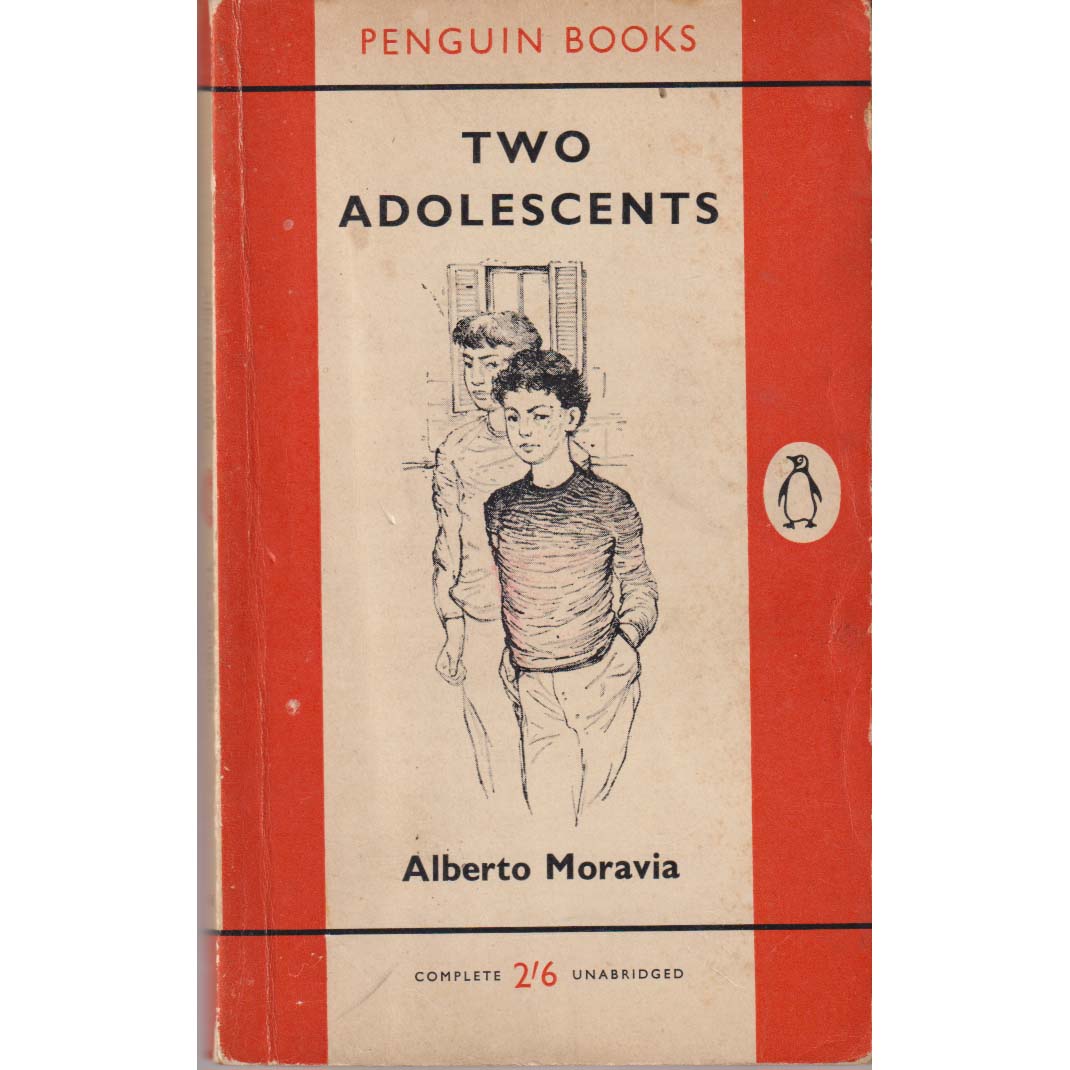
In the realm of mid-20th century literature, Alberto Moravia's Two Adolescents emerges as a noteworthy cultural artefact, encapsulating the tumultuous emotions and existential questions of youth. Published in 1961 by Penguin Books, the novel's paperback edition features a cover design typical of the era, with bold typography and a simplistic yet evocative illustration that hints at the complexities of adolescence. The aesthetics of the cover, combined with the tactile pleasure of the paperback, invite readers into a world where the struggles of youth are explored with a raw authenticity that resonates even today.
Moravia, an influential Italian author, is perhaps best known for his exploration of themes such as alienation, sexuality, and the human condition in the context of post-war Italy. Born in 1907, he lived through significant socio-political upheaval, which undoubtedly shaped his literary voice. Though he is celebrated for works like The Conformist and Contempt, Two Adolescents may not occupy the same esteemed position in literary canon, leading to a sense of obscurity surrounding this particular title. His writing, characterised by a focus on the inner lives of his characters, often reflects a disconnection from society—an element that is likely to resonate with young readers grappling with their own identities.
The publication year of 1961 places Two Adolescents in a time of great social change. The post-war period saw a shift in cultural norms, with the youth increasingly questioning traditional values and seeking their own paths. This novel, written during a time of burgeoning counterculture and the rise of youth movements, captures the feeling of rebellion and the quest for self-discovery that defined a generation. The themes of confusion and desire prevalent in the narrative mirror the struggles of adolescents during this transformative era, making the book a significant reflection of its time.
In Two Adolescents, Moravia delves into the lives of two young protagonists as they navigate the complexities of love, friendship, and societal expectations. The prose is marked by a stark realism, which may feel dated to contemporary readers but serves as a genuine portrayal of adolescent angst. It’s a narrative that captures the essence of youth’s fleeting moments of joy and despair, yet it occasionally stumbles into clichés that may leave readers wanting more depth. The dialogues are at times stilted, and the character development could be perceived as superficial, giving the impression that Moravia's observations, while insightful, may lack the nuance that modern readers often crave.
As one flips through the pages, the print culture of the 1960s becomes evident. The typesetting and layout reflect the era's aesthetic choices, with a straightforward presentation that prioritises readability. The weight of the paperback feels familiar and comforting, reminiscent of a time when literature was a staple of youth culture. This physicality adds an additional layer of nostalgia, inviting readers to engage with the text in a way that digital formats often fail to replicate.
While Moravia's work is often overshadowed by other contemporaries, his role as a chronicler of the human experience cannot be understated. He has a unique position within literary culture, straddling the line between high art and accessible storytelling. However, Two Adolescents may not be his most celebrated work, which raises questions about why it exists in the shadow of his more prominent titles. This obscurity adds a layer of intrigue for those who seek to explore the lesser-known facets of a renowned author’s oeuvre.
In conclusion, Two Adolescents serves as an artefact of its time, reflecting the cultural shifts and emotional landscapes of the 1960s while offering insight into the complexities of youth. Moravia's exploration of adolescent life, though flawed, remains poignant, capturing the essence of a generation grappling with identity and societal expectations. For those interested in the cultural narratives of the past, this book may hold a certain charm, albeit with the understanding that it is not without its shortcomings. Crappy Old Books brings these hidden gems to light, reminding us that even lesser-known works can offer valuable insights into the human experience.