AI-assisted note, based on the text and a physical inspection of this copy.
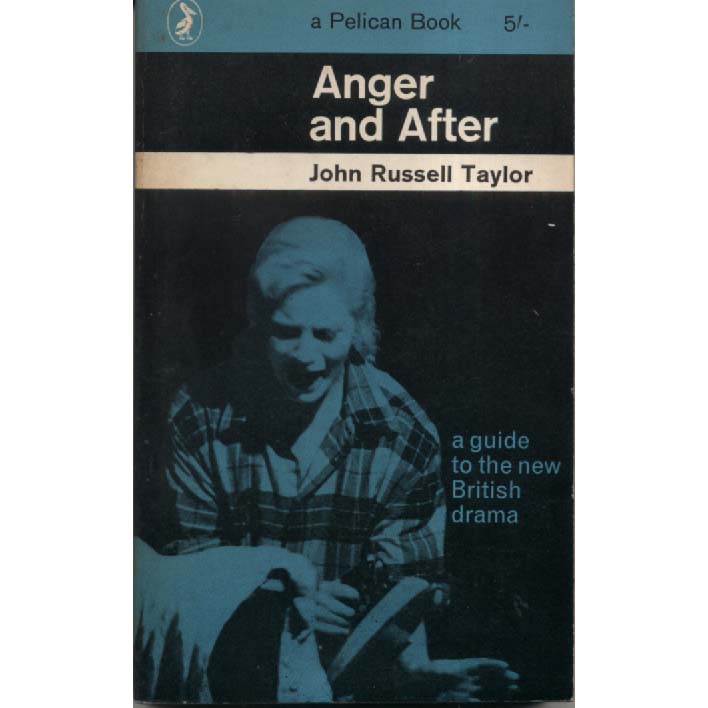
Upon diving into Anger and After by John Russell Taylor, one is immediately struck by the cover design typical of the Pelican Books series. The muted yet striking palette of blues and greens, paired with bold typography, evokes a sense of intellectual curiosity. Published in 1963, this paperback encapsulates a transitional period in British publishing, where accessible literature began to merge more overtly with academic and critical discourse. The overall feel of the book is that of a well-worn yet respected volume, its pages slightly yellowed, hinting at a history of readers before you. The print quality is standard for the era—serviceable but devoid of the luxurious finishes that might elevate a modern edition. This sense of rugged durability aligns with the book's themes, which grapple with the existential crises of its time.
John Russell Taylor, though not a household name, holds a distinctive place in the annals of theatre criticism and literature. He was a prominent British critic, known particularly for his work in theatre, where he explored the nuances of performance and its intersection with societal issues. His contributions to publications such as the Observer and his roles in various literary forums have shaped the way theatre is discussed in the UK. However, Taylor's broader literary contributions appear somewhat obscured, as there is a limited record of his works outside of theatre criticism. While he has penned several books, including critiques and analyses, it is evident that his legacy is largely tethered to his critical insights rather than any singularly iconic literary masterpiece.
The year 1963 marks a significant point in British culture, a time teetering on the edge of social upheaval and cultural re-evaluation. The post-war landscape was still fresh in the collective memory, and the burgeoning youth culture was beginning to assert its identity. This was the era of the 'Angry Young Men' in literature and theatre, a movement that challenged the status quo and sought to voice the frustrations of a disillusioned generation. Anger and After aligns itself with this zeitgeist, offering a critique and exploration of anger as a social and personal phenomenon. Taylor's insights resonate with the broader cultural conversations of the time, encapsulating feelings of discontent that were rising in various forms, from literature to music and beyond.
As one progresses through the pages of Anger and After, it becomes clear that Taylor delves into the nature of anger, not merely as an emotion but as a catalyst for change and creativity. He articulates the complexities of human emotion against the backdrop of societal expectations, making the reader ponder the relationship between personal anger and collective discontent. This exploration is particularly poignant when viewed through the lens of the 1960s, a decade marked by protests, civil rights movements, and a questioning of authority. Taylor's prose is both engaging and reflective, encouraging readers to consider their own experiences of anger and its implications in a rapidly changing world.
In terms of cultural impact, Anger and After serves as a vital document of its time. While it may not be regarded as a classic in the same vein as some of its contemporaries, its relevance is underscored by the enduring nature of its themes. Readers today can still find value in Taylor's discussions, as anger continues to be a relevant topic in contemporary society, from political discourse to personal relationships. The book prompts a reflection on how feelings of anger can lead to both destructive and constructive outcomes, a duality that is just as pertinent now as it was in the 1960s.
In conclusion, Anger and After by John Russell Taylor stands as a testament to the powerful interplay of emotion and culture in the 1960s. The book's design and print culture encapsulate a moment in British history that sought to grapple with the complexities of anger in a world yearning for change. Taylor's position as a critic offers a unique lens through which to explore these themes, even if his broader literary stature remains somewhat nebulous. For those interested in the intersections of emotion, society, and literature, this book from Crappy Old Books serves as a fascinating cultural artifact worth revisiting.