AI-assisted note, based on the text and a physical inspection of this copy.
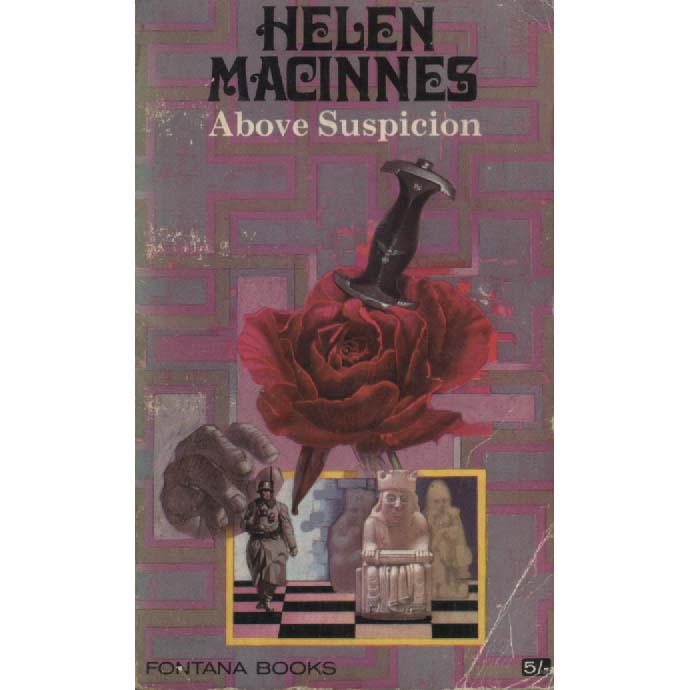
Helen Macinnes’ Above Suspicion, published in 1967 by Fontana Books, is an intriguing cultural artefact that encapsulates the era's fascination with espionage and political intrigue. The book's cover design features a striking blend of bold typography and a dramatic illustration that evokes a sense of suspense and danger, appealing to readers looking for excitement in the realm of Cold War narratives. The paperback format, typical of the time, suggests a mass-market appeal, inviting casual readers as well as more serious enthusiasts of the genre. The mid-century aesthetic resonates with the broader trends in print culture, where paperbacks became the preferred choice for readers seeking affordable and portable literature.
Macinnes, a Scottish author known for her thrillers and espionage novels, occupies a somewhat unique position in literary culture. While she may not be as widely recognised as contemporaries like John le Carré or Ian Fleming, her contributions to the genre have garnered respect among aficionados of spy fiction. Born in 1911, Macinnes began her writing career in the 1940s and quickly established herself as a writer who could blend romance with suspenseful narratives set against geopolitical backdrops. Her works often reflect her keen understanding of the intricacies of international relations, making her an important, though perhaps underrated, figure in the evolution of spy literature. It is worth noting that detailed biographical information about Macinnes is somewhat sparse, which may contribute to her relative obscurity in comparison to her more celebrated peers.
Published during a time when the world was deeply entrenched in Cold War tensions, Above Suspicion reflects the anxieties and uncertainties of the period. The 1960s were marked by a growing public interest in espionage, partly fueled by real-world events like the Cuban Missile Crisis and the increasing visibility of intelligence services. The backdrop of political intrigue not only serves to heighten the narrative tension within the book but also positions it as a cultural artifact of its time, tapping into the zeitgeist that characterised a generation caught between fear and fascination regarding global power dynamics. In this context, Macinnes’ novel resonates with contemporary readers who are still captivated by stories of espionage and betrayal.
The narrative structure of Above Suspicion is emblematic of Macinnes' style, weaving together complex characters and intricate plots that often involve themes of loyalty and deception. This particular work showcases her ability to blend action with emotional depth, allowing readers to engage with the characters on a more personal level while still delivering the thrills expected from the genre. The pacing mirrors the urgency of the times, reflecting a world where trust is scarce and every choice could have dire consequences. The characters, while perhaps not as memorable as those found in more famous works of the genre, are crafted with enough nuance to elicit sympathy and interest, placing them firmly within the narrative’s high-stakes environment.
One notable element of Macinnes’ writing is her attention to detail, which often enhances the authenticity of her settings and situations. The book's portrayal of various locales, from bustling cities to covert meeting spots, allows readers to visualise the action vividly, engaging their imagination in a way that is particularly effective for thrillers. This commitment to realism is significant, especially in a genre that can often veer into the fantastical. Her ability to ground her narratives in actual geopolitical contexts provides a sense of urgency and relevance that is still palpable for modern readers.
Despite its strengths, Above Suspicion is not without its flaws. Some critiques may point to pacing issues or character development that occasionally falters under the weight of the plot. The dialogue, while functional, can at times feel stilted or overly expository, which may detract from the immersive experience that a well-crafted thriller typically offers. However, these shortcomings do not overshadow the book’s merits; rather, they serve as reminders of the challenges inherent in crafting a compelling narrative within the confines of a genre that demands both excitement and coherence.
In considering the cultural and literary significance of Above Suspicion, it is essential to acknowledge the broader landscape of publishing in the 1960s. The era saw an explosion of popular fiction, particularly in the realms of crime and espionage, as publishers sought to capitalise on the public’s appetite for thrillers. Fontana Books, known for its catalogue of popular titles, played a crucial role in bringing works like Macinnes’ to a wider audience, helping to establish her presence within the literary marketplace. The success of such novels not only speaks to the authors behind them but also to the shifting tastes of readers eager for narratives that mirrored their own societal concerns.
In summary, Helen Macinnes’ Above Suspicion stands as a testament to the rich tapestry of 1960s espionage fiction. While the author may not enjoy the same level of recognition as some of her contemporaries, her work remains a significant contribution to the genre. The book reflects the cultural milieu of its time, offering readers a glimpse into the fears and fascinations that defined an era. As a piece of literary history, it is a worthy read for those interested in the evolution of spy novels and the socio-political context that birthed them. Crappy Old Books celebrates such works, recognising their place in the landscape of literature and the enduring appeal of stories that challenge our perceptions of loyalty and trust.