AI-assisted note, based on the text and a physical inspection of this copy.
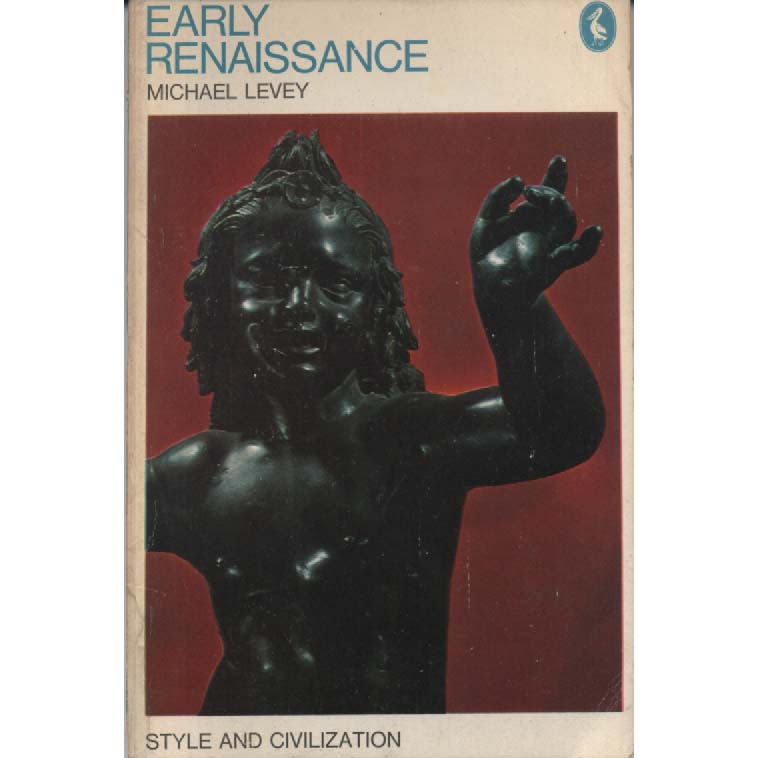
“Early Renaissance” by Michael Levey, published in 1967 by Pelican Original, is an intriguing exploration of a pivotal period in art history. The book encapsulates the essence of the Early Renaissance, a time marked by a revival of classical ideals and a burgeoning appreciation for humanism. The cover design reflects the aesthetic sensibilities of its era, utilising a simple yet evocative layout that hints at the grandeur of the artworks discussed within. The use of bold typography against a muted background allows for an immediate visual impact, though it does not stray far from the conventional design tropes of 1960s art history publications. The paperback format lends a certain accessibility to the text, inviting both serious scholars and casual readers to delve into the intricate world of Renaissance art without the intimidation of a hardcover tome.
Levey’s writing style is engaging, marked by a clear and concise articulation of ideas. His narrative weaves together historical context and aesthetic analysis, making the book a useful entry point for those unfamiliar with the period. The prose is punctuated by well-chosen illustrations, which serve to illuminate the text rather than overshadow it. Each image is carefully selected to reflect the innovative techniques and thematic explorations of the time, from the use of linear perspective to the emergence of chiaroscuro. In a sense, “Early Renaissance” serves both as a visual guide and as an intellectual companion to the art of the period, balancing scholarly insight with a reader-friendly approach.
Michael Levey appears to be a figure whose impact on art history is both notable and somewhat obscured by the passage of time. He is primarily known for his works on Italian Renaissance art, and while he may not have achieved the same level of fame as some of his contemporaries, his contributions to the field are nonetheless significant. This particular work stands as a testament to his ability to distil complex artistic movements into digestible narratives. The lack of extensive biographical information suggests that while he was an active participant in the discourse surrounding art history in the mid-20th century, he did not become a household name in the same way as some of his peers. This obscurity adds an intriguing layer to the reading experience, as one contemplates the broader context of his contributions.
The year 1967 was a culturally vibrant time, marked by a wave of social and political upheaval. The counterculture movement was gaining momentum, with younger generations challenging traditional norms in art, literature, and society at large. Within this backdrop, “Early Renaissance” emerges as a curious juxtaposition; while the world outside was embracing radical change, Levey’s work looks back to a time of cultural rebirth and artistic innovation, capturing the spirit of a different kind of transformation. The Pelican Original series, known for its educational yet engaging approach, reflects the era’s desire to make knowledge accessible to the masses, particularly in the fields of art and history. In this sense, Levey's book serves as both a product of its time and a bridge connecting the past to the present.
The text is structured in a way that facilitates understanding, with chapters logically progressing through key themes and artists of the Early Renaissance. Each section is meticulously researched, providing a balance of factual information and interpretative commentary. This makes it an excellent resource for students and enthusiasts alike, as it not only educates but also inspires further inquiry into the works and figures discussed. The book's layout, with its generous use of illustrations and well-organised content, enhances its readability, making it a valuable addition to the bookshelf of anyone interested in the evolution of art.
In terms of print culture, the 1960s were an exciting time for the publishing industry, with an increasing number of titles aimed at the general public. Pelican Original was known for its commitment to quality educational literature, and “Early Renaissance” fits perfectly within this ethos. The paperback format allowed for broader dissemination of Levey's insights, making it possible for a wider audience to engage with the complexities of Renaissance art. As a cultural object, this book encapsulates the ideals of its time, reflecting a dual desire for both accessibility and scholarly rigor.
In conclusion, “Early Renaissance” by Michael Levey stands as a noteworthy exploration of a transformative period in art history. Its engaging prose, clear structure, and thoughtful integration of visuals make it a valuable resource for those looking to understand the nuances of Renaissance art. While the author may not be as widely recognised as some of his contemporaries, his contributions are crucial within the context of art historical scholarship. The book’s publication in 1967 places it within a dynamic cultural landscape, bridging the gap between past and present ideals. For anyone interested in the intersections of art and history, this book is a worthwhile read, and as ever, Crappy Old Books continues to shine a light on such treasures from the past.