AI-assisted note, based on the text and a physical inspection of this copy.
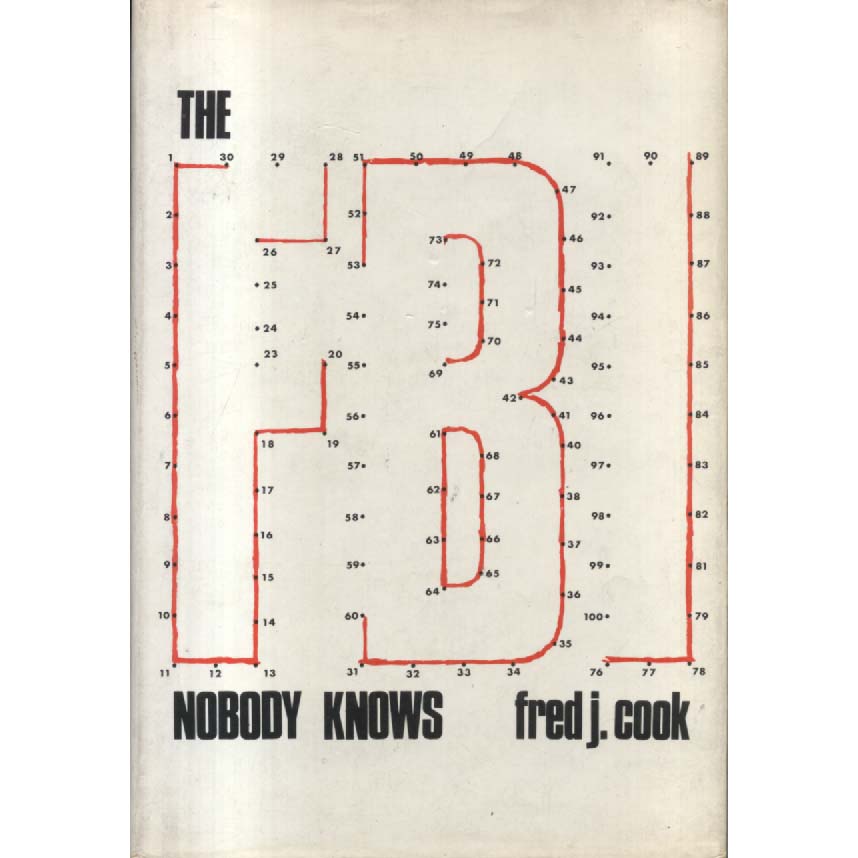
"The FBI Nobody Knows," authored by Fred J. Cook and published in 1965 by Jonathan Cape, is an intriguing artifact of mid-20th century print culture that attempts to peel back the layers of secrecy surrounding the Federal Bureau of Investigation. The cover design, featuring bold typography and a somewhat ominous image, encapsulates the zeitgeist of an era filled with paranoia and speculation regarding government institutions. The paperback format, with its slightly worn edges and yellowing pages, evokes a tangible sense of nostalgia, drawing readers back to a time when the Cold War cast a long shadow over American society. Cook’s work embodies the spirit of investigative journalism that sought to expose the hidden machinations of power, making it both a cultural relic and a significant commentary on the nature of authority.
Fred J. Cook remains a somewhat obscure figure in the pantheon of American authors. His work as a journalist and author seemed to focus on the murky intersections of power and public life. While not widely celebrated, Cook’s contributions to the genre of investigative reporting merit recognition. His writings often tackled provocative subjects, and "The FBI Nobody Knows" stands as a testament to his willingness to confront controversial topics. However, details about his broader literary career or any notable accolades are scant. Cook appears to occupy a niche within the landscape of mid-century journalism, one that is characterised more by the questions he raised than the accolades he received.
Published in 1965, "The FBI Nobody Knows" was released during a period rife with social upheaval and a growing distrust of government institutions. The 1960s were marked by significant events, including the civil rights movement, the Vietnam War, and widespread protests against governmental authority. This tumultuous backdrop provided fertile ground for Cook’s examination of the FBI, an institution that was both revered and reviled. His exploration of the Bureau's operations, often shrouded in secrecy, resonated with a public increasingly wary of governmental overreach. The book's publication coincided with a critical juncture in American history, where questions of civil liberties and state surveillance came to the forefront of public discourse, making Cook's work not only relevant but essential for understanding the era.
The content of "The FBI Nobody Knows" is a mixture of investigative reporting and political commentary that seeks to illuminate the inner workings of the FBI and its often controversial methods. Cook's writing style is accessible, though it occasionally veers into the sensationalistic, a hallmark of the era’s journalistic practices. The narrative pulls readers into a world where the lines between justice and power are blurred, reflecting the anxieties of a society grappling with its own ideals of democracy and freedom. Through anecdotal evidence, interviews, and a critical lens, Cook attempts to demystify the Bureau, revealing the contrasting narratives that surrounded its operations.
The book’s cultural significance is underscored by its ability to engage with the public’s fears and suspicions during a time when trust in authority was waning. Cook's revelations about the FBI's surveillance tactics and internal practices struck a chord, feeding into the broader narrative of governmental distrust that would only intensify later in the decade with events like the Watergate scandal. This work serves as a precursor to many of the conversations that would dominate American political discourse in the subsequent decades, highlighting issues of privacy, civil rights, and the role of federal agencies in everyday life.
In examining the book's style and structure, it is clear that Cook employed a journalistic approach that was both engaging and provocative. The chapters are structured to build upon one another, leading the reader through a gradual unveiling of the complexities surrounding the FBI. However, some critics at the time may have perceived Cook's tone as alarmist, which could have diluted the impact of his findings for more sceptical readers. Yet, in the context of the 1960s, such an alarmist tone might have been necessary to challenge complacency and provoke thought about the implications of governmental power.
The physical attributes of the book also contribute to its cultural value. The paperback edition from Jonathan Cape, with its slightly dog-eared pages and faded cover, not only serves as a time capsule of the 1960s but also reflects the democratic nature of print culture at the time. Paperbacks were more accessible than hardcovers, allowing a wider audience to engage with complex ideas. This accessibility is crucial in understanding how Cook’s work reached diverse demographics, potentially influencing public opinion in ways that hardbound editions could not. The tactile experience of reading this book, with its wear and tear, invites an intimate connection between the reader and the text, echoing the personal nature of investigative journalism.
In conclusion, "The FBI Nobody Knows" by Fred J. Cook is not merely a book; it is a cultural object that encapsulates the anxieties and realities of its time. Through its exploration of the FBI, it raises critical questions about power, surveillance, and civil liberties that remain relevant today. Cook's status as a somewhat lesser-known author does not diminish the importance of his work; rather, it highlights the myriad voices that contributed to the rich tapestry of American journalism. This book serves as a reminder of the ongoing struggle to hold powerful institutions accountable, making it a worthy inclusion in the annals of Crappy Old Books.