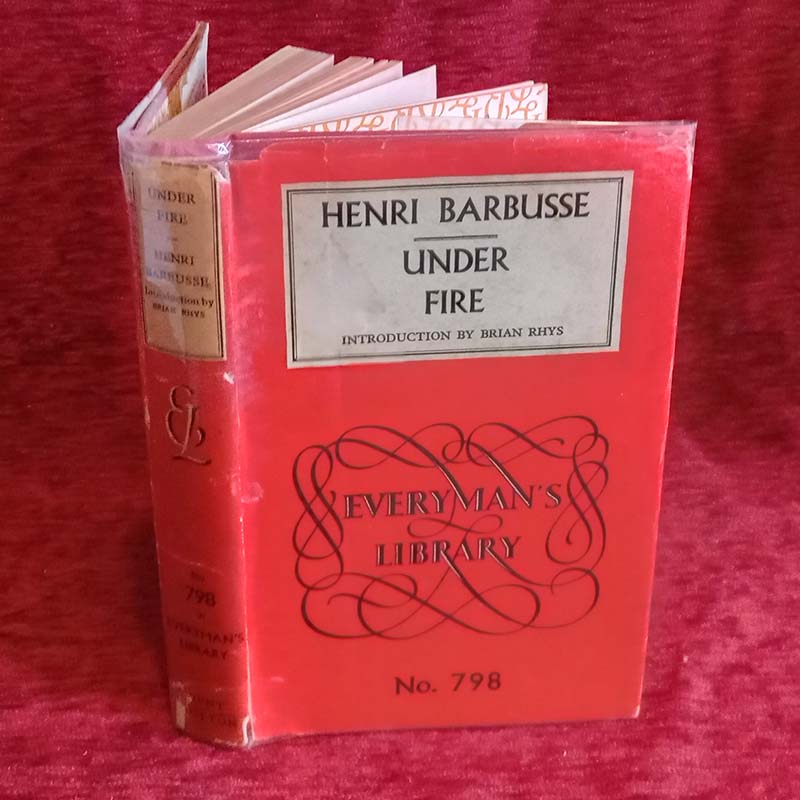
AI-assisted note, based on the text and a physical inspection of this copy.
Henri Barbusse's "Under Fire," published in 1955 by Everyman's Library, is a striking example of early 20th-century literature that grapples with the horrors of war. This edition, like many in the Everyman’s series, showcases a crisp, understated design, typically featuring a simple but elegant cover that hints at the serious themes within. The paperback vibe, reminiscent of the mid-century literary scene, feels both nostalgic and a touch anachronistic, appealing to readers who appreciate the tactile experience of flipping through pages that bear the weight of history.
The cultural significance of "Under Fire" cannot be understated. As a piece of war literature, it emerges from the disillusionment following World War I, capturing the visceral experiences of soldiers in the trenches with raw honesty. Barbusse's narrative style is direct and unembellished, effectively transporting readers into the chaos and confusion of battle. The book’s publication in the mid-1950s, nearly four decades after the war, reflects a growing interest in revisiting the traumatic aftermath of conflict, a theme that resonated deeply in a post-World War II world grappling with its own identity and the spectre of future wars.
Henri Barbusse, a French novelist and a soldier during World War I, is best known for his contributions to war literature. His experiences on the frontlines informed much of his writing, and "Under Fire" stands as a testament to his commitment to portraying the grim realities of combat. While Barbusse's prominence in literary circles may not match that of his contemporaries, he is recognised for his profound exploration of the human condition in times of strife, making him a significant figure in the canon of war literature. Yet, details about his life and works beyond this novel remain relatively obscure, with limited documentation available. His legacy, while impactful, seems to have faded somewhat in the broader literary landscape.
The year 1955 was a dynamic time in literature, marked by a shift towards realism and a deepening exploration of human psychology and societal issues. The post-war world was beginning to confront the consequences of global conflict, and Barbusse's narrative resonates with this zeitgeist. The tension between the glorification of warfare and its stark realities was becoming increasingly evident in literature, with authors seeking to dismantle romantic notions of heroism. In this context, "Under Fire" serves not only as a historical document but also as a powerful critique of the concept of war itself. Readers in the mid-1950s would have approached the book with a heightened awareness of the psychological scars left by the Second World War, making its themes particularly relevant.
The cover design of the Everyman's Library edition is emblematic of the era’s publishing aesthetic, with a focus on elegance and readability. The muted colours and traditional typography lend a sense of gravitas to the work, suggesting that this is a serious piece of literature deserving of thoughtful engagement. There is an almost reverential quality to the presentation, appealing to those who appreciate literary heritage. The physicality of the book, with its sturdy binding and quality paper, invites readers to linger over the text, contemplating the weight of Barbusse's words.
In terms of print culture, "Under Fire" occupies a unique space within the Everyman's Library collection, which is known for curating classic works of literature. This particular edition serves not only as a means of preserving Barbusse's legacy but also as an entry point for new readers to engage with the complexities of war literature. The decision to include such a work in a prestigious series speaks to its enduring relevance and the importance of remembering the lessons of history.
Overall, "Under Fire" is a compelling and poignant exploration of the brutal realities of war, positioned within a broader cultural context that values critical reflection on human conflict. It offers readers a visceral experience that lingers long after the final page is turned. As a part of Crappy Old Books, this edition reminds us of the power of literature to confront uncomfortable truths and to serve as a mirror reflecting the complexities of our shared human experience.