AI-assisted note, based on the text and a physical inspection of this copy.
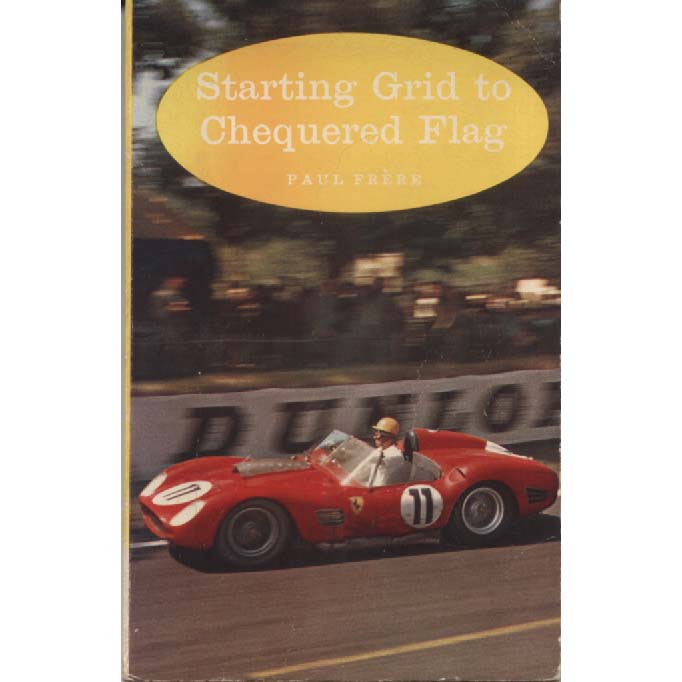
“Starting Flag to Chequered Flag” by Paul Frere, first published in 1962 by BT Batsford Ltd, occupies a curious niche within the realm of automotive literature. The book serves as both a practical guide and a nostalgic homage to the world of motor racing, capturing the spirit of the era while also attempting to educate the uninitiated. The cover design, typical of the period, features bold typography and a simplistic yet striking graphic that evokes the thrill of speed. The paperback format is indicative of the time, designed for easy consumption, and the slightly worn pages add to its charm, suggesting that this book has been held and cherished by racing enthusiasts over the decades. The overall aesthetic embodies a sense of retro cool, which appeals to collectors and nostalgic readers alike.
Paul Frere, an established name within the motorsport community, had a background not only as a writer but also as a racing driver. He contributed significantly to automotive journalism, becoming a respected voice in the field. Frere's perspectives stemmed from his own experiences on the track, which he translated into engaging narratives and insightful analyses. His reputation as a knowledgeable commentator on motorsport mechanics and culture positioned him as a notable figure in publishing history related to motor racing. While he may not be as widely recognised as some of his contemporaries, his contributions to the genre are substantial, particularly in bridging the gap between racing theory and practical application.
The year 1962 marked a significant period in the evolution of motor racing. The book emerges from a time when Formula One was gaining momentum as a major international sport, with legends like Graham Hill and Jim Clark making headlines. The cultural landscape was dominated by the excitement of speed and the glamour associated with racing. Cars were not just machines; they were symbols of status, innovation, and the thrill of the open road. The burgeoning popularity of motorsport was reflected in the media, with publications like Frere’s drawing in both avid fans and curious newcomers. This cultural backdrop provides context for “Starting Flag to Chequered Flag,” as it seeks to educate readers about the intricacies of racing while simultaneously celebrating the sport's burgeoning popularity.
Exploring the content of the book reveals Frere’s dual aim: to inform and to inspire. The chapters are structured in a way that gradually leads the reader from the basics of motorsport—such as the importance of the starting flag—to more complex topics like the intricacies of vehicle dynamics and race strategy. Frere’s writing is accessible, yet it carries an undertone of authority that stems from his own racing background. The use of diagrams and illustrations, characteristic of instructional texts of the time, enhances understanding, making it easier for readers to visualise concepts that might otherwise seem daunting.
However, the book does have its limitations. While it provides a solid foundation for understanding motor racing, some may find it lacking in depth when it comes to the more technical aspects of car engineering or race mechanics. The prose, though engaging, occasionally dips into the realm of the overly simplistic, which might frustrate seasoned enthusiasts looking for a deeper dive. Nonetheless, it remains a valuable resource for newcomers to the sport or casual fans who wish to gain a greater appreciation for the intricacies of racing.
The print culture of the early 1960s played a significant role in shaping how works like “Starting Flag to Chequered Flag” were both produced and consumed. The post-war boom in publishing facilitated a rise in niche genres, and automotive literature found its place among them. Books about sports, particularly those that captured the zeitgeist, were popular, providing not just information but also a sense of belonging to a community. Frere’s work is emblematic of this trend, positioning itself as an accessible entry point for readers who might otherwise feel alienated by the technical jargon often associated with motorsport.
In terms of its legacy, “Starting Flag to Chequered Flag” holds a certain nostalgic value. As the years have passed, it has become somewhat of a collector's item, appreciated not only for its content but also for its historical significance within the realm of motor racing literature. The book encapsulates a specific moment in time, reflecting the values, excitement, and culture of racing in the early 1960s. For many, it serves as a reminder of the exhilarating world of motorsport, a gateway that opened up a passion for racing that has endured through generations.
In conclusion, Paul Frere’s “Starting Flag to Chequered Flag” is a fascinating cultural artefact, blending education and nostalgia in the world of motorsport. While it may not satisfy every racing aficionado's craving for technical detail, it serves as an engaging introduction to the sport, capturing the excitement of a bygone era. As part of the collection at Crappy Old Books, it stands as a testament to the enduring allure of motor racing and the literary works that seek to document its evolution.