AI-assisted note, based on the text and a physical inspection of this copy.
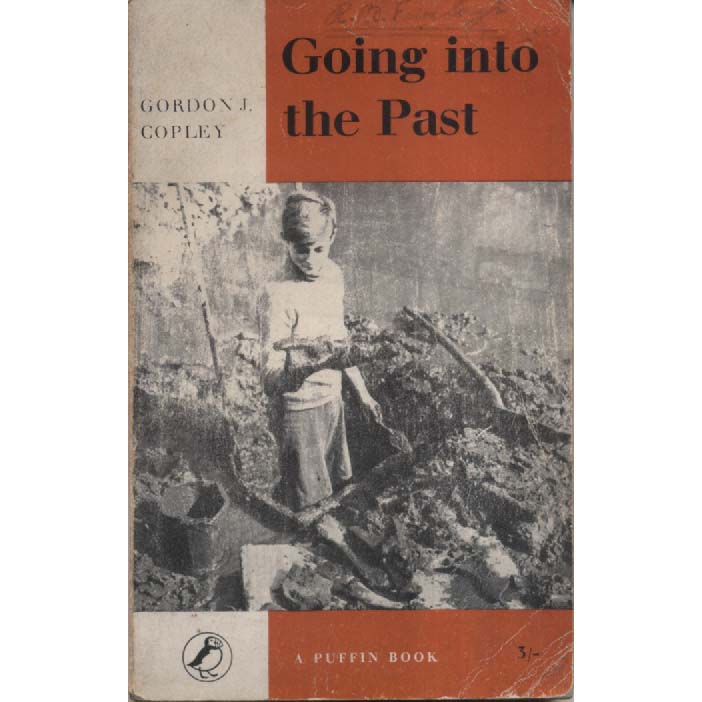
"Going into the Past" by Gordon J. Copley, published in 1958 by Puffin, is a curious artefact of its time, nestled within the realm of children's literature. The cover design, featuring bold, playful illustrations that hark back to the mid-20th century aesthetic, captures the imagination of young readers while also appealing to adults who may appreciate the nostalgia it evokes. The paperback vibe is distinctly characteristic of the era, with its slightly worn edges and the faint scent of aged paper, creating a tactile connection to a bygone age of publishing. The book's overall presentation reflects a period when children's literature was undergoing a transformation, becoming more colourful and engaging, a trend that Puffin, a publisher known for its commitment to youth-oriented narratives, embraced wholeheartedly.
As for Gordon J. Copley, he appears to be a rather obscure figure in literary history. There is limited information about his life, career, or other works, making it difficult to place him within the larger context of publishing culture. His lack of prominence in literary circles suggests that he may not have achieved significant acclaim or recognition during his time, which could explain the scarcity of biographical details available today. This obscurity adds an enigmatic quality to "Going into the Past," as readers are left to ponder the author's motivations and influences without the benefit of a well-documented background.
Published in 1958, "Going into the Past" emerges from a post-war Britain that was experiencing a cultural shift. The nation was beginning to heal from the scars of World War II, and a sense of optimism permeated the air. This period saw a burgeoning interest in historical narratives, particularly those aimed at younger audiences, as parents sought to provide their children with both entertainment and education. The book reflects this zeitgeist, offering young readers a whimsical journey into history, perhaps designed to instil a sense of curiosity about the past. Copley’s work fits neatly into this cultural moment, where literature for children was not only a means of escapism but also a tool for learning and moral development.
The narrative of "Going into the Past" invites readers into a world where time travel is not just a fantastical idea but a vehicle for exploration and understanding. This notion of adventure through history is particularly engaging for children, as it allows them to connect with figures and events that shaped the world. However, while the premise is intriguing, the execution may leave much to be desired. The prose can come across as simplistic, reflecting a desire to cater to a younger audience but sometimes failing to provide the depth that might enrich the experience. The dialogue is often stilted, and the characters lack the complexity that could make their adventures truly resonate.
One cannot overlook the impact of the book’s illustrations, which, while charming, sometimes overshadow the text itself. The vibrant colours and whimsical designs serve to captivate the young reader's attention, yet they can also distract from the narrative's substance. The balance between visual storytelling and written word is a delicate one, and in this case, the illustrations may inadvertently dilute the potential impact of Copley's writing. This is a common pitfall in children's literature of the time, where the allure of visual elements often takes precedence over the depth of the written narrative.
In terms of print culture, "Going into the Past" signifies a transitional moment for children's publishing. The 1950s marked a period of experimentation with format and design, as publishers sought to engage young readers in new ways. Puffin, as a pioneer in this field, played a crucial role in shaping the landscape of children's literature, and Copley's work is a testament to this evolution. The book embodies the spirit of its time, showcasing the excitement surrounding innovative storytelling and the importance of making literature accessible to younger audiences.
Overall, "Going into the Past" serves as both a reflection of its era and a testament to the evolving nature of children's literature. While it may not stand out as a seminal work in the canon, it remains an interesting cultural object that encapsulates the hopes and aspirations of a generation seeking to connect with both history and imagination. For those interested in the intersections of literature, culture, and childhood, this book offers a glimpse into a time when storytelling was becoming increasingly vibrant and multifaceted. As with many titles featured in Crappy Old Books, it invites readers to explore not just the content, but the broader cultural narratives that shape our understanding of literature and its role in society.