AI-assisted note, based on the text and a physical inspection of this copy.
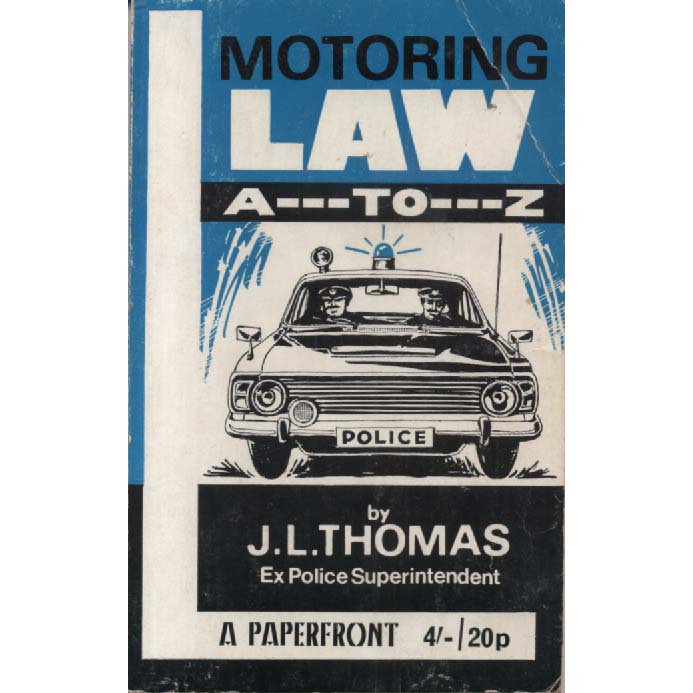
In the vast, often uncharted waters of motoring literature, JL Thomas's "Motoring Law A To Z," published in 1969 by Paperfronts, stands out as both a curiosity and a testament to the era's obsession with automobiles. This paperback volume, with its strikingly simple yet functional cover design, embodies a no-frills approach typical of the time. The cover features a bold, sans-serif font against a muted background, evoking a sense of straightforwardness that one might associate with the legalistic nature of its content. The book itself is the kind of paperback that one might find crammed into the glove compartment of a car, or perhaps stuffed in the back of a dusty shelf in a local library, awaiting discovery by an unsuspecting reader or an aspiring motorist.
The cultural significance of this book cannot be overstated. In the 1960s, motoring was not merely a means of transportation; it was a burgeoning lifestyle choice and a symbol of freedom. With the post-war economic boom, more people were buying cars, and with them came an increasing need for understanding the laws governing their use. This book, then, reflects the zeitgeist of its time—a society grappling with the implications of motor vehicle ownership, the rise of the commuter, and the associated legal frameworks. "Motoring Law A To Z" serves as a guide to navigating these new waters, providing insights into regulations that would have been crucial for the average motorist as road networks expanded and car culture flourished.
JL Thomas remains an elusive figure in the literary world. There is scant information available regarding his biography or career, leading one to speculate on his standing within the canon of motoring literature. He does not appear to have made a significant impact beyond this particular title or to have contributed to any notable literary movements. It is worth pondering whether Thomas was simply a legal expert or a passionate enthusiast who found a niche in writing for a public eager to understand the legal landscape surrounding their newfound love for motoring. His obscurity might suggest that he served a specific purpose in a specific time, perhaps as a voice for the everyday driver rather than an established literary figure.
Published in a time when motoring was becoming an integral part of daily life, "Motoring Law A To Z" captures the spirit of the late 1960s. The book's publication coincided with a critical juncture in British society, where car ownership was surging, and the accompanying legal complexities were starting to envelop the average citizen. The 1960s were also marked by significant social changes, including the rise of youth culture and the questioning of authority. It is interesting to consider how a book dedicated to the legal aspects of motoring might have been received by a generation that was starting to push back against traditional norms. This juxtaposition of freedom and regulation is palpable within the pages of Thomas's work.
The content of "Motoring Law A To Z" is approachable, presented in an alphabetical format that invites readers to dip in and out rather than read cover to cover. This structure not only caters to the practical needs of those seeking specific information but also reflects the growing trend in publishing towards user-friendly formats in non-fiction. The legal terminology is, for the most part, accessible, which is essential considering the target audience likely consisted of everyday motorists rather than legal scholars. This feature adds to the book’s charm, making it a handy reference for those wanting to understand their rights and responsibilities on the road.
Visually, the book carries the hallmarks of 1960s publishing, with its slightly yellowed pages and the faint aroma of old paper that one might expect from a vintage paperback. The physicality of the book adds to its cultural object status; it feels both nostalgic and slightly out of place in today's digital age. Readers might find themselves flipping through the pages not only for the information contained within but also for the experience of handling a relic from a bygone era of print culture. There is something undeniably satisfying about holding a physical book, especially one that encapsulates a specific time and place, contrasting sharply with the ephemeral nature of online resources.
Overall, "Motoring Law A To Z" is a reflection of its time—an instructive yet simplistic guide that speaks to the complexities of the motoring world in the 1960s. While JL Thomas may not be a household name, his work serves as a reminder of the cultural and legal shifts that accompanied the rise of the automobile. The book may not have garnered accolades or widespread fame, but its existence contributes to the mosaic of motoring literature, providing insight into the era's pressing concerns. For those intrigued by the interplay of law, culture, and everyday life, this book is an interesting footnote in the annals of motoring history.
As we sift through the dusty shelves of Crappy Old Books, "Motoring Law A To Z" stands as a curious testament to a time when the roads were opening up and the rules governing them were just beginning to take shape. Whether you are a motoring enthusiast or simply a lover of vintage literature, this book offers a glimpse into a world that was evolving rapidly, making it a noteworthy addition to any collection.