AI-assisted note, based on the text and a physical inspection of this copy.
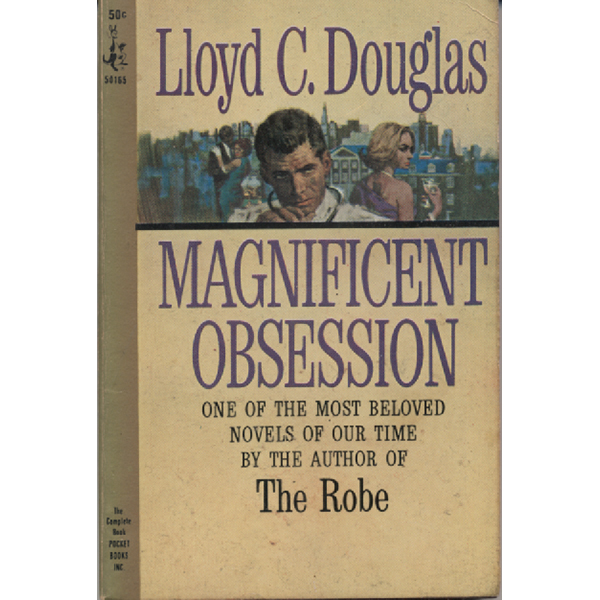
“Magnificent Obsession” by Lloyd C. Douglas, published in 1966 by Pocket Books, is a curious artefact from a bygone era, embodying both the aspirations and the limitations of mid-20th-century American literature. The cover design is a typical representation of the period, featuring bold, dramatic typography and an illustration that seeks to evoke a sense of longing and romance. The paperback format, with its slightly worn edges and a faint smell of aged paper, transports readers to a time when books were not merely objects to be consumed but symbols of personal belief and emotional investment. It is an attractive piece for collectors, though the design may seem somewhat dated and kitschy to the contemporary eye. The overall aesthetic of the book, with its soft cover and yellowed pages, resonates with the charm of the past, drawing in those who appreciate the tactile experience of reading physical literature.
Lloyd C. Douglas, the author of “Magnificent Obsession,” remains a somewhat obscure figure in the literary landscape. He was a minister and novelist, best known for his works that often blend themes of spirituality and personal redemption. Despite his relatively modest profile, Douglas holds a place in American literary culture, primarily through his storytelling that explores the intersections of faith and human experience. His most popular work, “Magnificent Obsession,” is often cited as a reflection of his own values and beliefs, though detailed biographical information is sparse. It appears that Douglas's impact has waned over time, with only a few dedicated readers keeping his works alive in conversation. The absence of a significant literary movement or broader recognition suggests that he remains a niche author, appreciated more for his narrative style and themes than for any groundbreaking contributions to literature.
The year 1966 was a notable period in American culture, marked by social upheaval and a growing counterculture movement. The post-war era was characterised by a quest for meaning, as many sought solace in spirituality amidst the chaos of the civil rights movement and the Vietnam War. “Magnificent Obsession” fits neatly into this cultural milieu, presenting a narrative that combines melodrama with a moral message. Readers at the time were likely drawn to its themes of hope and redemption, reflecting a collective yearning for stability and purpose. The book's popularity can be seen as a response to the anxieties of the era, offering a narrative that champions the power of love and faith in overcoming life's challenges. This cultural backdrop enhances the text, allowing modern readers to appreciate it not merely as a story but as a reflection of the zeitgeist of its time.
In “Magnificent Obsession,” Douglas crafts a tale that centres around the transformation of its protagonist through love and selflessness. While the narrative may seem predictable to a contemporary audience, it is essential to recognise that the conventions of storytelling in the 1960s often relied on clear moral dilemmas and resolutions. The prose is imbued with a sense of earnestness that may resonate with readers seeking comfort in the familiar patterns of narrative structure. However, one cannot overlook the book’s melodramatic tones, which, while evocative for some, may come across as overly sentimental or even clichéd today. This contradiction in the text raises interesting questions about the evolution of literary tastes and the ways in which societal values shape storytelling.
The print culture of the 1960s also played a significant role in the dissemination of works like “Magnificent Obsession.” The rise of paperback novels made literature more accessible to the masses, allowing readers from various backgrounds to engage with stories that might otherwise have been confined to the hardback shelves of affluent households. Pocket Books, as a publisher, championed this movement, helping to solidify the paperback format as a staple in American homes. The book’s presence in this format speaks to the democratisation of literature during this period, where readers could more easily carry their stories with them, fostering a deeper connection to the themes explored within.
As one flips through the pages of “Magnificent Obsession,” it is impossible to ignore the impact of its time and the way in which it has been shaped by the societal currents of the 1960s. The dialogue, while reflective of the era, may feel stilted and overly formal to modern readers, who are accustomed to more nuanced character interactions. Yet, there remains a certain charm in Douglas's earnest prose that echoes the simplicity of human emotions, making it a worthwhile read for those interested in the historical context of literature.
In examining “Magnificent Obsession,” one cannot dismiss the role of nostalgia in its appeal. For some, the book may evoke fond memories of a simpler time, while others might view it as a relic of a bygone era that has little relevance today. Regardless, it stands as a testament to the literary culture of the 1960s, encapsulating the hopes, dreams, and moral quandaries of a generation. In a world that often feels fragmented and disjointed, revisiting such works offers a comforting reminder of the enduring nature of human experience and the narratives we create around it.
Ultimately, “Magnificent Obsession” by Lloyd C. Douglas is a complex cultural object, reflecting the values and aesthetics of its time, while also inviting readers to reconsider the evolution of storytelling. It is a book that may not resonate with everyone, yet it provides an opportunity to explore the intersections of faith, love, and redemption within the context of a changing society. For those curious about the literary landscape of the 1960s, “Magnificent Obsession” serves as both a gateway and a mirror, inviting readers to engage with a piece of history through the lens of Crappy Old Books.