AI-assisted note, based on the text and a physical inspection of this copy.
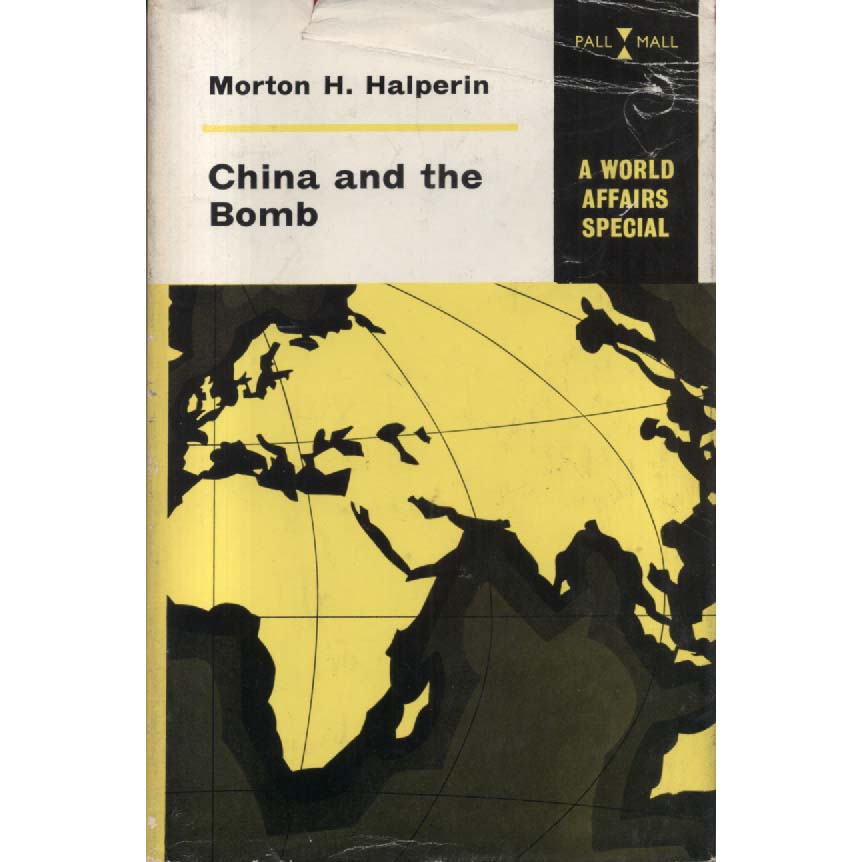
"China and the Bomb" by Morton H. Halperin, published in 1965 by Pall Mall Press, stands as an intriguing cultural artefact within the realm of Cold War literature. The book's cover design reflects the stark, utilitarian aesthetic of its time, featuring bold typography and a graphic that suggests urgency and gravity. This visual presentation sets the tone for a work that is both a product of its era and a commentary on the geopolitical tensions surrounding China and nuclear proliferation during the mid-20th century. The paperback format, with its slightly dog-eared edges and aged paper, imbues the text with a sense of history that is palpable; one can almost feel the weight of the discussions held within its pages, echoing the anxieties of a world teetering on the brink of nuclear conflict.
Halperin’s work delves into the implications of China’s burgeoning nuclear capabilities, offering insights that were particularly relevant during the time of its publication. The 1960s were marked by significant advancements in nuclear technology and a growing awareness of the potential for global destruction. Halperin approaches the topic with a blend of analytical rigor and accessible prose, making complex ideas digestible for a broader audience. The text navigates the intersection of political strategy and military power, reflecting the concerns of policymakers and intellectuals alike. This duality is one of the book's strengths—it serves as both a scholarly examination and a cautionary tale about the realities of international relations in a nuclear age.
Morton H. Halperin is a figure whose prominence in the world of political analysis is marked by his deep involvement in government and academia. He is primarily recognised for his work on national security, civil liberties, and foreign policy, having held various roles in both the public sector and think tanks. While he may not be a household name, his contributions to discussions on nuclear strategy and American foreign policy have been influential. His expertise lends credibility to "China and the Bomb," as he draws upon a wealth of knowledge and experience in crafting his arguments. However, it is worth noting that Halperin's biographical details are not extensively documented in popular literary culture, leaving some ambiguity about his broader impact on the field.
The year 1965 is pivotal in understanding the cultural context of "China and the Bomb." The Cold War was in full swing, characterised by an arms race between the United States and the Soviet Union, and the emergence of China as a nuclear power added another layer of complexity. The political climate was charged with fear and uncertainty, as nations grappled with the implications of nuclear weaponry. This environment not only shaped the content of Halperin's work but also influenced public perception and discourse surrounding nuclear arms. In this light, the book can be seen as a reflection of the zeitgeist, capturing the anxieties and aspirations of a society confronting the spectre of mutually assured destruction.
The paperback book's physical presence and the quality of its production are worth noting. The slightly yellowed pages and the smell of old paper evoke nostalgia for a time when the printed word held more immediate significance. In an age of digital immediacy, the tactile experience of reading a physical book has become increasingly rare, yet "China and the Bomb" offers a portal to a past era—one where information was consumed in a more deliberate manner. The choice of Pall Mall Press as the publisher adds to the book's gravitas, as the imprint was known for disseminating significant works that contributed to the intellectual landscape of the time.
In terms of content, Halperin's analysis provides a critical lens through which to examine China's motivations and strategic calculus regarding nuclear arms. His arguments are supported by a variety of sources, weaving together historical context, political theory, and empirical evidence. While some may critique the book for its dated analyses or lack of foresight regarding future developments, it remains a valuable resource for understanding the complexities of nuclear diplomacy in the 1960s. The insights Halperin presents are not merely historical artefacts; they resonate with ongoing discussions about nuclear proliferation and international security today.
In conclusion, "China and the Bomb" encapsulates a unique moment in both literary and political history. Morton H. Halperin's work serves as a reminder of the enduring questions surrounding nuclear power and the responsibilities of nations in a precarious world. As a cultural object, it speaks to the era's fears and hopes, offering a window into the past while prompting reflections on the future. Crappy Old Books continues to celebrate such works, ensuring that the conversations they inspire remain alive for generations to come.